
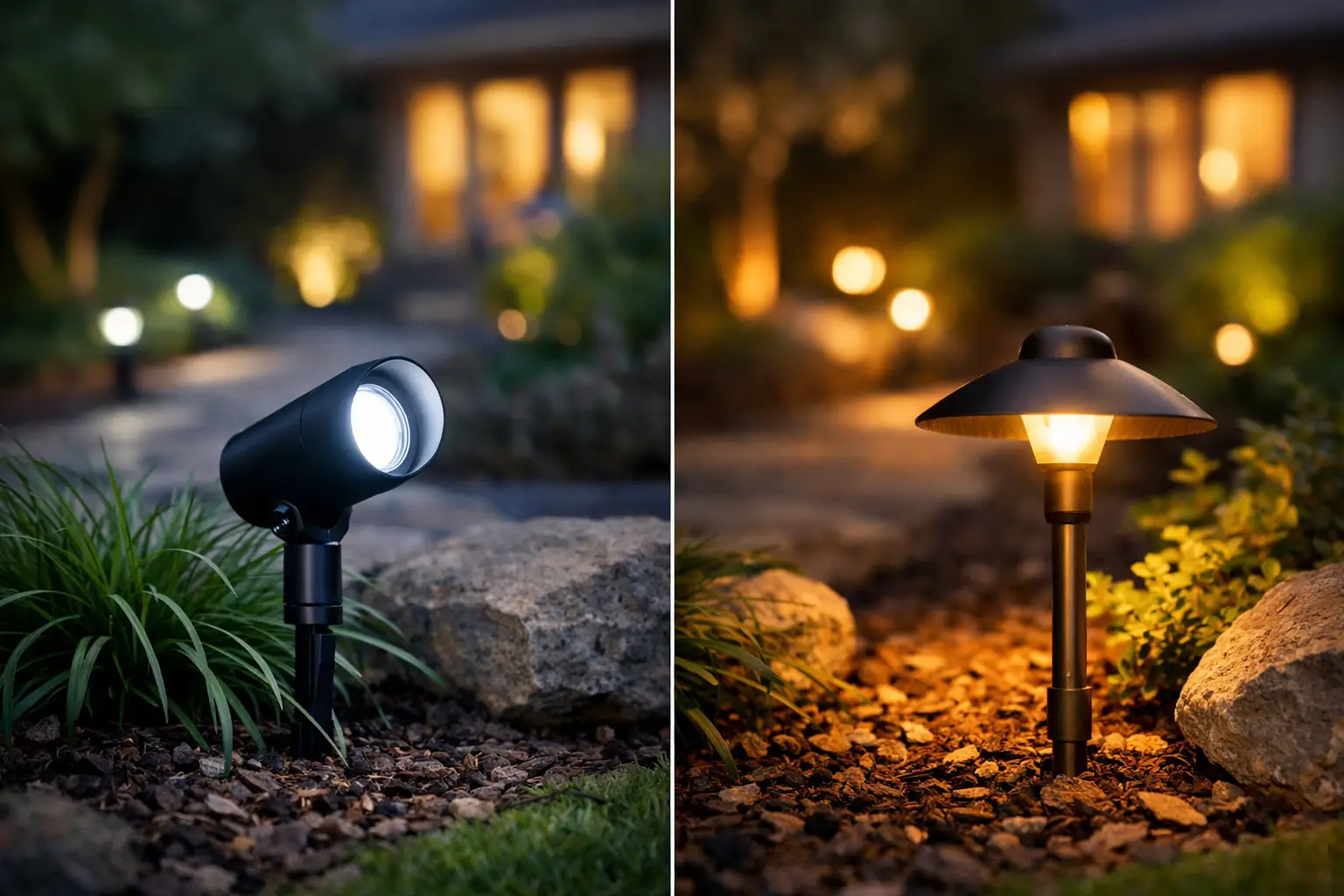
A beautifully illuminated home should feel effortless after sunset. Yet the choice between LED versus halogen landscape lighting affects far more than the appearance of a path, palm, façade, or pool deck. It shapes the warmth of the light, the reliability of the system, the amount of maintenance required, and the long-term cost of enjoying your property at night.
For Tampa Bay homeowners, the answer is rarely just about choosing the newest technology. It is about creating a lighting plan that complements the home, performs in intense heat and humidity, and continues to look refined long after installation day. Halogen earned its reputation for beautiful color and soft illumination. Modern LED, however, has changed what is possible in premium outdoor lighting.
LED Versus Halogen Landscape Lighting at a Glance
Halogen landscape lighting uses a heated filament to produce light. It has traditionally been valued for its warm, natural color and its ability to render stone, stucco, foliage, and architectural finishes attractively. Many existing outdoor lighting systems around Tampa Bay still use halogen lamps.
LED fixtures use light-emitting diodes rather than a filament. They consume far less electricity, generate much less heat, and can operate for many thousands of hours. Early LED products sometimes produced a harsh or bluish light, which is why some homeowners remain cautious. Quality outdoor LED fixtures no longer carry that limitation. With the right color temperature, optics, and professional placement, LED can create the same inviting warmth people associate with traditional halogen lighting – with considerably greater control and durability.
The real comparison is not simply old versus new. It is standard halogen equipment against carefully specified, weatherproof LED fixtures designed for the demands of a luxury exterior environment.
The Difference You See After Dark
Color warmth and visual character
Halogen naturally produces a warm color that many people find flattering. Its light can make brick, natural stone, mature trees, and textured architectural details feel especially rich. For a property with a traditional aesthetic, that warmth has genuine appeal.
LED offers a wider range of intentional choices. A professional designer can select a warm white tone for a Mediterranean-style residence, a cleaner white for contemporary architecture, or separate color temperatures for distinct areas of the property. Warm LED is particularly effective around entryways, patios, garden beds, and seating areas where atmosphere matters as much as visibility.
Fixture quality makes the difference. A low-cost LED lamp may create uneven color, visible glare, or a flat appearance. A well-designed LED fixture uses carefully engineered optics to direct light precisely where it belongs. The result is dimensional illumination: a canopy softly revealed from below, columns given depth, a walkway defined without being overlit, and a pool enclosure made more usable without turning the yard into a bright stage.
Beam control and architectural definition
Landscape lighting is not a matter of adding fixtures everywhere. It is an exercise in restraint. The best designs use contrast, shadow, and layers of light to create a composed evening view from the street, driveway, interior living spaces, and outdoor entertaining areas.
Modern LED systems provide excellent beam control. Narrow beams can accent a tall palm or a chimney detail. Wider beams can wash a façade or bring soft visibility to planting beds. Small LED fixtures can also be integrated discreetly into hardscapes, docks, decks, and pool cages where a bulky fixture would interrupt the design.
Halogen can deliver attractive results as well, but it generally offers less flexibility and requires more attention as lamps age and outputs change. For a tailored system with multiple lighting layers, LED gives the designer a more precise palette.
Energy Use Is Only Part of the Cost Story
The operating-cost difference between LED and halogen is substantial. An LED fixture can use a fraction of the wattage of a comparable halogen source. Across a complete lighting plan with dozens of fixtures, that reduction becomes meaningful over years of nightly use.
Still, energy savings should not be viewed in isolation. A lower utility bill is valuable, but the more practical financial advantage is reduced lamp replacement and service disruption. Halogen bulbs commonly require replacement much sooner than LEDs. Depending on run time and conditions, halogen lamps may need attention every year or two. Quality LED components can operate for years before replacement becomes necessary.
That matters on a large home where fixtures may be positioned in trees, under eaves, along rooflines, within dense landscaping, or around a pool deck. Fewer service visits mean fewer interruptions and a more consistent nighttime presentation.
There is an upfront-cost consideration. Premium LED fixtures and professional-grade components can cost more initially than a basic halogen setup. But a lighting system should be evaluated as a long-term property enhancement, not a short-term purchase. When energy consumption, lamp changes, heat, and maintenance are considered together, LED is typically the stronger long-range investment.
Why Tampa Bay Conditions Favor LED
Florida’s climate is demanding on exterior equipment. Heat, humidity, heavy rain, salt air in coastal areas, irrigation overspray, and persistent landscape growth all test a lighting system throughout the year.
Halogen lamps generate significant heat. That heat is not only less efficient, it can be problematic when fixtures are installed near mulch, ground cover, delicate plantings, or areas touched by frequent irrigation. LED runs much cooler, reducing stress on fixtures and making it a more practical choice for detailed landscape applications.
A dependable system also depends on more than the light source. Quality housings, sealed connections, properly sized transformers, sound wire runs, and careful fixture placement protect the investment. A beautiful fixture will not perform well for long if it is installed with poor connections or left vulnerable to drainage issues and landscape maintenance.
This is where specialized design and installation matter. Elegant Accents Outdoor Lighting has focused exclusively on outdoor lighting since 1999, with the experience to specify materials and placement that suit both the property and the local climate. The lighting itself is only one part of the finished result. The craftsmanship behind it determines whether the system continues to create a polished impression season after season.
When Halogen Still Makes Sense
LED is the preferred choice for most new landscape lighting installations, but halogen is not automatically the wrong choice in every circumstance. An existing halogen system may be functioning well, and a homeowner may prefer a phased approach rather than a full replacement. In certain specialty applications, the distinct warmth of halogen may also be desirable.
The best path depends on the system’s condition, the quality of its existing fixtures, transformer capacity, wire layout, and the goals for the property. In some cases, an LED retrofit can bring substantial benefits while preserving selected fixtures. In others, replacing aging components provides a cleaner, more dependable foundation for the future.
A thoughtful evaluation avoids two common mistakes: holding onto inefficient equipment simply because it still turns on, or replacing a system with generic LED products that fail to match the home’s architectural character. The objective is not merely brighter lighting. It is a better nighttime environment.
Designing for Beauty, Safety, and Everyday Use
A refined outdoor lighting plan should make guests feel welcomed before they reach the front door. It should guide family and friends safely along steps and walkways, bring subtle visibility to driveways and side yards, and allow patios, outdoor kitchens, and pool areas to remain inviting after sunset.
LED is especially well suited to this layered approach because it can provide low-level illumination without excessive power use. Soft path lighting, carefully shielded step lights, gentle downlighting from trees, and restrained architectural accents can all operate together without the high electrical demand of a comparable halogen system.
The most successful designs also respect darkness. More light does not create more elegance. Overlighting erases shadow, creates glare through windows, and can make a carefully landscaped property feel commercial rather than composed. A professional plan identifies focal points, balances brightness, and ensures that practical areas receive the light they need without sacrificing ambiance.
Maintenance Should Protect the Original Design
Even premium outdoor lighting benefits from periodic service. Plants grow, mulch shifts, lenses collect debris, and outdoor conditions can affect fixture alignment. Maintenance preserves the intended effect by resetting fixtures, checking connections, trimming around light sources, and replacing components before a small issue becomes a visible gap in the design.
LED reduces the frequency of lamp replacement, but it does not eliminate the value of professional care. For homeowners who expect their property to look exceptional year-round, ongoing maintenance is part of protecting the original investment.
The right lighting choice should leave you with more evenings to enjoy your home, not more bulbs to replace or dark corners to troubleshoot. Whether you are updating an aging halogen system or planning a complete new installation, choose the technology and design standard that will make the property feel just as considered at night as it does during the day.