
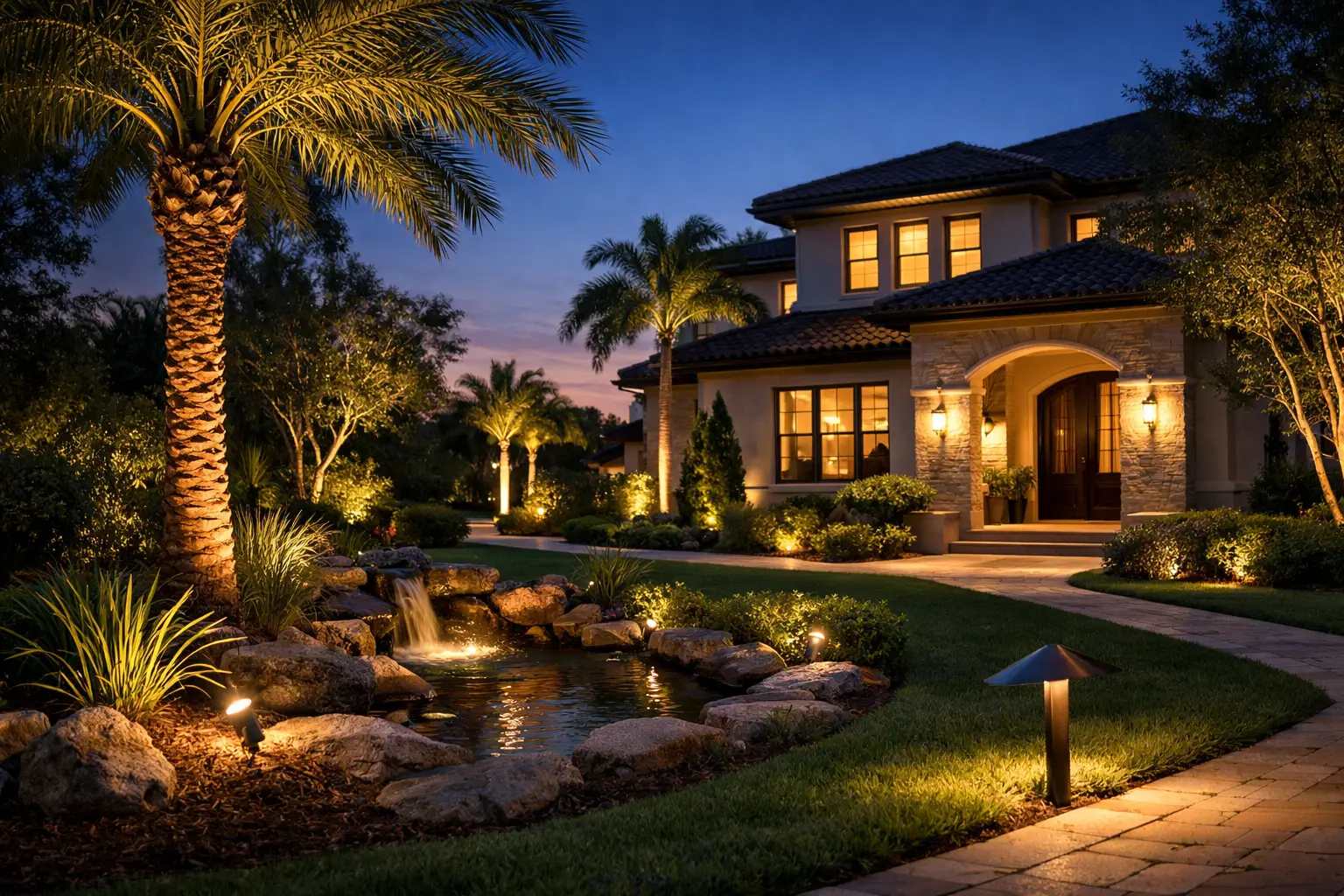
A beautiful Tampa Bay property should not disappear when the sun goes down. The right LED landscape lighting gives a home a second presence at night: palms and oaks gain dimension, stonework becomes more expressive, and entryways feel welcoming before guests reach the front door.
This is not simply a matter of placing lights along a walkway. Luxury outdoor lighting is a composed design, balancing brightness and shadow so the property feels polished rather than overlit. When the plan is tailored to the home, LED fixtures can improve safety, extend the use of outdoor spaces, and create the kind of after-dark curb appeal that leaves a lasting impression.
Why LED Landscape Lighting Is the Right Foundation
LED technology has changed what homeowners can expect from an outdoor lighting system. Older halogen systems can produce attractive light, but they consume more energy, generate considerable heat, and require more frequent lamp replacement. Quality LED fixtures deliver a refined effect with a fraction of the energy use and a much longer service life.
For Tampa Bay properties, that efficiency is only part of the appeal. Our climate brings intense heat, humidity, salt air in coastal areas, and long periods of heavy rain. A landscape lighting system must be built with weather-resistant fixtures, sound connections, correctly sized transformers, and careful wire routing. The fixture is only as dependable as the installation behind it.
LEDs also give designers better control. Light output, beam spread, color temperature, glare control, and dimming all influence the final result. That control allows a lighting plan to accent a grand oak without turning its canopy into a bright mass, or to reveal a home’s architectural texture without spilling light into a neighbor’s windows.
The Difference Between Bright and Beautiful
The goal of outdoor lighting is not to illuminate every square foot of the property. It is to direct attention with intention. A well-designed system creates contrast, allowing selected features to stand forward while darker areas provide depth and visual rest.
At the front of a home, lighting may draw the eye to columns, rooflines, specimen plantings, mature trees, or a distinctive entry. Along a driveway or garden path, lower-level illumination establishes a clear route without the runway effect of evenly spaced, overly bright fixtures. The result should feel effortless, even though the design requires close attention to angles, spacing, and intensity.
Warm white light is often the preferred choice for traditional, Mediterranean, coastal, and contemporary Tampa Bay homes because it feels inviting and complements natural stone, stucco, brick, and lush greenery. Cooler light can suit certain modern materials, but it can also make landscaping appear stark. The best color temperature depends on the architecture, exterior finishes, and the atmosphere the homeowner wants to create.
Architectural lighting creates evening presence
Architectural lighting reveals the lines that make a home distinctive. Uplighting can add height to columns and facades, while carefully placed downlighting can wash a wall with a softer, more natural effect. Grazing techniques, where light is positioned close to a textured surface, can bring out the character of stone, brick, or decorative block.
Restraint matters here. A few thoughtfully selected focal points often look more elegant than illuminating every window, gable, and corner. The home should appear composed after dark, not outlined like a stage set.
Landscape lighting gives the property depth
Mature landscaping deserves more than broad floodlights. A palm can be illuminated from below to show its sculptural trunk and fronds. A layered planting bed may benefit from soft cross-lighting that separates foliage textures. Moonlighting, installed high in a tree and directed downward, can create a gentle pattern across lawn, patio, or pathways.
Because plants grow and seasons change, landscape lighting should allow for adjustment. A fixture that performs beautifully when installed may need to be repositioned as a hedge fills in or a tree canopy expands. Ongoing service preserves the intended effect.
Where a Custom LED Lighting Plan Adds the Most Value
Every property has different priorities. For some homeowners, the front elevation is the central focus because they want a stronger arrival experience and enhanced curb appeal. For others, the real opportunity is behind the home, where a lanai, pool deck, outdoor kitchen, or waterfront view becomes far more usable after sunset.
The most effective plans usually consider several areas together:
- The entry and front walk, where visibility and a warm welcome matter most.
- Driveways, side yards, gates, and transitions, where lighting supports safer movement and everyday security.
- Patios, pools, and outdoor kitchens, where layered illumination makes entertaining more comfortable.
- Decks, docks, and waterfront edges, where carefully shielded light improves function without overwhelming the view.
Commercial and hospitality properties have related needs, but the design emphasis may shift toward guest arrival, signage, outdoor dining, and brand presentation. A restaurant patio, for example, needs enough functional light for service and circulation while preserving an atmosphere guests want to linger in.
Common Mistakes That Diminish a Lighting System
Many outdoor lighting problems are not caused by LED technology itself. They come from a plan that treats fixtures as interchangeable or installation as an afterthought.
One frequent mistake is using too much light. Excessive brightness flattens a property, creates glare, and can make a home feel less inviting. Another is relying on inexpensive fixtures that fade, corrode, crack, or retain moisture after repeated exposure to Florida weather. Replacing failed pieces one at a time often costs more over the years than choosing durable materials from the beginning.
Poor fixture placement is equally damaging. A light aimed directly toward the street, patio seating, or interior windows becomes a distraction rather than an enhancement. Wires left too shallow, poorly protected connections, and undersized transformers can lead to inconsistent performance and difficult maintenance later.
A professional design addresses these concerns before installation begins. It considers sightlines from the street, from inside the home, and from the areas where family and guests spend time outdoors. It also accounts for future planting growth, drainage, maintenance access, and the electrical load of the complete system.
A Thoughtful Process Produces a Better Nighttime Reveal
A premium lighting project should feel clear from the first conversation. The process begins with a property consultation, where the designer learns what the owner values most: a dramatic front elevation, safer pathways, a more inviting pool area, or all of the above.
From there, a custom plan identifies focal points, fixture types, and lighting zones. A transparent proposal should explain the scope of work, rather than leaving homeowners to guess what is included. Professional installation crews then place fixtures, conceal wiring, make electrical connections, and refine aiming after dark, when the true effect can be evaluated.
That final nighttime adjustment is where design becomes visible. Small changes in angle, shield placement, or output can transform a harsh beam into a graceful accent. Elegant Accents Outdoor Lighting has focused exclusively on this work since 1999, bringing specialized design, in-house installation, and dependable maintenance to properties throughout Tampa Bay.
Maintenance Protects the Investment
Even high-quality LED landscape lighting benefits from regular care. Florida’s weather can shift soil, cover lenses with debris, move mulch, and encourage landscaping to grow around fixtures. A maintenance visit may include cleaning lenses, checking connections, resetting timers, trimming around fixtures, repositioning lights, and confirming that every zone is performing as intended.
This is particularly valuable for homes with extensive plantings, waterfront exposure, or large outdoor entertaining areas. Maintenance is not merely a repair service. It protects the original design so the property continues to look intentional year after year.
Choosing the Right Lighting Partner
When comparing outdoor lighting providers, look beyond the fixture count and the initial price. Ask who designs the plan, who performs the installation, what materials are specified, and whether long-term maintenance is available. A general contractor may be capable of installing lights, but a dedicated lighting specialist understands how illumination behaves across architecture, landscaping, water, and outdoor living spaces.
It also helps to ask how the system will be adjusted after installation. Nighttime lighting cannot be fully judged from a daytime layout alone. The ability to refine the design on site is part of the craftsmanship.
The most rewarding outdoor lighting plans do more than make a property visible. They make arriving home feel different. Start by noticing the features you value after dark, then let those priorities guide a design that gives them the attention they deserve.