
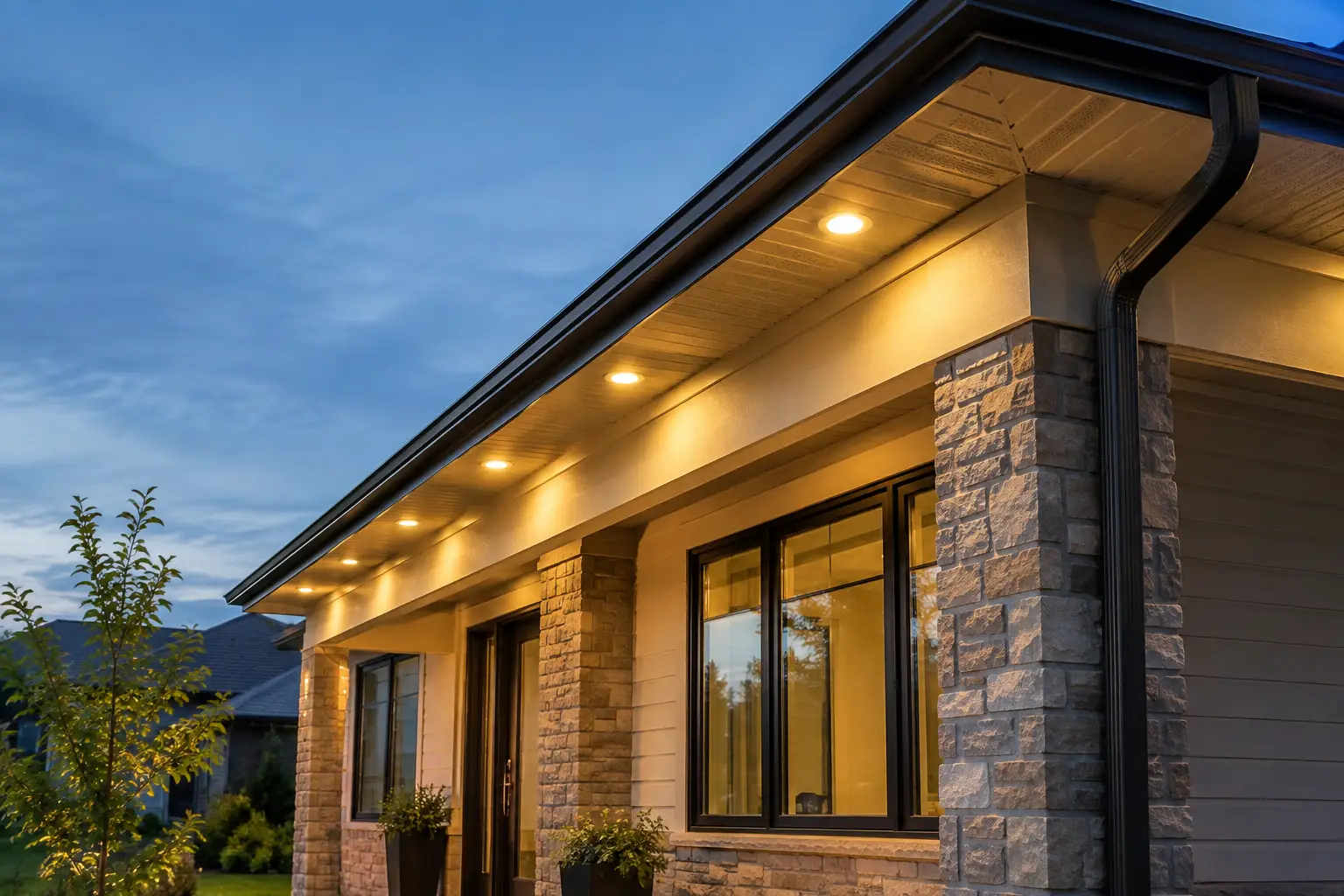
A beautifully finished home should not disappear after sunset. Soffit lighting gives Tampa Bay properties a composed, architectural presence at night by bringing soft illumination down from the roofline. Done well, it makes a front elevation feel more welcoming, defines outdoor living areas, and adds meaningful visibility without turning the property into a wash of harsh light.
This is not simply a matter of adding recessed fixtures under the eaves. The fixture spacing, beam direction, color temperature, mounting details, and relationship to surrounding landscape lighting all determine whether the result feels timeless and intentional or overly bright and flat. For homes with distinctive rooflines, stonework, columns, patios, and pool areas, soffit lighting can become one of the most refined elements in a complete exterior lighting design.
What Is Soffit Lighting?
A soffit is the finished underside of a roof overhang, porch ceiling, or exterior eave. Soffit lighting typically uses compact recessed LED fixtures installed within this protected surface, casting a controlled pool of light onto walls, walkways, entrances, or entertainment spaces below.
Its appeal lies in the clean architectural effect. During the day, quality recessed fixtures remain subtle within the soffit. At night, the light appears to originate from the home itself, emphasizing the structure’s scale and craftsmanship rather than calling attention to the fixture.
For many Tampa Bay homes, this approach works especially well along front entries, covered lanais, patios, balconies, porticos, and pool cages. It can also complement permanent roofline lighting when a homeowner wants a finished look that feels elegant every evening, not only during the holidays.
Why Soffit Lighting Changes the Exterior After Dark
The right lighting plan creates visual hierarchy. Instead of leaving the entire exterior equally bright, it guides the eye to the architectural moments that deserve attention: a welcoming entrance, a graceful archway, a textured wall, or a covered outdoor room where family and guests gather.
Soffit lighting contributes to that hierarchy in a few important ways. First, it establishes ambient light close to the home, reducing the deep shadows that can make an exterior feel uninviting. Second, it improves practical visibility around thresholds, doors, patios, and circulation areas. Finally, it brings a sense of continuity to the property. When paired with carefully placed uplights, path lights, and tree lighting, the home and landscape read as one cohesive nighttime composition.
There is also a security benefit, although brighter is not always safer. A thoughtfully illuminated perimeter can make entries and adjacent outdoor spaces easier to see while avoiding glare that impairs vision. The goal is comfortable visibility, not floodlighting every square foot of the property.
Designing Soffit Lighting for a Luxury Home
A sophisticated result begins with restraint. Recessed fixtures should support the architecture, not create a repetitive grid of bright circles across the façade. On a well-designed home, every fixture has a purpose and every pool of light belongs to the overall composition.
Spacing Should Follow Architecture, Not a Formula
Fixture placement depends on soffit height, ceiling depth, wall color, the angle of the roofline, and what sits below the fixture. A broad covered porch may benefit from evenly spaced downlights for comfortable entertaining, while a front elevation may need fewer fixtures positioned to frame columns, windows, or an entry door.
Installing fixtures at identical intervals around every eave can look orderly on paper but often produces an overly commercial appearance. Architectural features should lead the layout. A custom plan accounts for both the home’s strongest lines and the views from the street, driveway, pool deck, and outdoor seating areas.
Warm Light Usually Creates the Better Impression
For most residential applications, warm white LED light produces the most inviting effect. It complements stucco, stone, brick, wood, and painted trim while making outdoor gathering spaces feel comfortable rather than clinical.
Color temperature is a design decision, not merely a technical specification. A cool white lamp can make some contemporary finishes appear crisp, but it may also make a traditional façade feel stark. The surrounding landscape lighting matters as well. When soffit fixtures, path lights, and uplights have noticeably different color temperatures, the property can look disjointed after dark.
Beam Control Prevents Glare and Light Spill
The quality of light matters as much as the quantity. Properly selected recessed LED fixtures direct illumination where it is useful and minimize glare from common viewing angles. This consideration is especially important near driveways, front doors, upper-story windows, and neighboring properties.
Under a lanai or pool enclosure, beam control helps preserve the relaxed atmosphere homeowners want after sunset. Guests should be able to see one another, dine comfortably, and move safely without feeling as though they are sitting beneath a spotlight.
Where Soffit Lighting Delivers the Most Value
The front entry is often the highest-impact location. A softly illuminated portico creates a clear welcome for guests, enhances curb appeal, and makes the transition from driveway to front door more comfortable. When paired with landscape lighting that frames the approach, it gives the property a memorable arrival sequence.
Covered patios and lanais are another natural fit. Tampa Bay homeowners use these spaces well beyond daylight hours, whether for quiet dinners, family time, or larger gatherings. Recessed soffit lights provide useful ambient illumination without requiring freestanding lamps or bright wall-mounted fixtures that interrupt the view.
Soffits around garages, side entries, and rear doors can also improve everyday convenience. These areas are often overlooked until someone is carrying groceries in the rain or stepping outside with a pet after dark. The design should remain consistent with the rest of the home, even in practical locations.
Not every exterior surface needs soffit lighting. Open rooflines without a suitable mounting surface, heavily shaded areas, or façades where landscape lighting already creates sufficient definition may call for another solution. The strongest plans use the right technique in the right place rather than forcing one fixture type across the entire property.
LED Fixtures Built for Florida Conditions
Outdoor lighting in Florida faces intense heat, humidity, wind-driven rain, salt exposure in coastal areas, and seasonal storms. A fixture that looks appealing in a showroom may not deliver lasting performance when installed beneath a roofline year after year.
Professional-grade LED soffit fixtures are selected for weather resistance, dependable finishes, heat management, and consistent light output. LEDs also use far less energy than older lighting technologies and have long service lives, making them a sensible choice for homes that keep exterior lights on for several hours each evening.
Still, LED does not mean maintenance-free. Fixtures can collect insects and debris, connections should be checked, and changes in landscaping or exterior finishes can alter the way light performs. An established maintenance plan protects both the appearance and reliability of the system over time.
The Value of a Complete Lighting Plan
Soffit fixtures are most effective when considered alongside the rest of the property. If they are added in isolation, the home may look bright near the roofline while the landscape, driveway, and architectural focal points fall into darkness. A balanced design layers several types of illumination at different heights.
At Elegant Accents Outdoor Lighting, that planning begins with the way a property is actually used after sunset. A family focused on poolside entertaining needs a different approach than a homeowner prioritizing a dramatic front elevation or a commercial property focused on guest arrival and brand presentation. The consultation should identify those priorities before fixture locations are finalized.
A clear proposal also matters. Homeowners should understand what is being installed, why each area is being illuminated, how controls will work, and what ongoing service is available. Skilled installation crews can then integrate fixtures cleanly into finished soffits while protecting the home’s appearance and electrical integrity.
A Thoughtful Investment in Evening Living
The best soffit lighting does not announce itself. It simply makes a home look beautifully considered after dark, while making everyday outdoor spaces more enjoyable and approachable. When its warmth, placement, and performance are tailored to the architecture, the result is lighting that continues to make a lasting impression long after the sun goes down.