
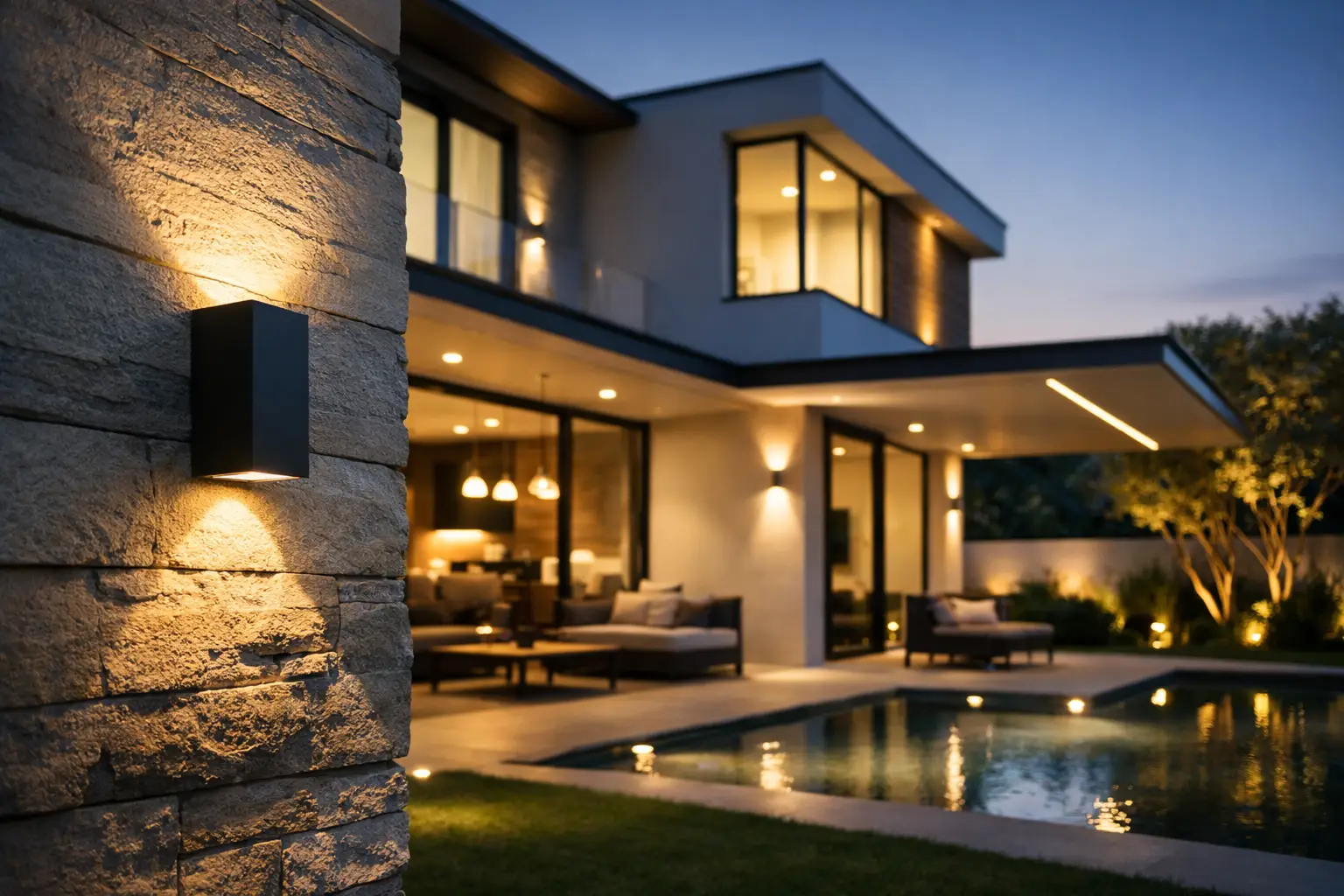
A beautifully designed home should not disappear after sunset. Its roofline, stonework, columns, entryway, and carefully chosen materials deserve the same attention at night that they command during the day. Architectural lighting gives a Tampa Bay property depth, presence, and a welcoming sense of arrival – without turning the exterior into a stage set.
The difference lies in restraint. Premium outdoor lighting is not about placing fixtures everywhere or making every feature equally bright. It is about understanding what makes a home distinctive, then shaping light around those details with intention. The right design improves curb appeal and safety while creating an evening atmosphere that feels polished, warm, and entirely natural.
What Architectural Lighting Is Designed to Do
Architectural lighting uses carefully placed exterior fixtures to reveal a home’s defining forms and finishes. It may bring attention to a textured façade, draw the eye up a dramatic gable, add dimension to columns, or give a front entry the importance it deserves.
Landscape lighting and architectural lighting work best as part of one composition, but they serve different roles. Landscape lighting adds beauty and dimension to trees, planting beds, walkways, and outdoor living spaces. Architectural lighting gives the home itself a strong nighttime identity. Together, they create a complete view of the property rather than isolated pools of light.
For homeowners, this work has practical value as well. A thoughtfully illuminated exterior improves visibility around entrances, stairs, and circulation areas. It can make a property feel more secure without relying on harsh floodlights. It also extends the pleasure of arriving home after dark, entertaining outdoors, or simply seeing a favorite residence presented at its best.
For restaurants, hospitality properties, and commercial buildings, the same principle applies. Guests form an impression before they reach the door. A warmly illuminated façade, visible entrance, and inviting outdoor areas can make a business feel established, cared for, and ready to welcome them.
The Details That Create a Refined Nighttime Look
A successful lighting plan begins with the architecture, not a fixture catalog. Every home has a visual hierarchy. Perhaps it is a grand entry, a graceful roofline, mature palms framing the structure, or a mix of stone and stucco that deserves texture after sunset. The design should establish a focal point, support it with secondary features, and leave enough shadow for the property to retain character.
Light Should Reveal, Not Overwhelm
The most common mistake in exterior lighting is over-lighting. When every wall, tree, and roof peak receives the same intensity, the home loses depth. Brightness alone does not create luxury. Contrast does.
A skilled designer uses light and shadow together. A low-angle wash can reveal the texture of natural stone. A narrow beam can frame a tall architectural feature. Gentle uplighting on a façade may add scale without creating glare in windows or spilling into a neighbor’s yard. The goal is a composition that looks composed from the street, the driveway, and the front walk.
Fixture placement matters just as much as beam spread. A fixture positioned a few inches too close to a wall can create an obvious hot spot. One placed too far away may flatten the feature it was meant to enhance. During a professional installation, small adjustments in aiming and placement often make the difference between adequate lighting and a finished look.
Color Temperature Sets the Mood
For many Tampa Bay homes, warm white LED lighting creates the most inviting result. It complements stucco, stone, wood, tile, and lush tropical landscapes while giving the exterior a comfortable residential character. Cooler white light can make certain contemporary materials look crisp, but used too broadly, it may feel commercial or severe.
Color temperature should also remain consistent throughout the property. Mixing warm porch fixtures with cool landscape fixtures can make an otherwise beautiful installation feel accidental. There are exceptions, particularly for specialty spaces or modern commercial designs, but consistency is usually what makes the full property feel intentional.
The Best Systems Respect the View From Inside
Exterior lighting should be experienced from indoors as well as outdoors. A bright fixture aimed toward a living room window can create reflection and distraction. Poorly placed pathway lights may be visible as individual dots rather than a soft guide across the landscape.
This is why a nighttime adjustment is essential. The design may look correct on paper and even appear promising at dusk, yet true results become clear after dark. Fine-tuning the fixture angle, output, and shielding protects sightlines and ensures the lighting enhances the home from every vantage point.
Where Architectural Lighting Makes the Biggest Impact
Certain exterior features offer an exceptional return in visual impact. Entryways are an obvious starting point because they shape the arrival experience and support safer access. Columns, arches, and porticos can gain a sense of scale and depth with carefully controlled uplighting.
Rooflines and gables can also be striking when treated selectively. The goal is not to outline every edge. Instead, light can emphasize the form of a prominent peak or reveal the rhythm of an architectural elevation. A well-designed roofline treatment makes the home feel more substantial from the street without looking theatrical.
Textured materials are particularly rewarding after sunset. Stacked stone, brick, decorative masonry, and wood accents come alive when light grazes across their surface. Smooth stucco benefits from a softer wash that avoids harsh scallops or overly defined beams.
In established Tampa Bay landscapes, the relationship between the home and surrounding plantings deserves special attention. Mature oaks, palms, hedges, and flowering beds can frame architectural focal points, but they should not block or compete with them. A balanced plan allows the landscape to add depth around the home while preserving a clear sense of structure.
Choosing Fixtures for Florida Conditions
A beautiful design depends on fixtures that can perform in Florida’s heat, rain, humidity, salt air, and seasonal storms. Decorative fixtures may look appealing initially, but outdoor lighting is a long-term system. Materials, seals, connections, and installation methods affect how it will look and function years from now.
High-quality, weatherproof LED fixtures are a practical choice for most properties. They provide efficient operation, long service life, and reliable color consistency. LEDs also allow designers to use lower wattage while achieving precise, effective illumination.
The transformer, wiring, and connections behind the scenes matter just as much. Professional-grade components and proper burial methods protect the system from damage and help maintain dependable performance. A polished fixture cannot compensate for weak wiring practices or poorly managed voltage across a large property.
Maintenance remains part of protecting the investment. Landscaping grows, storms shift fixtures, and lenses collect debris. Periodic service keeps beams aimed correctly, replaces any failed components, and ensures the property continues to look as intended. Lighting should feel effortless to enjoy, but that lasting result comes from attentive care.
Why a Custom Design Is Worth It
There is no universal formula for a home exterior. A lighting plan for a coastal residence with clean contemporary lines will differ from one for a Mediterranean-style home with detailed arches, mature landscaping, and a long drive. The property’s scale, materials, neighborhood setting, and how the owners use the outdoor space all shape the right approach.
A custom consultation provides the opportunity to walk the property, identify the features worth emphasizing, and discuss priorities such as curb appeal, safety, pool deck use, entertaining, or visibility around a dock. From there, a clear proposal can define the recommended fixtures, installation scope, and investment before work begins.
Elegant Accents Outdoor Lighting has focused exclusively on outdoor lighting in Tampa Bay since 1999, pairing custom design with in-house installation crews and continued system support. That specialist approach matters because exterior illumination is both technical and artistic. It should be installed with precision, then adjusted with an experienced eye.
The most successful lighting designs do not call attention to the fixtures themselves. They make a home feel more composed, more welcoming, and more memorable after dark. When the lights come on, the property should still feel like yours – simply shown in its best light.