
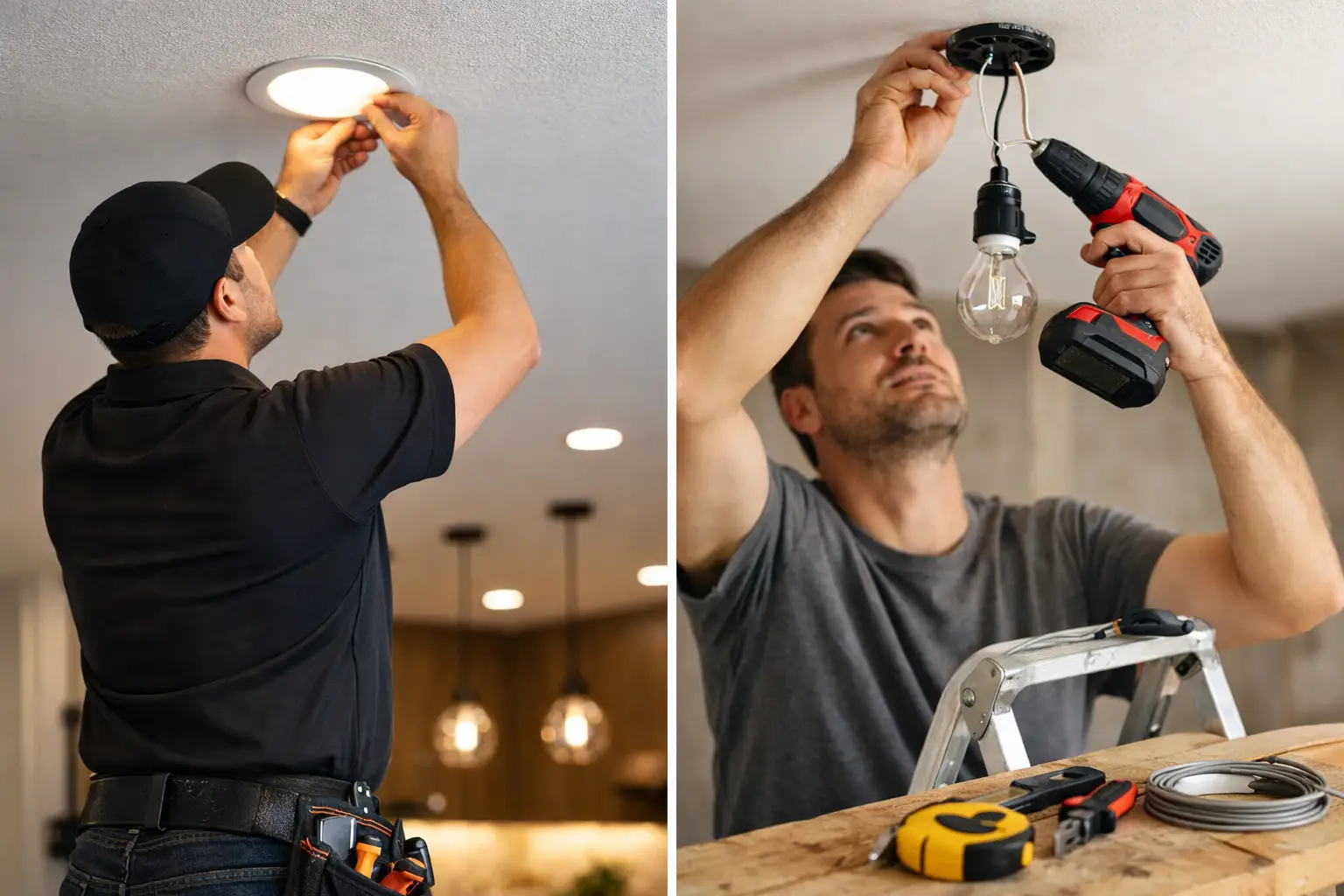
A beautiful Tampa Bay home can disappear after sunset if its lighting is limited to a bright porch fixture and a few solar stakes along the walkway. The decision between professional versus DIY lighting is not simply about who installs the fixtures. It is about whether the final result gives your property the same distinction at night that it carries during the day.
DIY lighting can be a sensible starting point for a modest, temporary need. Professional outdoor lighting is designed for homeowners who want a complete transformation: architecture with depth, landscapes with dimension, safer paths, inviting entertaining areas, and a polished nighttime presence that lasts through Florida heat, rain, humidity, and changing seasons.
Professional Versus DIY Lighting: The Real Difference
The most visible difference is design. A DIY project often begins with individual products: a box of path lights, a spotlight for a palm, perhaps string lights for a patio. That approach can add light, but more light is not always better light. Without a unified plan, fixtures may create glare, leave dark gaps, compete with one another, or draw attention to areas that are better left understated.
A professional lighting plan begins with the property itself. The roofline, columns, entry, mature trees, garden beds, water features, pool cage, dock, and outdoor living spaces are considered as one composition. The objective is to create layers of illumination that guide the eye naturally, reveal texture, and make the home feel welcoming rather than overlit.
This distinction matters especially on established properties. A dramatic oak may need soft uplighting from two carefully positioned fixtures rather than one harsh beam. Stonework may need grazing light to bring out its texture. A stately facade may benefit from subtle architectural washes, while a side gate needs focused illumination for safe access. Each choice affects the next.
What DIY Lighting Does Well
DIY lighting has its place. Battery-powered fixtures, plug-in bistro lights, and basic solar path lights can be useful for a small gathering, a seasonal accent, or a quick improvement around a simple garden path. The upfront cost is lower, and homeowners who enjoy hands-on projects may appreciate the flexibility to experiment.
For a temporary patio setup, DIY can be entirely appropriate. It also works when the goal is narrow and practical, such as adding a single motion-activated fixture near a storage area. The challenge comes when a project expands from one small need into a whole-property lighting system.
Many do-it-yourself systems are designed for easy retail installation, not for years of refined performance. Solar fixtures depend on consistent daytime charging and often produce limited output. Consumer-grade materials can fade, corrode, crack, or collect moisture. Exposed cords, shallow wiring, and poorly placed fixtures can become both an eyesore and a maintenance concern.
There is also the issue of color temperature and beam control. Mixing fixtures purchased at different times can leave a property with clashing shades of white light, uneven brightness, and inconsistent fixture finishes. These details may sound minor in daylight. At night, they are often the difference between a deliberate design and a collection of products.
Where Professional Design Earns Its Value
Professional lighting is an investment in both the effect and the process behind it. A specialist evaluates sightlines from the street, driveway, front entry, pool deck, and main outdoor gathering areas. The design accounts for how the property will look when viewed up close and from across the lawn.
A thoughtful plan also keeps comfort in focus. Light should help guests see steps and transitions without shining into their eyes. It should add confidence around walkways and entries without flooding bedroom windows or disturbing the relaxed feel of a lanai. On waterfront or dock properties, fixture placement requires particular care to support safe movement while preserving the view and atmosphere.
Professional designers understand that restraint is part of luxury. Not every tree requires a fixture. Not every roof peak needs outlining. The strongest lighting designs create contrast – a softly lit façade against a darker background, an illuminated path leading toward a warm entry, or a pool deck that feels usable without being visually busy.
At Elegant Accents Outdoor Lighting, that work begins with a property consultation and a custom plan rather than a preset package. The result is a design shaped around the home’s architecture, the landscape’s strongest features, and how the owners want to live outside after dark.
Installation Is More Than Placing Fixtures
Even the best plan depends on workmanship. Outdoor lighting systems require careful wire routing, secure fixture placement, properly sized transformers, reliable connections, and components selected for the environment. Tampa Bay’s intense sun, saturated summer soil, heavy rain, and coastal air can expose weak materials and shortcuts quickly.
A professional installation crew can conceal wiring, set fixtures at the proper depth and angle, and make adjustments after nightfall. That final nighttime aiming is essential. During the day, a fixture may appear perfectly positioned. Once it is dark, it may reveal glare on a window, cast an awkward shadow, or miss the architectural feature it was meant to highlight.
Professional-grade LED fixtures are also built for longevity and consistent performance. They use less energy than older lighting technology while delivering controlled, dependable illumination. Quality components cost more at the outset, but they can reduce the cycle of replacing faded solar lights, repairing failed connections, and redoing a project that never looked quite right.
Comparing Cost Without Missing the Bigger Picture
DIY appears less expensive because the first purchase is usually smaller. That comparison is fair when the project is genuinely small and temporary. It becomes less clear when homeowners buy fixtures in stages, replace underperforming products, hire help for electrical issues, or decide to redesign the system after seeing it at night.
Professional lighting carries a higher initial investment because it includes design expertise, durable materials, installation labor, system planning, and precise adjustments. It should also come with a transparent proposal that explains the scope, fixtures, and expected investment before work begins.
The better question is not, “Which option costs less today?” It is, “What result am I trying to own for the next several years?” If the answer is a refined exterior that enhances curb appeal, supports security, improves outdoor entertaining, and complements a significant property investment, professional lighting often delivers greater long-term value.
For commercial properties and restaurants, the calculation can be even more direct. Exterior lighting shapes first impressions before a guest reaches the door. It can clarify entrances, improve nighttime visibility, extend the appeal of patios, and reinforce a business’s sense of care and quality. A patchwork DIY approach rarely delivers that level of consistency.
Maintenance Is Part of a Lasting Impression
Outdoor lighting is not a set-it-and-forget-it feature. Landscapes grow, mulch shifts, fixtures can be bumped by lawn equipment, and storms can affect connections. A system that looked exceptional on installation night may need occasional aiming, cleaning, or adjustments to maintain its intended effect.
DIY owners handle those responsibilities themselves, including diagnosing a dim section of lights or identifying why a fixture has stopped working. For some people, that is acceptable. For homeowners who prefer their investment to remain polished without adding another weekend task, professional maintenance offers meaningful peace of mind.
Regular service protects the original design. It keeps paths clearly illuminated, trees properly accented as they mature, and outdoor living areas ready for an impromptu dinner or a special occasion. More importantly, it preserves the quiet confidence of arriving home to a property that looks cared for every night.
Which Choice Fits Your Property?
Choose DIY lighting when your need is limited, temporary, or primarily functional, and you are comfortable with the installation and upkeep. It can provide a useful accent without requiring a major commitment.
Choose professional lighting when the goal is a cohesive, durable nighttime environment. That is particularly true for architectural facades, expansive landscapes, pool decks, docks, entertaining areas, and properties where curb appeal and craftsmanship matter. The best system does not call attention to its hardware. It makes the home itself look extraordinary.
A well-lit property should feel natural the moment you see it: safer to walk, warmer to approach, and more memorable to enjoy. Start with the view you want to come home to after dark, then choose the level of design and workmanship that can make that view last.