
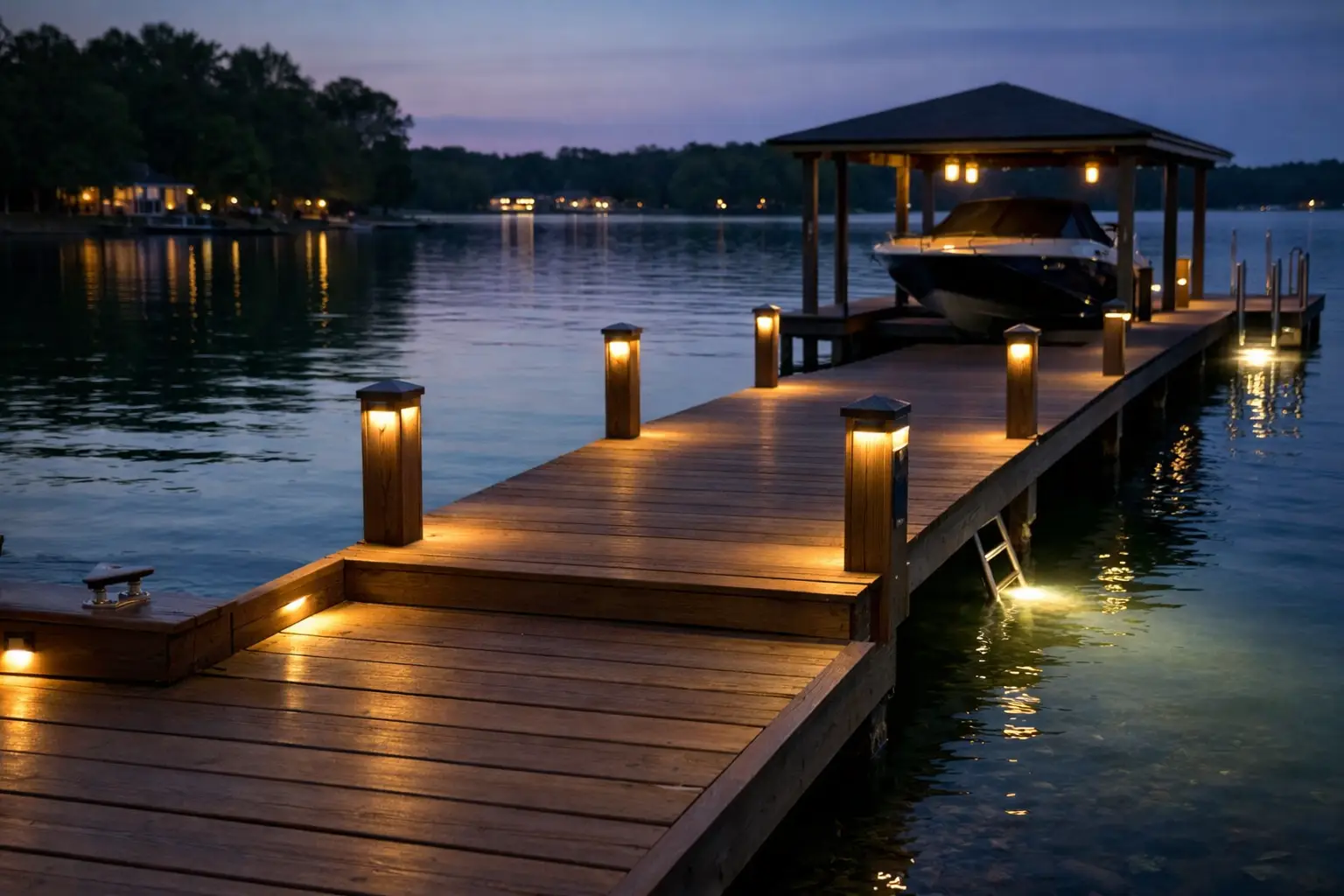
A dock should feel as inviting after sunset as it does on a clear afternoon. The right lighting turns a dark, uncertain path to the water into a polished extension of your property – one that supports safer footing, quiet evenings outside, and a more distinctive waterfront view. Knowing how to light a dock begins with more than selecting fixtures. It requires a thoughtful plan for where people walk, where boats approach, what you want to see, and what should remain softly in the background.
For Tampa Bay homeowners, dock lighting also has to stand up to salt air, humidity, heavy rain, wind, and long hours of use. A beautiful design only creates a lasting impression when every fixture, connection, and beam of light is chosen for the waterfront environment.
Start With Safety, Then Shape the Ambiance
A well-lit dock makes movement easier without flooding the water with harsh light. Begin by considering the route a guest takes from the house or pool deck to the dock, then identify every transition: stairs, changes in elevation, narrow walkways, gates, cleats, ramps, and the boat boarding area.
These are the places where purposeful light matters most. Step lights can define each tread without creating glare. Low-profile downlights or shielded path fixtures can make a walkway visible while preserving the view across the water. At the end of the dock, a subtle marker helps guests understand the edge of the structure before they reach it.
The goal is not to eliminate darkness altogether. Waterfront properties are most appealing when the lighting creates contrast and depth. A layered plan gives people confidence underfoot while allowing the sky, water, landscaping, and architecture to retain their natural presence.
Choose the Right Layers for Dock Lighting
The most refined dock designs rarely rely on one fixture type. They combine a few discreet layers, each with a clear purpose.
Walkway and step lighting
For the main route, use low-glare fixtures that cast light down and across the walking surface. Recessed deck lights, under-rail lighting, and compact downlights mounted to posts can all work beautifully, depending on the dock construction and desired look.
Under-rail lighting is especially effective when a dock has handrails. The source remains mostly concealed, while the boards below receive an even, welcoming wash of light. On open docks without rails, post-mounted fixtures may be more appropriate, provided they are shielded and carefully aimed.
Dock edge and piling accents
Edge lighting can help define the perimeter, but it should be used with restraint. A continuous row of bright lights around every edge can make a dock look commercial and can reflect heavily on the water. Instead, consider softly illuminating key corners, piling locations, or changes in direction.
Piling lights add a tailored finish and can make a waterfront structure feel intentional from the house or from the water. They are best selected for proportion as well as output. A large cap light on a slender piling can feel oversized in daylight, while a tiny fixture may disappear visually and provide too little useful illumination at night.
Boat access and boarding areas
The space where you step from dock to boat deserves additional attention. This is often where people carry coolers, fishing equipment, or bags after dark, and where wet surfaces can increase the risk of a slip. A focused, shielded downlight near the boarding point can provide practical visibility without shining into a neighbor’s windows or directly across the water.
If your dock includes a lift, lighting should account for the lift controls, platform edges, and approach path. The best placement depends on how the lift is used and whether the boat remains on the water or elevated above it.
Architectural and landscape connection
A dock should not feel like a detached bright spot at the end of a dark yard. The transition from house to water is part of the experience. Soft landscape lighting along the route, subtle illumination on palms or specimen trees, and carefully placed architectural lighting on the rear elevation can connect the dock to the rest of the property.
This broader composition is what creates timeless elegance. Rather than seeing a collection of individual fixtures, you see a property with depth, warmth, and a clear nighttime identity.
Use Warm, Shielded LED Light
Color temperature changes the entire mood of a waterfront setting. Warm white LED lighting, typically in the 2700K range, is often the strongest choice for residential docks. It complements wood, stone, natural foliage, and warm exterior finishes while creating a relaxed atmosphere for entertaining.
Cooler white light can appear stark against the water and may make a luxury outdoor space feel more utilitarian. There are exceptions, particularly where a commercial marina or task-focused work area needs sharper visibility, but most upscale residential properties benefit from a warmer tone.
Shielding matters just as much as color. The fixture should direct light where it is needed rather than exposing a bright bulb or sending uncontrolled light toward the water. Glare reduces visibility, disrupts the atmosphere, and can affect neighbors and boaters. Well-designed lighting allows you to see the dock surface clearly without feeling as though you are looking into the fixture itself.
Select Fixtures Built for Coastal Conditions
A dock is one of the least forgiving places to install outdoor lighting. Salt, moisture, sun exposure, insects, shifting wood, and occasional storm conditions place constant demands on the system.
Choose high-quality, weatherproof LED fixtures designed for exterior use and appropriate for the degree of exposure they will receive. Marine-adjacent locations call for corrosion-resistant materials, sealed components, and durable finishes. Even a fixture that looks impressive on installation day can quickly lose its appeal if its hardware rusts, lenses cloud, or connections fail.
Professional-grade LED systems also offer practical advantages. They use far less energy than older lighting technologies, generate less heat, and provide reliable, consistent illumination for years. Quality drivers, transformers, wiring methods, and connections are equally important. The parts you do not see are often what determine whether dock lighting performs beautifully through Tampa Bay summers and storm seasons.
Plan Controls Around How You Use the Space
Lighting should feel effortless. A dock system may be controlled with a dedicated switch, timer, photocell, smartphone app, or integrated smart control system. The right option depends on your routines.
If you use the dock mainly for evening entertaining, a simple scene that activates the backyard, pathway, and dock together may be ideal. If boating schedules vary, separate control for the dock and boarding area can give you more flexibility. Timers and astronomical scheduling can also prevent lights from being left on unnecessarily, preserving energy and extending system life.
Dimming is worth considering when the fixtures and controls support it. A brighter setting may be helpful when guests arrive or when you are preparing a boat, while a lower setting can create a calmer waterside atmosphere later in the evening.
Avoid the Most Common Dock Lighting Mistakes
Many dock lighting problems come from good intentions applied too broadly. Bright floodlights may seem like the fastest path to safety, but they flatten the scene, create glare, and often leave shadows where they are least expected. A focused lighting plan is safer and far more attractive.
Another common mistake is spacing fixtures by guesswork. Lighting placement should respond to the dock’s length, board direction, railing layout, access points, and surrounding view lines. Even spacing is not always the right answer. A stairway, turn, or boat boarding zone may need more light than an uninterrupted stretch of walkway.
Homeowners should also avoid treating dock lighting as a stand-alone weekend project when the work involves electrical wiring near water. Waterfront electrical systems demand careful planning, code-aware installation, proper low-voltage design where appropriate, and secure connections. This is not the place to compromise on craftsmanship.
Bring the Design Together With a Professional Plan
The strongest answer to how to light a dock is a custom plan that balances safety, visual restraint, and long-term durability. Before installation, a lighting specialist should assess the dock structure, available power, boating needs, sightlines from the home, neighboring properties, landscape features, and the coastal exposure of the site.
At Elegant Accents Outdoor Lighting, this design-first approach helps ensure that every fixture has a reason to be there. The result is not simply a brighter dock. It is a waterfront setting that feels safer, more usable, and more refined after sunset, with dependable installation and ongoing maintenance to protect the investment.
As you consider your dock, picture the moment you look out from your home at night. The most successful lighting will guide the way to the water, honor the view once you arrive, and leave the entire property looking quietly exceptional.