
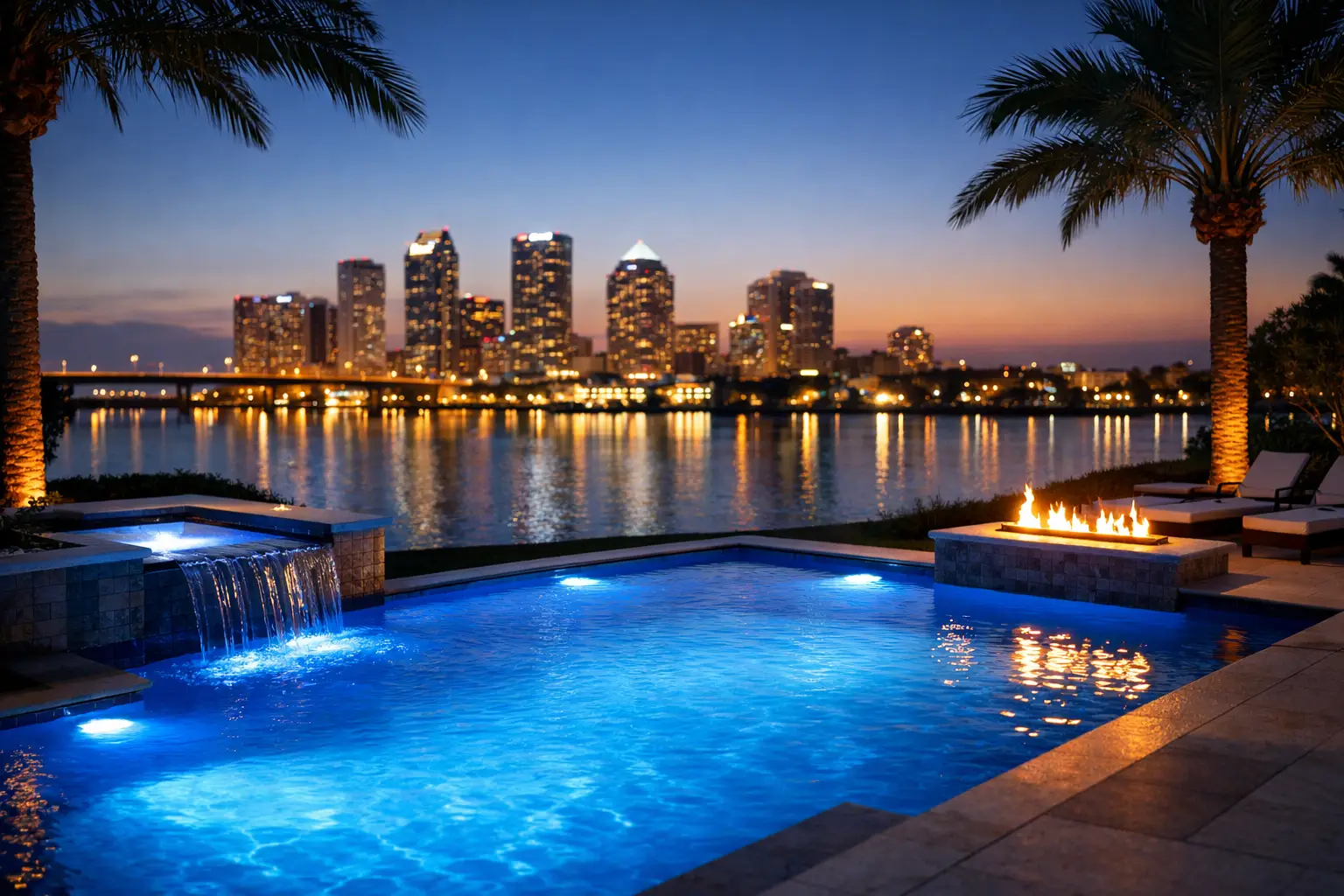
A beautiful pool should not disappear when the sun goes down. Thoughtful pool illumination turns the water, deck, cage, landscaping, and architecture around it into an evening setting with purpose. It makes late swims safer, extends the life of an outdoor entertaining area, and gives an established Tampa Bay property a more polished presence from every angle.
The difference is rarely one bright light in the pool. The most memorable results come from a layered design that balances visibility with atmosphere. Water should feel inviting rather than glaring. Steps and changes in elevation should be clear without looking commercial. Palms, textured walls, rooflines, and screen enclosures should support the scene instead of competing for attention.
Pool Illumination Is More Than Underwater Lights
Underwater fixtures are often the starting point, but they are only one part of a complete lighting plan. Their role is to reveal the shape and movement of the water, define the pool edge, and give the backyard a natural focal point after dark. In a simple rectangular pool, carefully placed white LEDs may create a crisp, tailored appearance. A freeform pool, spa, sun shelf, or water feature may call for more nuanced placement to avoid dark pockets and harsh reflections.
The surrounding environment matters just as much. Pool deck lighting clarifies walkways, lounge areas, outdoor kitchens, and transitions between the house and pool. Softly lit planting beds add depth beyond the waterline. Architectural lighting can bring texture to a stucco façade, stone wall, or columns visible from the pool, making the entire outdoor space feel composed rather than isolated.
For homes with a pool cage, illumination requires particular restraint. A fixture aimed directly into screening can create distracting glare and make the enclosure more visible than the landscape beyond it. Well-positioned, shielded fixtures preserve the openness homeowners value while providing the light needed for circulation and entertaining.
The Right Design Starts With How You Use the Space
A pool that hosts family gatherings every weekend needs a different plan than one used primarily for quiet evening relaxation. The first calls for comfortable visibility around seating, grilling, dining, and access points. The second may favor lower light levels, subtle landscape accents, and gentle reflections across the water.
This is why a property consultation should consider more than fixture locations. A lighting specialist should look at where guests arrive, how people move through the yard, which views matter from inside the home, and where shadows create uncertainty. Existing trees, mature hedges, water features, pavers, and architectural details all influence the final design.
A few questions help establish the right direction:
- Do you want the pool area to feel energetic for entertaining or calm for unwinding?
- Are there steps, raised spas, dock connections, or uneven landscape edges that need added visibility?
- Which areas should be visible from interior rooms after dark?
- Do neighboring homes, waterfront views, or preserved night skies require more careful light control?
There is no single brightness level that works for every backyard. In fact, more light can reduce the effect. Overlighting flattens the landscape, creates uncomfortable glare, and can make a refined pool environment feel like a public facility. A professional plan uses contrast intentionally, allowing darkness to frame the features worth seeing.
Layering Light Around the Water
A balanced pool environment typically combines several lighting techniques. Underwater LEDs establish the water as the centerpiece. Downlighting from nearby trees or structures can create a soft, natural wash on the deck, especially when mounted and aimed with care. Path and step lights provide low-level guidance where people walk, while landscape fixtures highlight palms, ornamental trees, hedges, or sculptural plantings at the perimeter.
Architectural accents complete the composition. A softly illuminated wall behind the pool can add visual depth and prevent the backyard from feeling like a dark void beyond the water. Gentle uplighting on columns, arched openings, or roofline details connects the pool area to the home and creates a more intentional nighttime view from indoors.
Color can be part of pool illumination, but it works best as an occasional feature rather than the entire design. Color-changing LEDs are appealing for celebrations, holidays, and themed gatherings. For everyday use, warm white light usually delivers the more timeless result. It complements natural stone, travertine, pavers, lush foliage, and the warmer finishes common in Tampa Bay outdoor spaces.
LED Quality and Installation Details Matter
Florida weather is demanding on outdoor systems. Intense sun, humidity, heavy rain, salt air near the coast, and landscape irrigation can expose weak fixtures and poorly protected connections quickly. A low-cost system may look acceptable at installation, then begin showing uneven output, corrosion, moisture intrusion, or failed components far sooner than expected.
Quality LED fixtures provide efficient operation, long service life, and consistent color performance. Yet the fixture itself is only part of the equation. Wire routing, transformer capacity, voltage management, aiming, shielding, mounting, and water-safe electrical practices determine whether the system will perform as designed.
Professional installation also protects the visual standard of the property. Wiring should be discreet. Fixtures should sit cleanly within the landscape or hardscape. Light should land exactly where it is intended, without spilling into a neighbor’s yard, shining toward the street, or reflecting uncomfortably off windows and glass doors.
For pool areas, electrical work deserves special attention. Water and electricity demand qualified planning and installation that accounts for applicable codes, equipment requirements, and the specific conditions of the property. This is not an area for improvised additions or mismatched fixtures purchased over time.
Control Makes Beautiful Lighting Easier to Enjoy
A well-designed system should feel simple once the installation is complete. Timers, zoning, and smart controls can allow the pool, deck, landscape, and architectural lighting to operate together or independently. A homeowner might use a welcoming setting for dinner guests, a lower-level setting for a quiet evening, and a brighter setting when children are swimming or guests are moving between the house and pool.
The value of control is not just convenience. It helps protect the atmosphere. When every fixture comes on at full output at once, even excellent equipment can feel excessive. Zoning lets each part of the property serve its purpose without overwhelming the rest of the scene.
A thoughtful proposal should explain these options clearly, including what is included in the system, where each lighting zone will be used, and how future additions can be accommodated. Transparent planning makes it easier to invest with confidence rather than guessing at what a finished nighttime setting will deliver.
Maintenance Preserves the Nighttime Reveal
Outdoor lighting is not a set-it-and-forget-it feature, particularly in a heavily landscaped Florida yard. Plants grow into beam paths, mulch shifts, irrigation affects fixture positions, and seasonal storms can disturb wiring or aiming. Even premium LEDs benefit from periodic inspection and adjustment.
Maintenance keeps the original design intact. Fixtures can be cleaned, repositioned, and checked for proper operation. Overgrown foliage can be addressed before it blocks an accent light. Changes to the pool deck, landscaping, or outdoor furniture can be evaluated so the lighting still supports how the space is used.
This ongoing attention is one reason a specialist matters. Elegant Accents Outdoor Lighting approaches lighting as a long-term element of the property, not simply a one-day installation. The goal is to preserve the same polished effect that made the first nighttime reveal so compelling.
The best pool lighting does not ask for attention fixture by fixture. It lets the water shimmer, the pathways feel clear, and the home hold its presence long after sunset. When each layer is planned with care, the backyard becomes a place you look forward to using, not simply a view that disappears at dusk.