
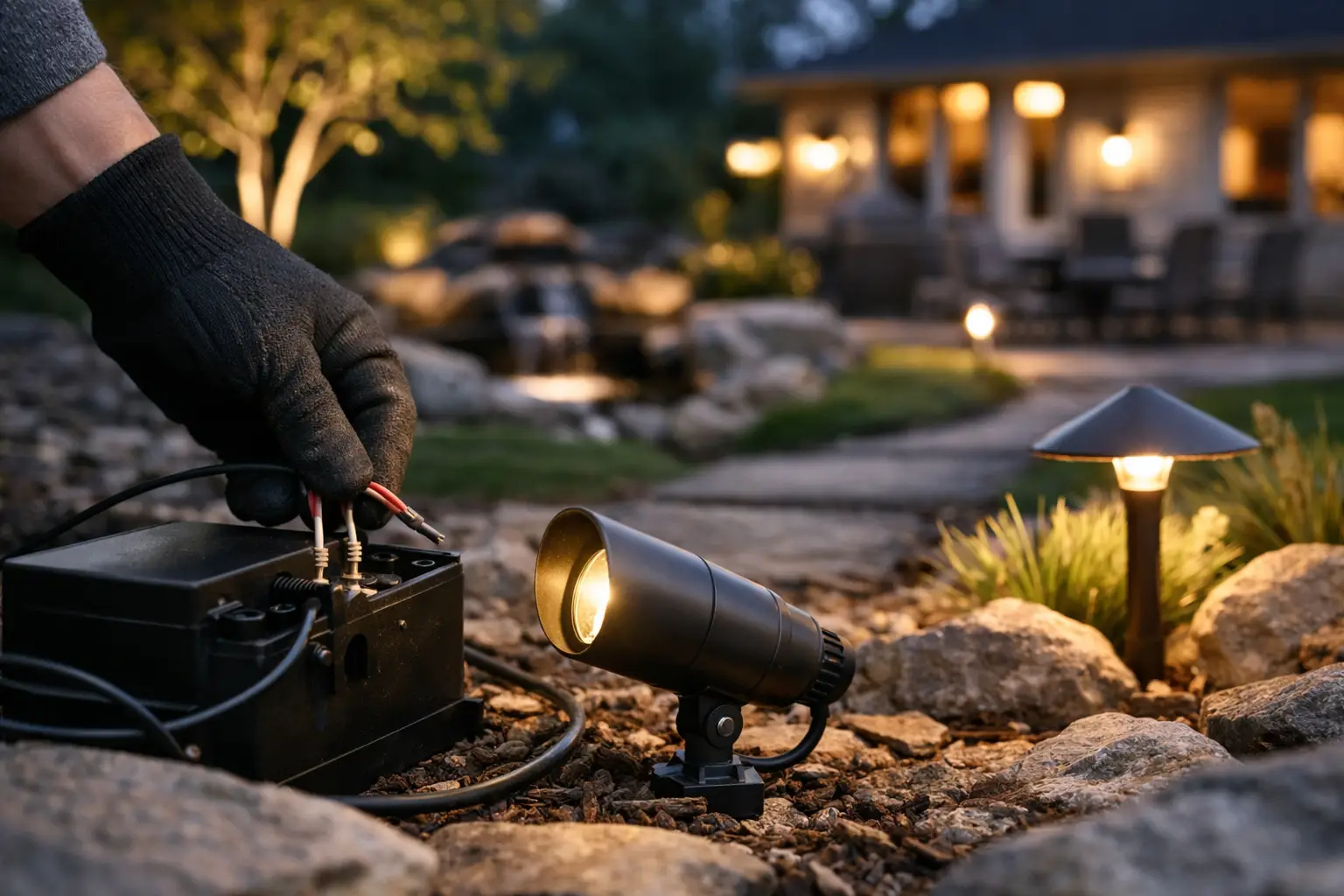
A beautiful property does not disappear when the sun goes down. With thoughtful low voltage lighting installation, its best details take on a new presence: a textured stone façade, a specimen palm, a graceful oak canopy, the path to a pool deck, or the welcoming line of a front entry. The difference is not simply more light. It is a carefully composed nighttime experience that makes a home feel more distinguished, usable, and secure.
For Tampa Bay properties, outdoor lighting must also perform through heat, rain, salt air, irrigation, and changing landscapes. That is why the quality of the design and installation matters as much as the fixture itself.
Why Low Voltage Is the Right Foundation for Outdoor Lighting
Low voltage landscape lighting operates through a transformer that reduces standard household power to a safer, lower voltage. This allows professional installers to place fixtures throughout the landscape, along walkways, around pool areas, and across architectural features with far greater flexibility than a line-voltage system.
For homeowners, the practical advantages are compelling. LED low voltage fixtures use a fraction of the energy required by older halogen systems, while offering exceptional lamp life and precise control of color temperature and beam spread. A well-planned system can provide a warm, inviting glow without creating harsh brightness, wasted light, or distracting glare through windows.
Low voltage does not mean low impact. When fixtures are selected and positioned correctly, the effect can be dramatic. A modest uplight can bring depth to a layered landscape. A narrow beam can accent a column or chimney without washing out the entire elevation. Subtle path lighting can make guests feel guided rather than overlit.
There are trade-offs to consider. Lower-quality fixtures and undersized transformers may initially cost less, but they can lead to uneven brightness, early corrosion, voltage drop, and frequent repairs. A professional system is designed around the property, not assembled from a one-size-fits-all kit.
The Design Comes Before the Fixtures
The most memorable exterior lighting does not announce every fixture. It directs attention toward the features that give a property its character. That requires a design conversation before installation begins.
A lighting specialist will look at the home from the street, study arrival points, walk the backyard after dark, and identify how each outdoor area is used. A front elevation may call for soft architectural lighting that adds definition without flattening the façade. A lanai, pool deck, or outdoor kitchen may need enough functional illumination for entertaining, paired with softer layers that preserve the evening atmosphere.
Landscape maturity also shapes the plan. Young plantings will grow. Trees that look balanced today can eventually block a fixture or change the direction of the light. An experienced designer accounts for those changes, choosing fixture locations that can be adjusted as the property evolves.
Lighting Layers Create a More Refined Result
A complete lighting plan usually combines several lighting techniques rather than relying on one bright source. Architectural uplighting gives height and dimension to a home. Downlighting from trees can create a natural moonlit effect across lawn or planting beds. Path and step lighting improve footing while keeping circulation areas visually calm.
Accent lighting can draw attention to water features, garden walls, sculptures, and distinctive planting material. Deck, dock, and pool cage lighting can extend the use of spaces that are otherwise left in darkness. The right balance depends on the property. A formal Mediterranean-style home, a waterfront residence, and a contemporary outdoor living space should not be lit in exactly the same way.
The goal is selective emphasis. Light should reveal shape, texture, and depth, while shadows remain part of the composition.
What Professional Low Voltage Lighting Installation Includes
A polished result depends on details that are easy to overlook during the daytime. Professional low voltage lighting installation begins with a custom plan and a transparent proposal that explains the fixture types, placement, system capacity, and scope of work. This gives the homeowner a clear picture of both the visual intent and the investment.
The transformer is selected according to the total load of the system, with room for appropriate future additions. Wiring runs are planned to maintain balanced voltage across the property. Without this calculation, fixtures farther from the transformer can appear dimmer or take on a different color than those nearby.
Connections are equally important. Outdoor wiring must be buried at an appropriate depth, routed thoughtfully around planting beds and hardscapes, and joined with weather-resistant connectors designed for the environment. Fixtures should be secured and aimed with precision, not simply placed where the cable happens to reach.
At Elegant Accents Outdoor Lighting, installation is completed by in-house professional crews who understand how design intent carries through to the finished system. The work is followed by a nighttime adjustment, when beam angles, brightness, and focal points can be evaluated in the conditions where they matter most.
The Nighttime Reveal Is a Necessary Step
Daytime planning is essential, but darkness reveals the final composition. During the nighttime reveal, a fixture may need to be shifted a few inches, its beam narrowed, or its output softened to eliminate glare. These adjustments are not minor finishing touches. They are where an installation moves from functional to exceptional.
For example, an uplight aimed too high can create a bright hot spot on stucco. A path light placed too close to a walkway can shine directly into a guest’s eyes. A tree-mounted downlight may require careful shielding so the fixture itself disappears from view. Fine-tuning protects the sense of timeless elegance homeowners expect from a premium lighting investment.
Durability Matters in Tampa Bay Conditions
Outdoor lighting in Tampa Bay faces conditions that demand more than attractive finishes. Heavy rain, high humidity, intense UV exposure, irrigation overspray, and coastal air can all shorten the life of poorly made equipment.
Quality fixtures should be built for exterior use with durable, weatherproof materials and sealed components. Brass and copper fixtures are popular for their longevity and natural patina, while high-grade powder-coated finishes can suit a range of architectural styles. The best choice depends on the location, exposure, and desired appearance over time.
LED technology also deserves a closer look. Color temperature has a major influence on the final mood. Warm white light often complements traditional architecture, natural stone, and lush landscape materials, while a slightly cleaner white may suit select contemporary applications. The strongest designs maintain consistency across the property rather than mixing noticeably different light colors.
Plan for Maintenance From the Beginning
Even a carefully installed system benefits from ongoing attention. Landscapes change, storms move fixtures, mulch can cover lenses, and plant growth can obstruct a beam. Routine service keeps the property looking as intentional in year five as it did on the first evening.
Maintenance may include cleaning lenses, checking connections, resetting fixture angles, trimming around light sources, inspecting transformer performance, and replacing any components that have reached the end of their service life. For homes with seasonal landscaping changes or expansive outdoor entertaining areas, periodic adjustments can make a meaningful difference.
This is also when a system can grow with the property. A new courtyard, renovated pool deck, mature tree, or updated front entry may create an opportunity to extend the original design without starting over. Choosing an appropriately sized transformer and a professionally installed infrastructure makes future additions more straightforward.
Questions to Ask Before You Invest
Before selecting an outdoor lighting provider, ask whether the design is customized to your property, how the system will be protected from weather, who performs the installation, and what maintenance support is available afterward. It is also worth asking how fixtures will be demonstrated and adjusted at night.
Be cautious of proposals that focus only on fixture quantity. More fixtures do not automatically create a more beautiful result. The quality of placement, beam control, materials, wiring, and service will shape the experience long after installation day.
A well-designed lighting system should make a property feel unmistakably its own after dark. It should welcome guests, support safer movement, extend the enjoyment of outdoor spaces, and bring lasting distinction to the features you chose with care. When the plan is tailored, the products are built to endure, and the final aiming is handled with precision, the evening becomes one of the home’s finest expressions.