
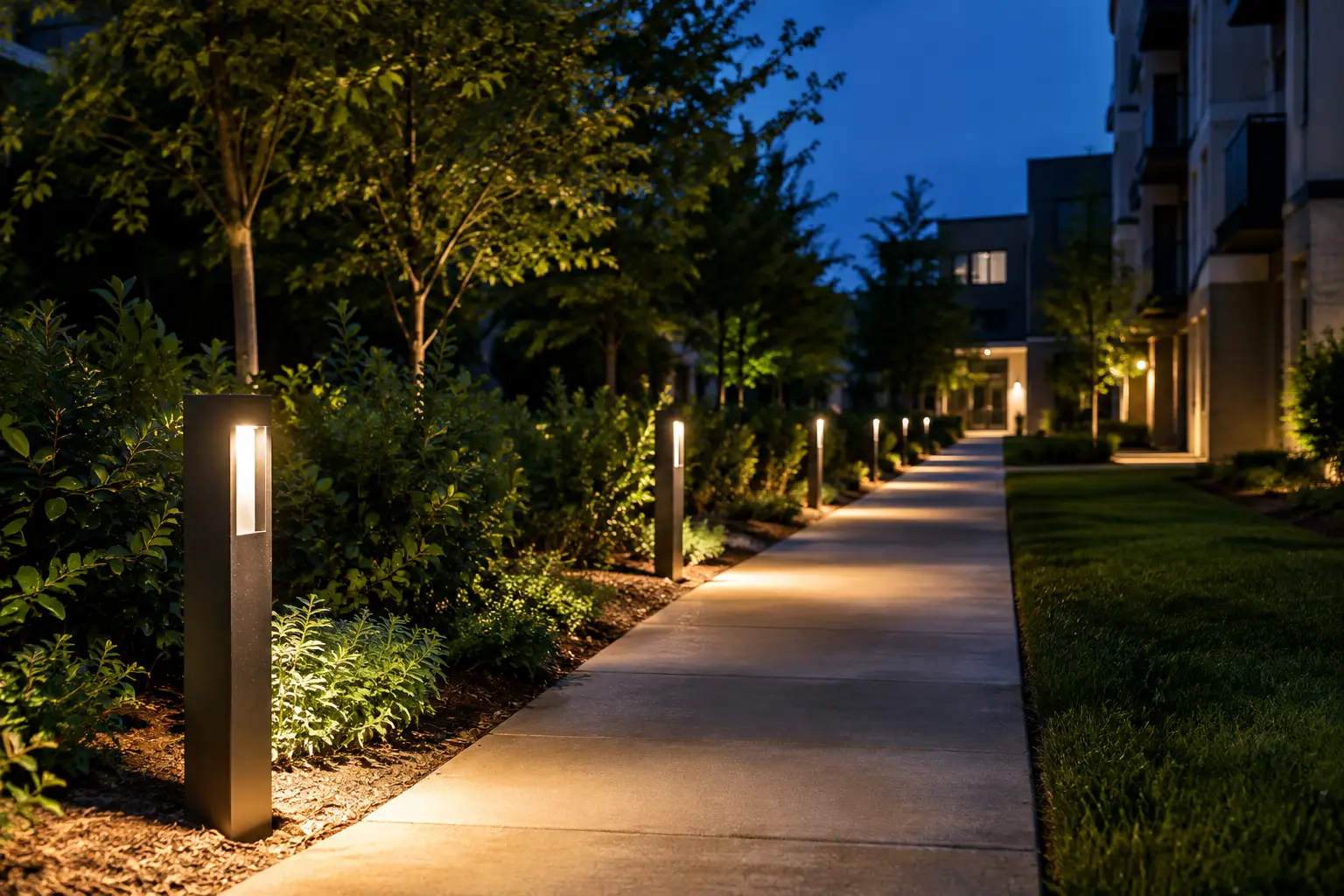
A beautiful Tampa Bay home should not become difficult to navigate the moment the sun goes down. A shadowed front path, side-yard passage, or route from the pool deck to the house can turn a familiar space into an uncertain one. Knowing how to secure dark walkways starts with more than adding a few lights. It requires a thoughtful plan that guides each step, reveals changes in elevation, and preserves the refined nighttime character of the property.
Well-designed walkway lighting gives guests confidence from the curb to the front door, helps family members move comfortably after an evening outside, and makes a property feel cared for long after daylight fades. The best systems accomplish all of this quietly. They deliver visibility where it matters without creating glare, visual clutter, or an overly bright runway effect.
Start With the Route, Not the Fixture
The most effective lighting plan begins by walking the property after dark. What looks adequately lit from the street can feel entirely different at ground level. Pay attention to the complete route a person would take: the driveway to the entry, the gate to the side yard, the patio to the pool, or the dock to the house.
Look for places where the path disappears into darkness, where tree canopies block existing light, and where a change in material creates an uneven surface. Pavers, stepping stones, gravel, brick, and concrete each reflect light differently. A polished design accounts for those differences rather than applying one fixture style at the same spacing everywhere.
Certain features deserve particular attention: stairs, ramps, curves, narrow passages, low walls, transitions between lawn and hardscape, and any threshold near a door. These are not simply areas to make brighter. They are visual cues that help people understand where to place their feet and where the route continues.
Identify the hazards that daylight hides
A walkway may be structurally sound but still become hazardous after sunset. A raised paver edge, exposed root, drainage swale, or subtle step down is easier to miss when the surrounding landscape is dark. During an evening assessment, stand at both ends of the route and view it from the perspective of a guest who has never visited before.
Also consider Florida weather. Heavy rain can leave surfaces slick, while lush plant growth can cast new shadows over time. Lighting should make walking surfaces legible in changing conditions, not only on a clear evening immediately after installation.
Use Layers to Secure Dark Walkways Gracefully
A single bright fixture rarely creates the best result. It often produces harsh contrast: the area directly beneath the light is bright, while the space beyond it feels even darker. A layered approach provides a more comfortable visual transition and a more polished appearance.
Path lights are often the foundation of a walkway plan. Placed with intention, they define the direction of travel and cast useful illumination across the walking surface. They should not be installed like fence posts at identical intervals regardless of the landscape. Spacing should respond to bends in the path, planting beds, surface texture, and nearby architectural elements.
Downlighting from trees, eaves, pergolas, or other elevated structures can complement path lighting beautifully. It creates a soft, natural pattern of light that makes a route easier to read without filling the landscape with visible fixtures. This technique is especially effective along broader walks and garden paths where low fixtures alone might feel repetitive.
Step lights provide focused guidance on stair risers and level changes. They are compact but highly valuable because they make the edge of each tread visible. On a pool deck or raised terrace, carefully shielded fixtures integrated into a wall, retaining structure, or nearby landscape feature can bring clarity to a transition while maintaining the architecture’s clean lines.
Accent lighting has a role as well. Illuminating a specimen palm, textured wall, mature oak, or architectural column establishes visual reference points. Those points help the eye orient itself as someone moves along the property. Accent lighting should support the route, however, not compete with it.
Control Glare for Better Visibility
More light does not automatically mean more safety. Excessive brightness can cause glare, particularly when fixtures shine directly into someone’s eyes. Once the eye is drawn to a bright source, it has a harder time seeing the darker areas around it. That is precisely the condition a walkway design should avoid.
Choose fixtures with shielding that directs light downward or toward the intended surface. Avoid exposed lamps aimed across a path at eye level. A fixture may look impressive in a daytime catalog image, yet create uncomfortable glare when installed beside a narrow walkway.
Color temperature matters, too. Warm white LED lighting generally complements stone, brick, stucco, wood, and established landscaping while creating an inviting residential atmosphere. Very cool lighting can appear stark against warm-toned architecture and may flatten the depth of the landscape. The ideal color temperature depends on the property’s materials, surrounding lighting, and desired mood, but consistency throughout the system is key.
Give Every Entry and Transition Its Own Treatment
Not all walkways serve the same purpose. A front approach should create a welcoming progression from curb to entry. A side-yard path may need more practical coverage for trash bins, gates, or service access. A poolside route needs to respect a relaxed entertaining environment while making wet surfaces and level changes easy to see.
For a front entry, light the path and the destination. If the front door is visible but the route leading to it is not, guests may hesitate. If the path is bright but the entry itself is in shadow, the arrival can feel incomplete. A balanced composition makes both the direction and destination apparent.
For rear yards, deck steps, and pool areas, the plan should coordinate with entertaining zones. Light should guide guests toward seating, outdoor kitchens, gates, and restrooms without spilling into neighboring properties or creating reflections that distract from the water. Near a dock or waterfront edge, the approach needs special care so the route is clear without unnecessarily illuminating the surrounding water.
Choose Equipment Built for Florida Conditions
Outdoor lighting is exposed to rain, irrigation, heat, humidity, insects, and landscape maintenance. Decorative fixtures that are not built for these conditions may corrode, shift, collect water, or fail well before they should. Quality materials and professional-grade LED components protect both the appearance and reliability of the system.
LED technology is particularly well suited to walkway lighting because it uses relatively little energy, offers a long service life, and gives designers precise control over beam spread and output. The goal is not to flood the path with light. It is to put the right amount of light exactly where it serves the property.
The installation itself also matters. Low-voltage wiring should be properly routed and concealed, connections should be protected, and fixtures should be positioned to avoid damage from mowers, edging, and routine landscaping. Poor placement can turn a sophisticated lighting system into an ongoing maintenance concern.
Make the System Easy to Live With
A walkway is only protected when its lighting is operating. Controls should fit the household’s routine so the system is not dependent on someone remembering to flip a switch every evening. Timers, photocells, and smart controls can provide dependable operation while allowing for seasonal adjustments.
A professional plan can also separate zones when appropriate. The front entry may operate nightly from dusk until a chosen hour, while a side route or entertaining area may have its own schedule. This gives homeowners useful control without sacrificing the consistent visibility that makes a property more comfortable after dark.
Maintenance should be expected, not treated as an afterthought. Landscapes grow, mulch shifts, storms affect fixtures, and lamps can eventually need service. Periodic adjustments keep fixtures upright, clear foliage from light paths, and preserve the carefully balanced effect created on installation night.
When a Professional Lighting Plan Makes Sense
A few solar lights may offer a quick visual marker along a small, simple path. They can be useful in the right setting, but their performance depends heavily on sunlight exposure, battery condition, and fixture quality. For established homes with tree cover, long walkways, multiple elevation changes, or a desire for a cohesive architectural result, a designed low-voltage system offers more dependable performance and greater visual refinement.
Elegant Accents Outdoor Lighting approaches walkway security as part of the property’s complete nighttime experience. Since 1999, its in-house crews have created custom lighting plans that account for architecture, landscape, movement patterns, and the details that make each home distinctive. A clear proposal, professional installation, and ongoing service support make a premium lighting investment feel as practical as it is beautiful.
The right walkway lighting does more than reveal the next step. It extends the usable hours of your property, welcomes the people you invite in, and gives every evening arrival the confidence and timeless elegance your home deserves.