
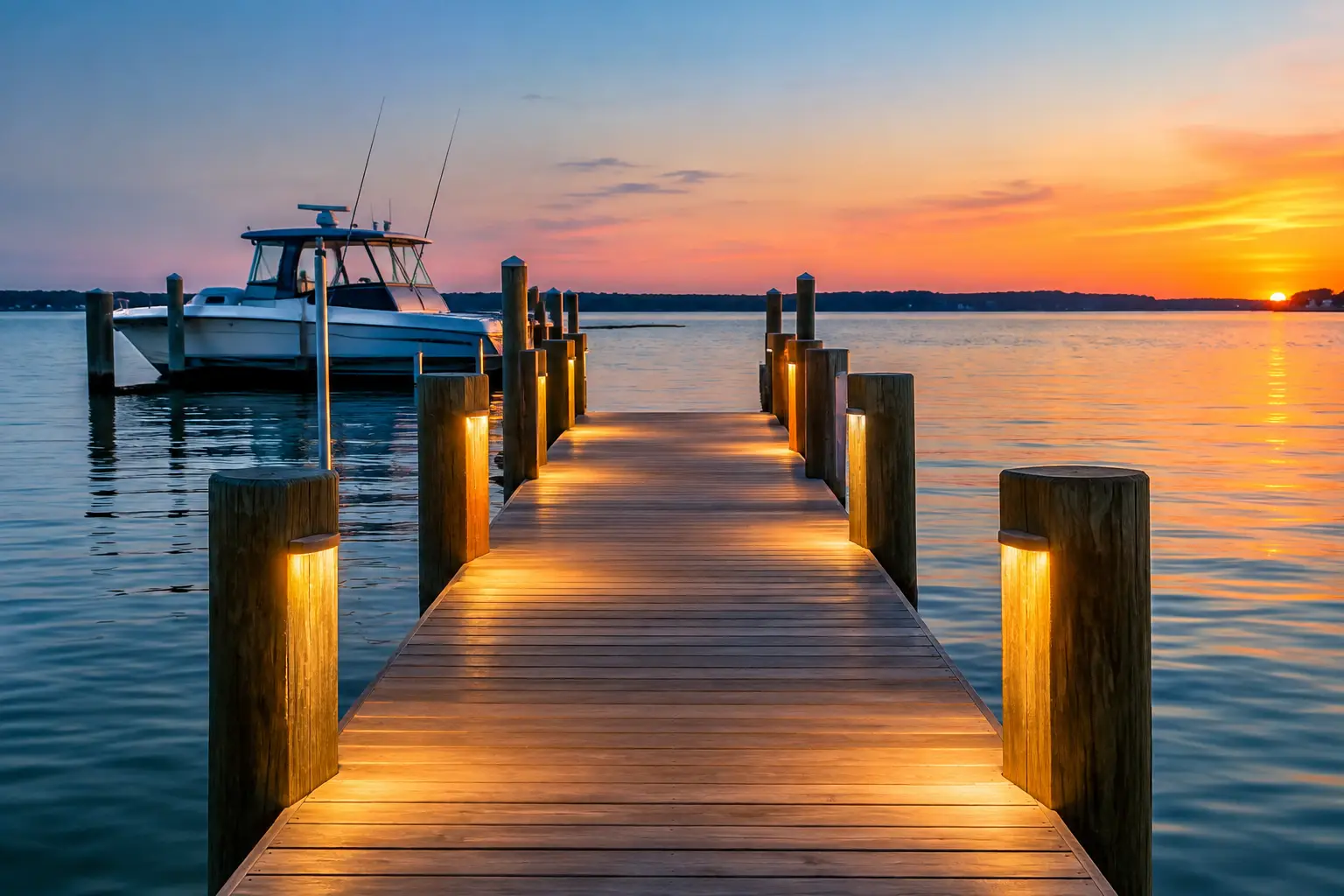
A waterfront dock should feel like an extension of the property, not an unlit obstacle after sunset. Knowing how to light docks well means balancing safe footing, clear access from the water, architectural beauty, and the realities of Florida’s salt air, rain, heat, and storms. The best results are layered and restrained: enough illumination to guide every step, with no harsh glare disrupting the view across the water.
For Tampa Bay homeowners, dock lighting is also a meaningful part of how the home presents at night. A thoughtfully illuminated shoreline creates a lasting impression from the patio, pool deck, boat, and street while making the dock more useful for evening entertaining, fishing, or a late return home.
Start With How the Dock Is Used
The right lighting plan begins with the dock’s purpose. A small residential fishing platform needs a different approach than a boat lift, a long pier, or a waterfront entertaining area with seating and a covered pavilion. Consider where people board, where they turn, where equipment is stored, and which routes are used after dark.
Access points deserve the greatest attention. The transition from the yard or pool area onto the dock, any steps, gates, changes in elevation, and the approach to a boat slip should be easy to read at a glance. These are the places where a refined lighting design does its most practical work.
It also helps to decide what should remain dark. Open water views, neighboring properties, and bedrooms should not be washed in light. A luxury dock design is not about making every surface bright. It is about creating calm visual guidance and highlighting the dock’s most distinctive features without sacrificing the atmosphere of the waterfront.
How to Light Docks With Layers, Not Floodlights
A single floodlight may seem like the simple answer, but it usually creates glare, sharp shadows, and an overly commercial appearance. It can make it harder to see beyond the bright pool of light and may shine directly toward boaters or nearby homes. Layered LED lighting produces a safer and more elegant result.
Define the Walking Path
Low-profile post cap lights, shielded downlights, or discreet fixtures mounted beneath the handrail can define the length of a dock without exposing the light source. Spacing depends on dock width, surface material, and ambient light, but the goal is consistent visibility rather than a runway effect.
Downward-directed fixtures are often especially effective because they place light where it is needed: on the walking surface. Warm white illumination typically complements natural wood, composite decking, stone, and the surrounding landscape more beautifully than a stark blue-white tone.
For long docks, designers may use a measured rhythm of fixtures to lead the eye toward the water. The effect feels intentional from the house and provides dependable guidance when someone is walking back from the boat after sunset.
Treat Steps, Edges, and Changes in Level Separately
Steps and dock edges are not details to leave to general ambient lighting. Recessed step lights, small shielded fixtures, or carefully placed downlighting can reveal treads and risers without casting harsh light into a guest’s eyes.
Edge lighting requires restraint. Continuous bright strips along every perimeter can look artificial and create unwanted reflection on the water. In many cases, lighting select corners, transitions, and boarding areas is enough to establish the dock’s outline. If the dock has cleats, ladders, or narrow areas near a boat lift, those elements should be visible without becoming visually dominant.
Illuminate the Boat Slip and Lift With Purpose
Boat slips require task lighting, especially where passengers board, lines are handled, or gear is loaded. Fixtures beneath roof structures, mounted on pilings, or integrated near the lift can provide clear, targeted illumination. The beam should be directed down and away from open water whenever possible.
A covered dock pavilion may benefit from subtle overhead lighting on a dimmer. This makes it comfortable for conversation and loading supplies while allowing the space to shift from functional to relaxed. Brightness control matters here. The setting needed to prepare a boat is rarely the setting desired for a quiet evening overlooking the bay.
Choose Fixtures Built for Waterfront Conditions
Florida waterfront lighting has a demanding job. Salt-laden air, heavy rain, high humidity, intense sun, insects, and occasional storm conditions can quickly expose weaknesses in residential-grade fixtures. Materials and installation methods matter as much as fixture style.
Look for weatherproof LED fixtures with corrosion-resistant finishes and hardware designed for exterior coastal exposure. Marine-grade materials, sealed housings, durable lenses, and properly rated connections help preserve both performance and appearance. LEDs are a strong choice for docks because they use relatively little energy, produce minimal heat, and can provide years of dependable service when installed correctly.
Do not overlook the wiring. All dock lighting should be installed with appropriate outdoor-rated components, protected connections, and electrical safeguards suited to wet locations. A professional installer can also plan wire routes to keep them protected and visually discreet while allowing the system to be serviced later.
Solar fixtures have a place in some applications, particularly for simple marker lighting, but they are rarely the best foundation for a high-end dock lighting plan. Their output can vary with weather, tree cover, and panel cleanliness, while battery performance may decline over time. A professionally installed low-voltage LED system offers more consistent illumination and more refined control.
Respect the Water, Wildlife, and Your Neighbors
Water reflects light, so poor fixture placement can multiply glare. Aim light downward, use shielding, and avoid fixtures that expose a bare bulb or direct beam toward the water. This is more comfortable for homeowners and guests, and it is more considerate of boaters navigating nearby.
Wildlife considerations can also shape the design. Depending on the location and season, waterfront properties may need to minimize light spill or follow local guidance related to nesting and aquatic habitats. Amber or wildlife-conscious lighting may be appropriate in certain settings, but it should be selected as part of a cohesive plan rather than added as an afterthought.
The same principle applies to neighboring homes. A beautiful dock lighting system establishes a welcoming presence without becoming a source of glare across the property line. Good design gives the dock definition while preserving the character of the night.
Build Control Into the Design
Dock lighting should be easy to operate from inside the home and simple to adjust for different occasions. Timers and astronomical controls can turn path lighting on at dusk and off at a chosen hour. Dimmers allow covered areas and entertaining spaces to feel softer once the practical work of the evening is done.
Smart controls can be useful, particularly for homeowners who travel or want to manage dock, landscape, and pool-area lighting together. Still, the system should remain intuitive. The most elegant controls are the ones that make the right lighting appear reliably without requiring constant attention.
Separate zones are often worthwhile. A homeowner may want the dock path and boat slip illuminated while keeping pavilion lighting low, or they may want a brighter setting for guests and a more subtle setting on quiet nights. Zoning provides that flexibility without adding visual clutter.
Plan for Maintenance From the Beginning
Even premium outdoor lighting needs periodic care near the water. Salt residue, pollen, spider webs, landscape growth, shifting dock boards, and severe weather can affect both light output and fixture alignment. Maintenance protects the investment and ensures that safety-focused areas remain properly illuminated.
A professional service visit can include cleaning lenses, checking electrical connections, adjusting fixture aim, replacing damaged components, and reviewing timers or controls. This is particularly valuable after storm season, when a system may need inspection before it is relied upon for daily waterfront use.
Elegant Accents Outdoor Lighting approaches dock illumination as part of the property’s complete nighttime experience. A consultation can identify the safest routes, the most compelling views, and the right fixture placement before installation begins, followed by a clear proposal and dependable long-term service.
The most memorable docks do not announce themselves with glare. They guide guests quietly, frame the water beautifully, and make every return home by boat feel considered, secure, and distinctly your own.