
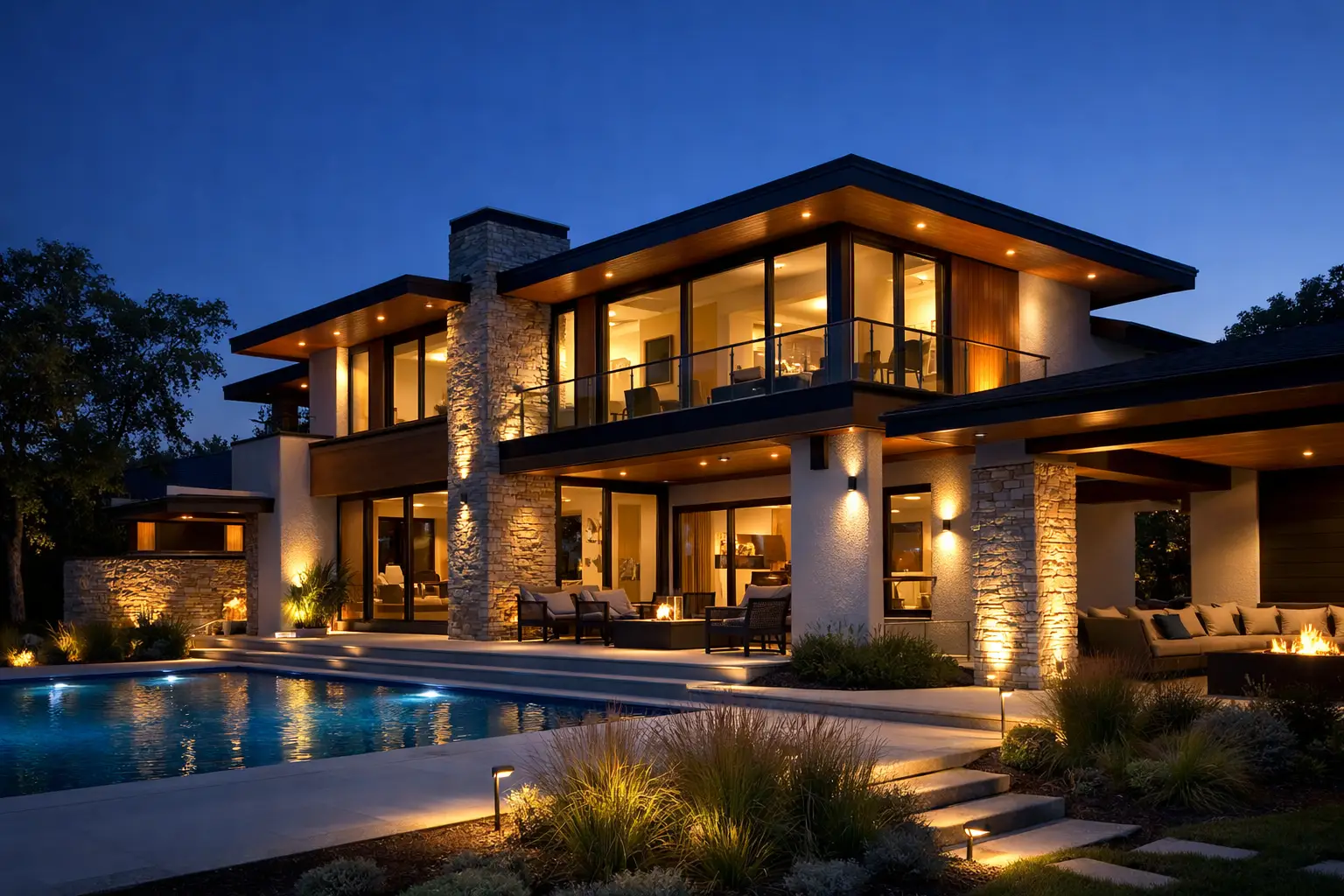
A well-designed home does not disappear when the sun goes down. The right exterior lighting reveals the details that made you choose the property in the first place: the roofline, stonework, columns, entryway, mature palms, and the clean proportions of its facade. Knowing how to highlight home architecture is less about adding more fixtures and more about directing light with intention.
For Tampa Bay homeowners, that intention also has to withstand heat, rain, salt air in coastal areas, and the long outdoor seasons that make patios, pools, and front entries part of everyday living. A thoughtful lighting plan creates a welcoming arrival, improves safe movement around the property, and gives the home a distinguished presence without making it look overlit.
Start With the Home’s Strongest Architectural Features
Every elevation has a focal point. On a Mediterranean or transitional home, it may be the arched entry, textured stucco, tiled roofline, or symmetrical columns. A contemporary residence may call attention to strong horizontal lines, a dramatic pivot door, clean masonry, or a cantilevered overhang. The goal is not to light every surface equally. It is to establish visual hierarchy.
Begin by viewing the home from the street, driveway, sidewalk, pool area, and main entertaining spaces. Notice what draws the eye in daylight and what becomes indistinct after dark. The features that create identity should receive the most careful attention. Secondary elements, such as planting beds or side-yard pathways, can support the composition without competing for it.
A useful rule is to create contrast, not glare. The eye is naturally drawn to a brighter feature against a softer surrounding field. When every wall, tree, and pathway is illuminated at the same intensity, the property can feel flat and commercial rather than refined.
Use Layers to Create Architectural Definition
The most successful outdoor lighting plans use several types of light working together. Architectural lighting provides form and drama, while pathway, landscape, deck, and entry lighting make the property usable and secure. Each layer should have a clear purpose.
Uplight Columns, Walls, and Facade Details
Uplighting is often the foundation of architectural illumination. A carefully aimed fixture at the base of a column can emphasize its height and texture. Placing light near a stone veneer or brick wall creates shadow and dimension, allowing the material to read beautifully from a distance.
For broad facade areas, a wider beam can softly wash the wall with light. For narrow features such as pilasters, columns, or decorative trim, a tighter beam gives greater precision. Fixture placement matters as much as beam spread. Set too close to the wall, the light may produce a harsh hot spot. Set too far away, it can lose definition and spill onto windows or neighboring property.
Frame the Entry Without Overpowering It
The front door is the home’s point of welcome, and it deserves more than a bright porch fixture. Lighting around the entry should make visitors feel expected while bringing attention to the craftsmanship of the door, sidelights, steps, and surrounding architecture.
Wall-mounted fixtures, discreet uplights, and gentle downlighting from an overhang can work together to create an inviting approach. The preferred approach depends on the home. A formal entry may benefit from balanced lantern-style fixtures and illuminated columns, while a modern entrance may look best with restrained linear light and a focused wash across textured materials.
Avoid placing a powerful fixture where it shines directly into the eyes of someone approaching the door. Comfort is part of luxury. The light should reveal the entry, not demand attention for itself.
Trace Rooflines Selectively
Roofline lighting can give a home an unmistakable nighttime silhouette, especially when the property has distinctive gables, dormers, or covered outdoor living areas. Yet outlining every inch of a roof is not always the most elegant answer. Selective illumination often feels more timeless.
Permanent roofline lighting can be especially effective when fixtures are concealed and carefully spaced to produce an even, polished glow. It can also provide flexibility for holidays, celebrations, and seasonal color without the annual disruption of temporary installation. On a more traditional home, understated eave lighting may complement the architecture better than a highly visible outline.
The right choice depends on the design language of the home and the view from the street. A lighting professional can determine where roofline illumination adds distinction and where it would become visual noise.
Let Landscape Lighting Support the Architecture
Landscaping is the setting for the home, not an afterthought. Mature oaks, palms, ornamental trees, hedges, and foundation planting can soften transitions between illuminated walls and darker areas of the property. When designed well, landscape lighting gives the architecture depth.
Uplight a specimen tree near the corner of the home to create a layered backdrop. Use subtle lighting in planting beds to connect the driveway to the front entry. If the home has a long approach, alternating pools of soft pathway light can guide guests naturally toward the door.
Be selective with trees directly in front of windows. A bright uplight aimed into a dense canopy can reflect indoors or cast distracting movement across ceilings. In those situations, softer grazing light or a different focal point may be more appropriate.
Consider the View From Inside the Home
Exterior lighting is not only for curb appeal. It becomes part of the evening view from living rooms, kitchens, bedrooms, and covered lanais. A dark window can feel like a blank mirror at night; a softly lit courtyard, pool enclosure, or garden can extend the visual boundaries of the home.
Walk through the interior after dark and look outward from the rooms you use most. Identify what should be visible: a palm grouping, a fountain, a retaining wall, or the architectural line of the pool cage. Then identify what should remain quiet. Equipment areas, utility panels, and neighboring views generally do not need emphasis.
Pool deck and pool cage lighting deserve special care in Tampa Bay homes. The system should make steps, transitions, and gathering areas easier to navigate while preserving the relaxed atmosphere of an evening swim or dinner outdoors. Downlighting and indirect illumination often produce a more comfortable result than exposed fixtures or excessive brightness around the water.
Choose Color Temperature and Fixtures for a Lasting Finish
Color temperature has a major effect on how architectural materials appear. Warm white light generally complements stucco, natural stone, brick, wood, and traditional exterior palettes. It creates the inviting, established character many homeowners want at the front of the property and around outdoor living spaces.
Cooler light can suit certain contemporary homes, especially those with crisp white finishes, metal, glass, and clean geometric forms. Even then, moderation is essential. Light that is too cool can make a residence feel stark, while mismatched color temperatures can make a carefully designed home look accidental.
Fixtures should disappear into the design as much as possible. High-quality, weatherproof LED fixtures offer long life, energy efficiency, and more consistent performance than bargain products. In Florida’s demanding climate, durable materials, professional wiring, proper drainage, and secure installation are not details to overlook. They are what protect the appearance and reliability of the system over time.
Avoid the Most Common Architectural Lighting Mistakes
The most frequent mistake is overlighting. More lumens do not automatically produce more beauty, and excessive brightness can erase the shadows that give stone, landscaping, and facade details their character. A second mistake is aiming fixtures without considering sightlines. Light spilling into windows, toward the street, or into a neighbor’s yard reduces comfort and can undermine the entire design.
Another issue is treating each area as a separate project. A bright driveway, dark entry, and unrelated pool lighting can make a property feel fragmented. The home should read as one cohesive nighttime environment, with the front facade, landscape, pathways, and entertaining areas connected by a consistent level of warmth and visual restraint.
Finally, do not overlook maintenance. Plants grow, fixtures can shift, lenses collect debris, and seasonal weather affects every outdoor system. Periodic adjustments preserve the original design and ensure pathways, entries, and focal features continue to perform as intended.
Work From a Custom Lighting Plan, Not a Fixture Count
A premium lighting result begins with a property-specific design rather than a predetermined number of fixtures. During a professional consultation, the designer should assess the home’s architecture, materials, mature landscaping, outdoor activities, existing electrical conditions, and the views that matter most to you. The proposal should make clear what will be illuminated, how the system will be installed, and what the investment includes.
Elegant Accents Outdoor Lighting has focused exclusively on outdoor lighting since 1999, bringing in-house installation crews, durable LED technology, and ongoing maintenance support to homes throughout Tampa Bay. That specialized approach allows the lighting plan to evolve from a clear design vision into a precise nighttime reveal.
The best architectural lighting feels effortless because every fixture has a reason to be there. Give your home a chance to make its lasting impression after sunset, then choose a design that will continue to look beautiful long after the first evening reveal.