
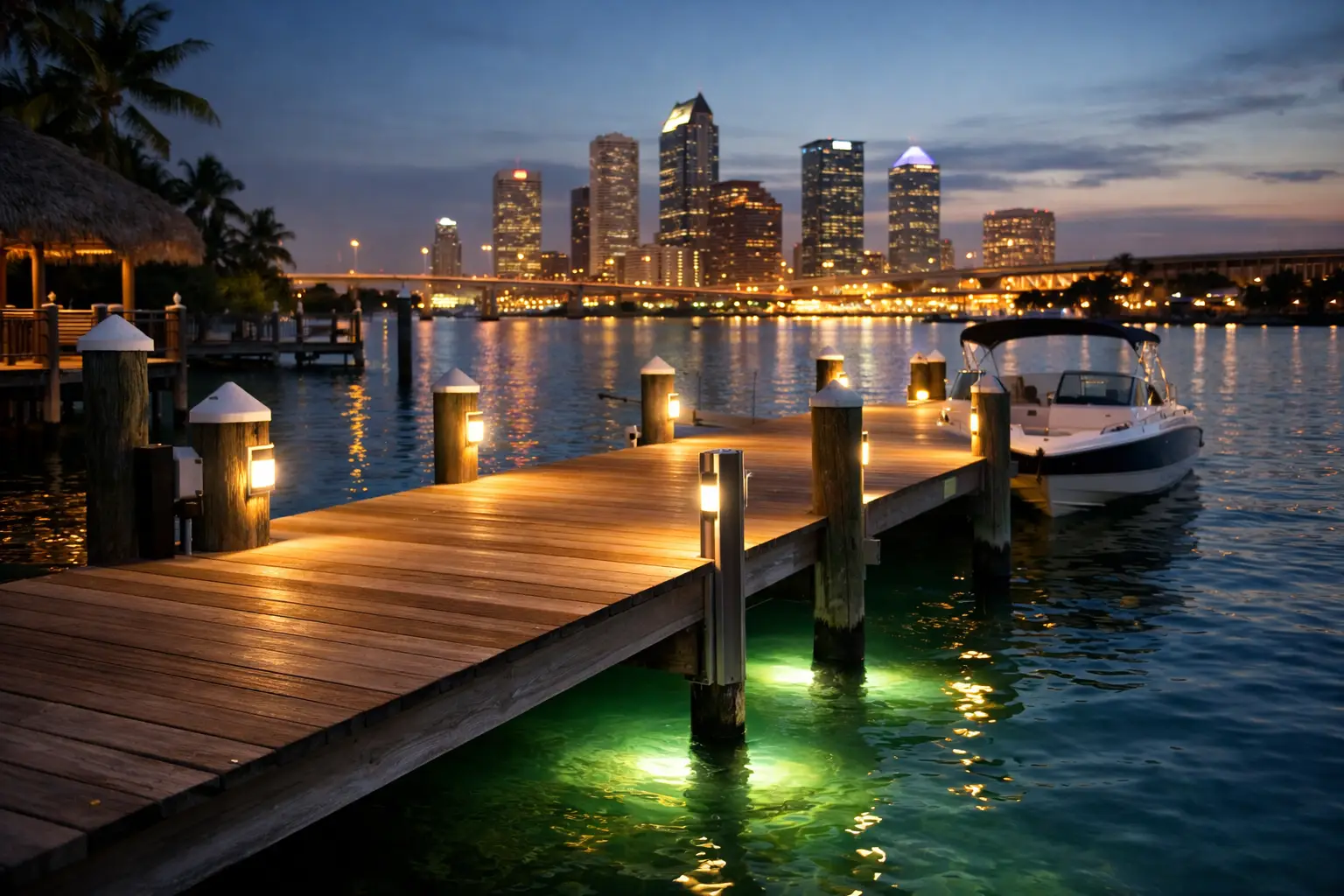
A waterfront property changes character after sunset. The water softens the view, pathways become less certain, and a dock that feels inviting by day can become a dark edge of the property at night. Thoughtfully designed dock lighting brings definition back to that space, creating a safer approach to the water while preserving the relaxed elegance that makes Tampa Bay living so distinctive.
The best results are never about placing the most fixtures. They come from a carefully balanced lighting plan that guides movement, reveals craftsmanship, and gives the shoreline a refined presence from the home, the pool deck, and the water itself.
What Well-Planned Dock Lighting Should Accomplish
A dock serves several roles at once. It may be a route to a boat, a fishing spot, a gathering place, or simply a focal point at the edge of the landscape. Its lighting should support each of those uses without making the waterfront feel overlit or commercial.
Safety is the first consideration. Steps, transitions, cleats, changes in elevation, and the outer edge of the dock need to be visible. Yet safety does not require harsh floodlights. Low-profile LED fixtures can create clear visual guidance while keeping glare out of guests’ eyes and away from neighboring properties.
The second consideration is atmosphere. A softly illuminated dock extends the usable hours of an outdoor living space. From the patio or pool cage, the light creates a composed view across the property rather than a dark, undefined boundary. For homes that entertain often, this visual connection can make the entire backyard feel more expansive and intentional.
Finally, dock lighting protects the investment in the structure itself. Quality fixtures and professional wire management are designed for a demanding environment of humidity, salt air, rain, heat, and changing water conditions. A beautiful fixture is only part of the equation. The components behind it must be selected and installed for lasting performance.
The Right Layers of Dock Lighting
A polished waterfront design uses layers, with each layer assigned a purpose. This approach produces a more natural result than relying on a single bright source near the shoreline.
Step and pathway illumination
Steps should be easy to read without becoming visual interruptions. Recessed step lights, carefully positioned downlights, or discreet fixtures placed beneath a handrail can define every change in level. Along the route from the home to the dock, path lighting should establish a calm rhythm, directing guests forward while complementing the surrounding landscape lighting.
The fixture placement matters as much as fixture brightness. Light aimed across a walking surface generally feels more comfortable than light shining directly upward into the face of someone approaching. It also creates better depth and texture on wood, composite decking, pavers, and stone.
Post cap and perimeter lighting
Post cap lighting gives a dock a finished, architectural outline. It can be especially effective on long walkways or docks with seating areas, where a gentle series of warm points of light provides orientation without overpowering the view.
This option is not always the right choice for every structure. Closely spaced post lights can look busy on a smaller dock, while taller posts may introduce unnecessary glare. A custom design considers the dock’s proportions, railing style, and the sightlines from the house before deciding how much perimeter definition is needed.
Downlighting for gathering areas
For a dock with a bench, fish-cleaning station, covered area, or boat lift, carefully shielded downlighting can provide useful illumination. The goal is functional visibility with a soft edge, not a bright pool of light that competes with the water or night sky.
Downlighting is particularly valuable when it is mounted high enough to cast broad, gentle coverage. Proper shielding keeps the source out of view and directs light where it belongs. This is one of the details that separates a finished lighting design from a collection of fixtures.
Accent lighting for architectural distinction
When the dock includes distinctive pilings, a pavilion, a pergola, or a substantial seawall, subtle accent lighting can connect it visually to the rest of the property. A softly lit architectural element at the shoreline creates a compelling nighttime focal point from inside the home.
Restraint is essential here. Reflections on the water already add movement and dimension. A few well-placed accents are often more elegant than lighting every post, railing, and surface.
Why LED Quality Matters on Tampa Bay Water
Waterfront lighting in Tampa Bay faces conditions that are less forgiving than a typical front-yard installation. Moisture, wind-driven rain, salt exposure near the coast, intense sun, and seasonal storms all influence fixture selection and installation methods.
Professional-grade LED lighting offers meaningful advantages: low energy use, long service life, consistent color temperature, and the ability to maintain a clean, tailored appearance without frequent bulb replacement. But not every LED fixture is built for waterfront use. Weather-rated housings, corrosion-resistant materials, sealed connections, and properly protected wiring are essential.
Color temperature deserves special attention. Cooler white light can make a dock feel stark and can intensify glare against water. Warm white light is generally more inviting for residential outdoor spaces, complementing natural wood tones, stone, landscaping, and the warm architecture common throughout Tampa Bay. The ideal tone still depends on the home and the surrounding lighting plan, particularly when a property includes contemporary architecture or bright white exterior finishes.
Design for the View From Inside the Home
A dock is not only experienced while standing on it. For many homeowners, its most powerful role is the view it creates from the kitchen, living room, lanai, or primary suite.
That is why a dock lighting plan should begin with sightlines. Where do you look when you are indoors after dark? Which parts of the dock should quietly recede, and which deserve visual emphasis? A softly defined walkway may be all that is needed for one property. Another may benefit from a more composed scene that includes illuminated palms, a seawall, and a pool deck that leads the eye naturally to the water.
The surrounding property should be considered as a complete nighttime composition. Dock lighting that is designed separately from the landscape, architecture, and pool area can feel disconnected. When all of these elements work together, the result is a home that feels finished from the curb to the waterline.
Avoid the Most Common Waterfront Lighting Mistakes
The most frequent mistake is overlighting. Bright fixtures can flatten the beauty of the water, create uncomfortable glare, and diminish the sense of privacy that makes a waterfront setting special. More light is not necessarily better light.
Another issue is using fixtures that are not suited to the environment. Decorative products may look appealing initially, but exposed hardware, poorly sealed connections, and low-grade materials often show their limitations quickly near the water. Repairs can become more expensive when wiring and mounting were not planned correctly from the start.
Homeowners should also avoid treating dock lighting as an afterthought. Adding a few fixtures after a dock is complete can work in some cases, but the cleanest results come from a plan that accounts for power, cable routing, fixture locations, switches or controls, and future maintenance. This is especially relevant when a dock renovation, pool update, or landscape project is already underway.
A Custom Process Creates a Lasting Result
Every waterfront property has different dimensions, access points, elevations, and lifestyle needs. A homeowner who uses a dock mainly for quiet evenings will want a different effect than someone who regularly hosts waterfront gatherings or returns by boat after dark.
A professional consultation clarifies those priorities before installation begins. The process should consider the dock’s construction, the property’s architecture, existing exterior lighting, safety needs, and the desired level of nighttime ambiance. From there, a transparent proposal can define the fixture selections, installation scope, and long-term maintenance considerations.
Elegant Accents Outdoor Lighting has focused exclusively on outdoor lighting since 1999, bringing in-house installation craftsmanship and weatherproof LED technology to tailored Tampa Bay properties. The objective is not simply to add light at the shoreline. It is to create a waterfront setting with clarity, beauty, and lasting distinction.
A beautifully lit dock should make the water feel closer, the path feel safer, and the entire property feel more complete after sunset. When the fixtures disappear into the experience and the view remains unforgettable, the design has done exactly what it should.