
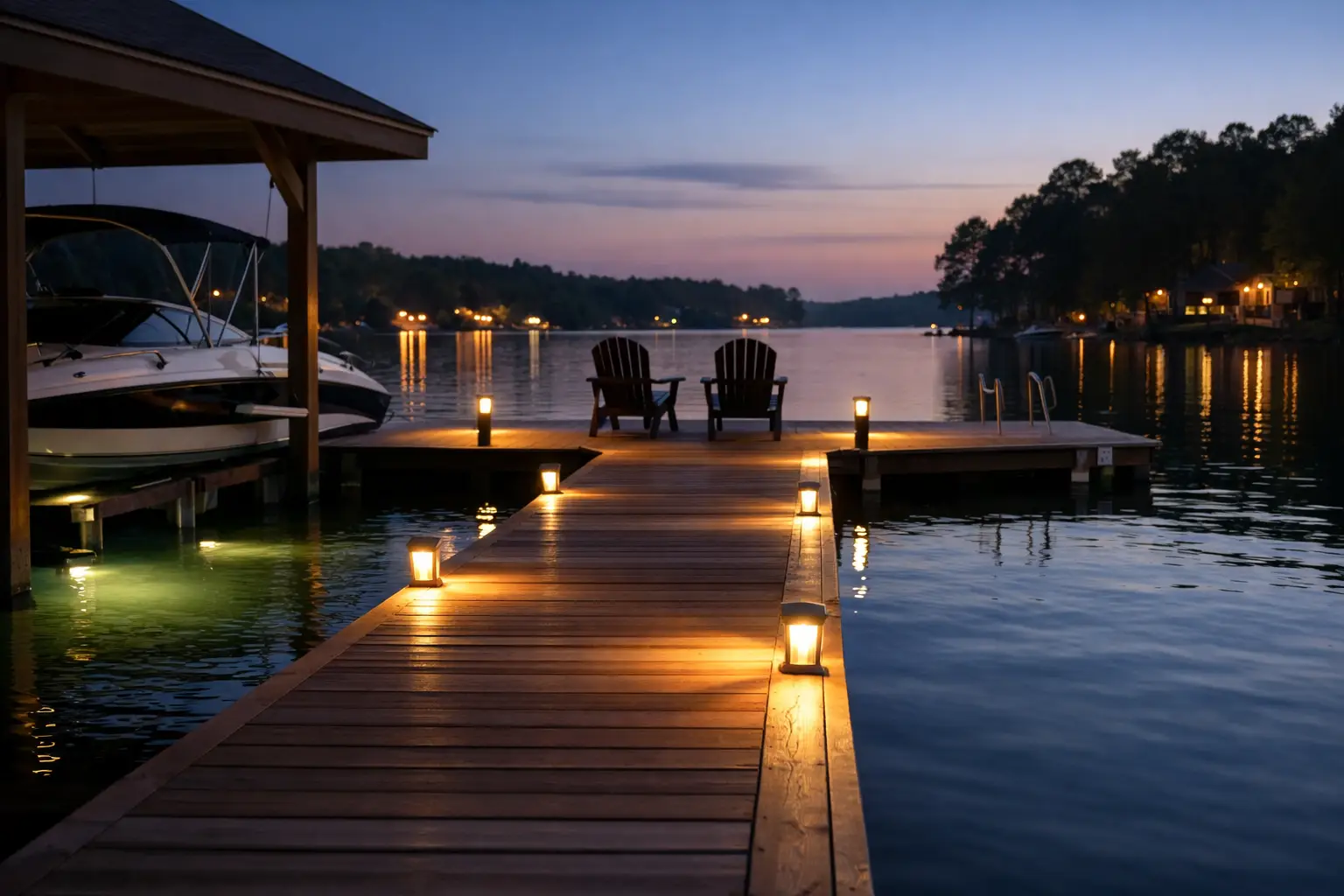
A waterfront property changes character after sunset. The dock that feels like a natural extension of the backyard during the day can become difficult to navigate, visually disappear from the shoreline, or leave guests unsure where the water begins. Thoughtful dock lighting installation solves those practical concerns while giving the entire property a more polished, intentional presence at night.
For Tampa Bay homeowners, the right design is not simply about adding lights along a walkway. It is about creating a clear path to the water, highlighting the dock’s structure without glare, and choosing equipment that can withstand salt air, humidity, storms, and constant outdoor exposure. When every fixture is placed with purpose, the result feels refined from the pool deck to the end of the pier.
What a Well-Designed Dock Lighting Installation Should Do
The best dock lighting performs several jobs at once. It improves footing on steps, ramps, transitions, and uneven boards. It helps define the edge of the dock so family members and guests can move with greater confidence. It also creates a composed nighttime view from the home, turning a dark waterfront boundary into an inviting architectural feature.
That balance matters. A dock can be brightly lit and still feel poorly designed if fixtures shine into people’s eyes, create harsh reflections on the water, or overwhelm the surrounding landscape. Conversely, lighting that is too subtle may look attractive from a distance but fail to make the dock safer to use.
A custom plan considers how the space is actually used. A quiet private fishing dock needs a different approach than a boat slip used after dinner, a broad entertaining deck, or a waterfront restaurant where guest circulation and ambiance must work together. The property’s sightlines, dock materials, elevation changes, nearby landscape, and neighboring homes all influence the final design.
Start With Movement, Not Fixtures
A common mistake is choosing fixtures before identifying the routes people take. Begin at the house or pool area and follow the path to the waterfront. Where do people step down? Where does the deck narrow? Is there a gate, gangway, boat lift, seating area, or change in elevation that becomes harder to see after dark?
These circulation points deserve the most deliberate illumination. Low-level lights can define a walkway without making it feel like a runway. Recessed step lights can make stairs easier to read. Carefully positioned downlighting from a nearby structure may provide broad, soft coverage where mounting lights directly on the dock is not ideal.
The goal is visual guidance. People should instinctively understand where to walk and where the edge begins, without seeing a line of exposed bulbs or pools of intense light. This is where professional placement makes a visible difference: the fixtures should support the experience of the space, not become the main event.
Light Dock Edges With Restraint
Edge lighting is one of the most valuable features of a waterfront design, but it requires restraint. Fixtures positioned too high or aimed outward can cause glare for boaters and can send unnecessary light across the water. Fixtures set too close together can create a dotted, commercial look that competes with the home’s architecture.
A more elegant approach uses strategically spaced, shielded fixtures that make the dock perimeter legible while preserving a calm waterfront atmosphere. The exact spacing depends on the width of the dock, ambient light around the property, and the amount of functional light needed. On a narrow finger pier, less is often more. On a wide entertaining platform, a layered plan may be appropriate.
Choose Fixtures Built for Tampa Bay Waterfront Conditions
Dock lighting faces a demanding environment. Moisture is constant, even when rain is not. Salt-laden air can accelerate corrosion near coastal or brackish water. Heat, UV exposure, wind-driven rain, and seasonal storms place added pressure on housings, finishes, wiring, and connections.
This is not a setting for decorative fixtures designed for a protected patio. Durable, weatherproof LED fixtures with corrosion-resistant materials are a better investment. Quality components cost more initially than basic retail-grade options, but they help protect the appearance, safety, and longevity of the system.
Professional installation also includes the details that are easy to overlook: properly rated wire, secure mounting, protected connections, appropriate transformer capacity, and thoughtful wire routing. These elements are largely invisible once a project is complete, yet they determine whether the lighting continues to perform beautifully season after season.
LED technology is especially well suited to dock environments. It offers efficient operation, long service life, and excellent control over brightness and color temperature. Warm white light generally complements upscale residential architecture, natural wood, and waterfront landscaping more gracefully than stark blue-white illumination. However, the ideal color temperature depends on the property’s existing landscape and architectural lighting, so consistency across the full system should be considered.
Build a Layered Waterfront Lighting Plan
A dock rarely looks its best as an isolated feature. It should relate to the rest of the property after dark. The approach from the home, nearby palms or specimen trees, seawall, pool cage, outdoor kitchen, and architectural details can all contribute to a more complete nighttime composition.
A layered plan typically combines task lighting where people need to move safely, ambient lighting for comfort, and accent lighting for visual distinction. For example, understated path lighting may guide guests from the patio to the dock, while low-profile step lights clarify the descent. Soft illumination at the dock perimeter adds definition, and selective uplighting in nearby palms gives the waterfront a sense of depth without aiming light directly at the water.
This approach also prevents one fixture type from having to do every job. A bright floodlight may provide visibility, but it rarely creates the quiet elegance a luxury waterfront property deserves. Several carefully controlled sources usually produce a more natural and flattering result.
Consider Boating, Wildlife, and Neighboring Views
Waterfront lighting should be considerate as well as beautiful. If the dock is used for boating, illumination must make cleats, slips, ramps, and boarding areas easier to see without compromising visibility on the water. Fixture shielding and aiming are essential.
Wildlife considerations can also affect the plan. Depending on the location and season, waterfront properties may need to reduce unnecessary light spill or use lighting choices that are more appropriate for sensitive coastal environments. Local regulations and community guidelines may apply, particularly in areas near beaches, preserves, or managed waterways.
Neighboring views deserve the same attention. A refined system keeps light on the intended surface rather than shining into adjacent yards or windows. This is another reason a nighttime adjustment is so valuable. What looks balanced in daylight can require fine-tuning once the property is dark.
Why Professional Design and Installation Matter
Dock systems involve more than aesthetics. Electrical work near water requires experienced planning and careful execution. A professional team can evaluate access, mounting surfaces, electrical source locations, existing landscape lighting, code-related considerations, and the long-term serviceability of the system before installation begins.
At Elegant Accents Outdoor Lighting, the process begins with how you want the property to feel and function after sunset. A consultation identifies priorities, followed by a custom design and a clear proposal that outlines the scope of work. In-house installation crews then bring the plan to life with fixtures selected for both visual quality and outdoor durability.
The nighttime reveal is where the design becomes real. Adjustments to aiming, brightness, and fixture placement can transform good lighting into lighting that feels tailored to the property. Ongoing maintenance matters, too. Even premium systems benefit from periodic inspections, cleaning, adjustments after landscaping changes, and prompt attention to storm-related issues.
The Details That Protect the Investment
A dock is exposed to more wear than most outdoor living areas, so maintenance should be part of the initial conversation rather than an afterthought. Salt residue, shifting boards, changing plant growth, damaged wiring, and fixture alignment can affect performance over time. A service plan helps preserve the clean, balanced appearance that made the installation worthwhile.
It is also wise to plan for future use. If a dock expansion, boat lift, outdoor kitchen, pool renovation, or landscape update may be on the horizon, the lighting system can be designed with capacity for that next phase. Planning ahead is often more efficient than rebuilding a finished system later.
The right dock lighting does more than make a waterfront safer after dark. It gives you another reason to step outside, welcome guests to the water’s edge, and enjoy the view you invested in long after the sun has set.