
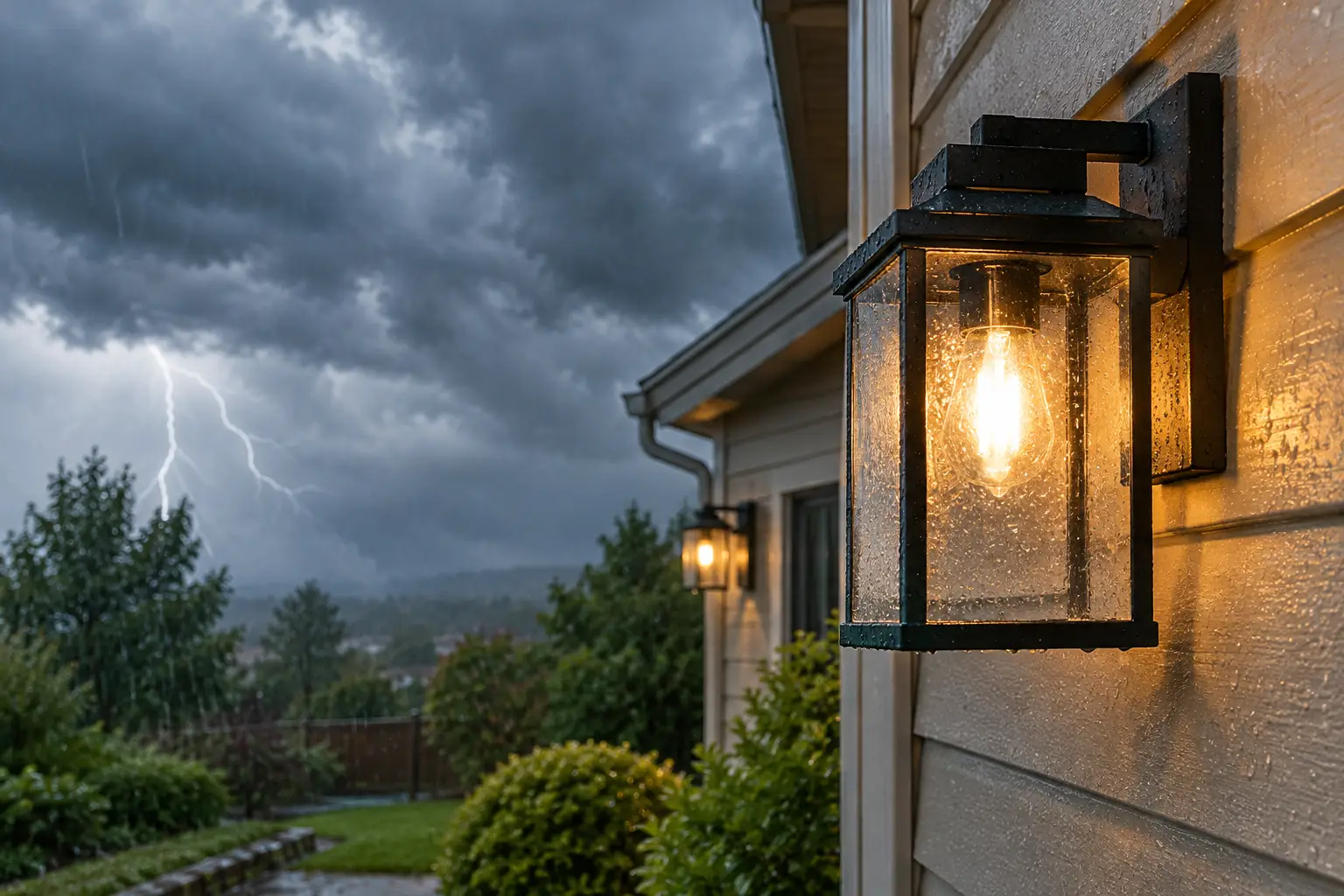
A Tampa Bay storm can turn a beautifully illuminated home into a serious test of workmanship in minutes. Can outdoor lights withstand storms? They can, when the system is designed for the climate, built with quality components, and installed with the details that prevent water, wind, and electrical issues from finding a weak point.
The more accurate question is not whether a fixture is simply “weatherproof.” It is whether every part of the lighting system – fixtures, connections, wire runs, transformers, mounts, and controls – is prepared for driving rain, high humidity, summer heat, and the occasional tropical system. Luxury outdoor lighting should create a lasting impression at night, but it should also earn confidence when the forecast changes.
Can Outdoor Lights Withstand Storms in Florida?
Yes, professionally selected and installed outdoor lighting can perform reliably through ordinary thunderstorms and severe weather. No lighting system is entirely immune to every event. A direct lightning strike, flooding, falling branches, or hurricane-force debris can damage even exceptional equipment. The goal is to minimize exposure, protect electrical components, and make recovery straightforward if a storm does affect the property.
Florida’s conditions create a particular challenge because water is only part of the equation. Salt air can accelerate corrosion near the coast. Persistent humidity can affect inferior seals and connections. Intense heat places demands on electronics, while wind-driven rain can reach areas that stay dry during a normal shower. A fixture that performs adequately in a mild climate may not be the right choice for a Tampa Bay estate, waterfront dock, pool enclosure, or restaurant patio.
That is why durable outdoor lighting begins with thoughtful design rather than a collection of fixtures placed after dark. The best plans account for how water moves across the property, where landscape growth will occur, which architectural surfaces need careful mounting, and how each illuminated feature can remain accessible for service.
What Makes an Outdoor Lighting System Storm-Ready?
A dependable system is defined by its complete construction. Fixture quality matters, but a premium fixture can still underperform if it is paired with poor connections, exposed wire, or an improperly located transformer.
Weather-rated fixtures and finishes
Outdoor fixtures need a rating suitable for wet locations, not merely damp locations. This distinction matters around pool decks, open landscapes, docks, rooflines, and uncovered entertaining areas where rain can reach the fixture directly. Depending on the application, ingress protection ratings can also indicate how effectively an enclosure resists dust and water intrusion.
Material selection deserves equal attention. Powder-coated aluminum, brass, copper, marine-grade stainless steel, and high-quality composite materials each have a place in outdoor design. The ideal choice depends on the location and desired finish. Brass and copper develop a natural patina that many homeowners appreciate, while carefully finished aluminum can provide a refined architectural look. Near saltwater, corrosion resistance becomes especially significant.
Quality LED fixtures offer another practical advantage. They produce less heat than older lamp technology, use less energy, and reduce the frequency of lamp replacement. Fewer service interruptions mean fewer opportunities for moisture to enter a system through rushed or repeated handling.
Secure mounting and intentional placement
Wind does not need to remove a fixture completely to cause trouble. It can loosen a mount, shift an aiming angle, damage a stake, or make a poorly secured canopy vibrate against an architectural surface. Fixtures should be anchored for the conditions they will face, whether they are installed in landscape beds, beneath eaves, on masonry, around a pool cage, or along a dock.
Placement also protects performance. A well-designed uplight should illuminate a palm, oak, façade, or specimen planting without sitting in a low spot where water regularly collects. Deck and step lights should be positioned to improve safety without leaving exposed wiring where it can be snagged by furniture, equipment, or storm cleanup. The visual effect and the long-term durability should support one another.
Protected wiring and watertight connections
Many outdoor lighting problems begin below the fixture. Landscape wire needs proper routing and burial depth, with enough care taken around roots, irrigation lines, hardscape edges, and areas likely to be disturbed. Connections must be rated for direct burial where applicable and sealed to keep moisture out.
A clean installation avoids loose wires across planting beds, casual splices, and connection points left vulnerable to standing water. These details are largely invisible after installation, but they are central to a system’s reliability. They also make future maintenance more efficient because trained technicians can inspect and service the system without having to untangle avoidable installation issues.
Transformers, surge protection, and electrical safeguards
The transformer is the heart of a low-voltage landscape lighting system. It should be properly sized for the fixture load, installed in an appropriate location, and protected from unnecessary moisture exposure. Voltage should be planned across the property so fixtures at the far end of a long run still receive the power needed to perform consistently.
Surge protection is equally valuable in Central Florida, where lightning activity is a regular fact of life. It cannot guarantee protection from a direct strike, but it can help reduce the risk of damaging voltage spikes traveling through the electrical system. Ground-fault circuit interrupter protection and code-compliant electrical work provide another essential layer of safety.
Smart controls, timers, and photocells should also be selected for outdoor conditions. A sophisticated lighting plan loses its appeal if the control system becomes unreliable after heavy rain. Professional planning keeps those components accessible while protecting them from direct exposure whenever possible.
What Homeowners Should Do Before a Major Storm
A professionally maintained lighting system generally does not require dramatic preparation before every thunderstorm. For a named tropical storm or hurricane, however, a brief property check is worthwhile.
Walk the exterior during daylight and look for fixtures that appear loose, tilted, cracked, or surrounded by erosion. Clear leaves and debris from areas around transformers, junction points, drains, and fixtures set into dense planting beds. If branches are hanging directly over lighting equipment or wires, address them before high winds turn them into a hazard.
Avoid attempting electrical repairs in wet conditions. If a fixture is damaged, a wire is exposed, or the system begins tripping a breaker, turn off the affected system if it is safe to do so and arrange for professional service. Temporary fixes with tape, household connectors, or an exposed extension cord can turn a manageable lighting repair into a safety concern.
For properties with dock lighting, pool cage lighting, or fixtures near water, storm preparation deserves even more attention. These locations experience concentrated moisture, wind, and corrosion exposure. A specialist can assess whether mounts, wiring paths, and fixture materials remain appropriate as the property ages or landscaping changes.
After the Storm: When to Inspect the System
Once conditions are dry and safe, a visual inspection can reveal obvious concerns. Look for displaced fixtures, fallen limbs, damaged lens covers, exposed cable, water pooled around equipment, or lights that are flickering, dimmer than usual, or no longer operating.
Do not assume a nonworking fixture simply needs a replacement bulb. With LED systems, a single outage may point to a connection issue, a damaged component, voltage loss, or a problem upstream in the run. Likewise, repeated breaker trips should never be ignored. Water intrusion and electrical faults need a qualified diagnosis.
A maintenance visit after a major storm can restore both safety and design integrity. Technicians can reset fixture angles, replace damaged components, inspect connections, adjust lighting around newly pruned or fallen landscape material, and confirm that the system remains balanced. This is particularly valuable for homes where lighting is designed to highlight mature trees, stonework, water features, and distinctive architecture. Even a small shift in aiming can change the appearance of the entire property after dark.
The Value of Professional Design and Ongoing Care
Storm resilience is one reason outdoor lighting should be treated as a permanent property enhancement rather than a weekend project. The difference is visible in the finished effect, but it is often felt most clearly during the first hard rain, the first summer of rapid landscape growth, or the first service need years after installation.
Elegant Accents Outdoor Lighting approaches each property with those long-term realities in mind. A tailored plan considers beauty, safety, access, fixture placement, and the environmental demands of Tampa Bay before installation begins. Transparent proposals and experienced in-house crews help ensure that the finished system reflects the home’s character without sacrificing practical performance.
The finest outdoor lighting does more than make a residence look exceptional on a calm evening. It gives the property a sense of welcome and distinction through changing seasons, knowing that the details behind the illumination were chosen to endure.