
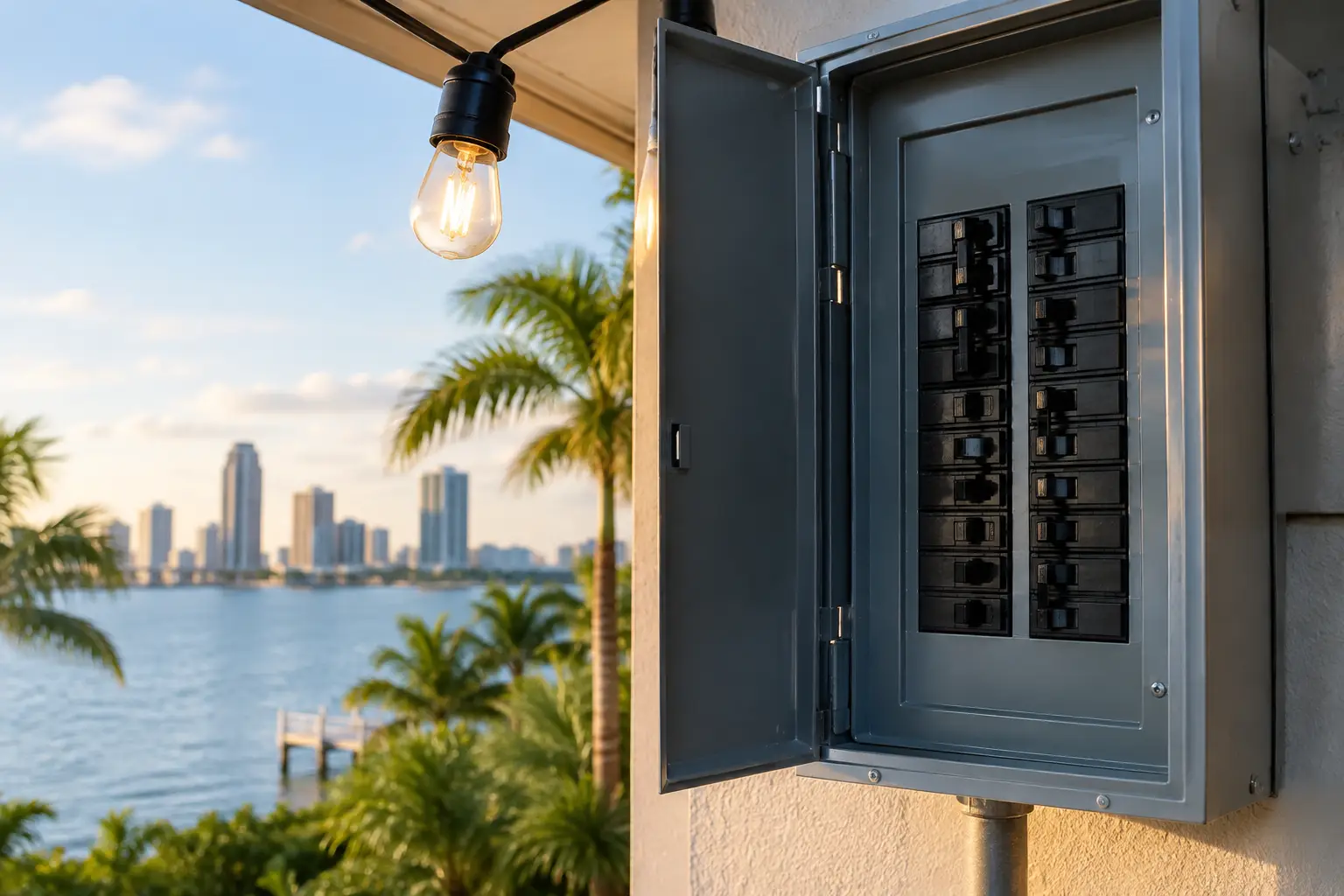
A breaker that trips after sunset can turn a beautifully planned outdoor evening into an inconvenience. More importantly, it is your electrical system doing its job. If you are asking why outdoor lights trip breakers, the answer is usually not the breaker itself. It is often a sign that moisture, damaged wiring, an overloaded circuit, or a failing fixture needs attention before it affects your home’s safety or the performance of your lighting.
For Tampa Bay properties, outdoor electrical systems work in demanding conditions. Heat, heavy rain, humidity, salt air near the coast, irrigation, and active landscaping all place pressure on connections that should remain dry, secure, and protected. A professional diagnosis identifies the source of the issue rather than simply resetting the breaker and hoping it stays on.
Why Outdoor Lights Trip Breakers
A circuit breaker trips when it detects a condition that could overheat wiring or create an electrical hazard. In an outdoor lighting system, the most common causes are a ground fault, a short circuit, or an overloaded circuit. Each calls for a different repair, which is why the pattern of when the breaker trips matters.
If the breaker trips immediately when lights turn on, the issue may be a shorted fixture, pinched wire, damaged insulation, or a failed transformer. If it trips only during or after rain, moisture intrusion is a much stronger possibility. If it trips after the system has been running for a while, circuit load or a heat-related equipment failure may be involved.
A reliable lighting system should create distinction around your architecture, pathways, pool deck, and landscape without requiring repeated trips to the electrical panel. When the breaker begins interrupting that experience, it deserves a careful inspection.
Moisture inside fixtures, connections, or junction boxes
Water is one of the leading reasons exterior lighting circuits fail. Weatherproof equipment is designed to manage normal exposure, but seals age, fixture lenses crack, gaskets shift, and underground connections can be disturbed by roots, irrigation work, or landscaping projects.
When water reaches a connection or component that should remain protected, it can create a path for electrical current to travel where it should not. A ground-fault circuit interrupter, commonly called a GFCI, is especially sensitive by design. It may trip quickly, even with a small amount of moisture present.
This is particularly common after Tampa Bay’s summer storms. A system may appear perfectly functional for weeks, then trip after a hard rain because water has found its way into one vulnerable fixture or splice. Resetting the outlet may restore power temporarily, but it does not remove the source of the problem.
Damaged low-voltage cable or line-voltage wiring
Outdoor wiring is exposed to more than weather. Garden edging, shovel work, new plantings, pest activity, deck repairs, and lawn equipment can all damage buried cable or wiring routed near exterior features. Sun exposure can also weaken materials over time when wiring is not properly protected.
A nicked cable may not fail right away. Moisture can enter through a small opening, gradually corrode the conductor, and eventually create a fault that trips the breaker. This delayed failure is one reason a lighting system that has served a property well for years can suddenly become unreliable.
Low-voltage landscape lighting is often safer and more flexible for many architectural and landscape applications, but its transformer and primary power connection still need proper installation. A fault on the line-voltage side of the system can trip the home’s breaker just as readily as a problem in any other exterior circuit.
A failing fixture, lamp, transformer, or driver
Even high-quality fixtures have components that can wear over time. LED systems use drivers that regulate power to the LEDs, while low-voltage systems depend on a transformer to deliver the correct voltage. When these components fail, they may draw power irregularly or develop an internal fault.
A single compromised fixture can take down an entire lighting zone. The challenge is that it may not look damaged from the outside. Condensation behind a lens, discoloration near a connection, flickering, or a fixture that becomes unusually warm can offer clues, but many failures require testing to confirm.
This is where quality matters. Well-built, weatherproof LED fixtures and properly matched components are designed for long-term exterior performance. They also make future service more straightforward because the system has been planned, labeled, and installed with access in mind.
Too many loads on one circuit
Not every tripped breaker points to damaged equipment. Sometimes the circuit is simply being asked to do too much. Outdoor receptacles and lighting may share a circuit with pool equipment, patio appliances, holiday displays, a refrigerator in an outdoor kitchen, or tools used around the property.
A circuit that handled a modest lighting installation may become overloaded after additional fixtures or exterior amenities are added. The breaker might trip only when several items run at once, which can make the issue seem unpredictable.
LED lighting uses far less power than older halogen systems, but circuit planning still matters. A refined lighting design considers more than visual impact. It accounts for transformer capacity, voltage drop, circuit loading, zoning, control requirements, and room for thoughtful future additions.
The Timing of a Trip Offers Useful Clues
Homeowners can often give an electrician or lighting specialist valuable information before the inspection begins. Notice whether the breaker trips as soon as the lights are switched on, only after a storm, when a particular zone activates, or when another outdoor appliance is in use.
A trip tied to rain suggests moisture intrusion. A trip tied to one lighting zone may indicate a fixture, connection, or cable issue within that area. A trip that occurs when the pool pump, outdoor kitchen, or holiday lighting is also running can point toward an overloaded circuit. These are clues, not proof, but they can make troubleshooting faster and more precise.
It also helps to note whether the breaker is a standard breaker or whether a GFCI outlet has tripped. In some homes, an exterior GFCI outlet protects several downstream outlets and fixtures. One reset button may affect more of the property than expected.
What Not to Do When a Breaker Keeps Tripping
A breaker should not be repeatedly reset without investigating the cause. If it trips again, leave it off until the circuit can be evaluated. Repeated resetting can allow a developing electrical problem to worsen.
Avoid replacing a breaker with a larger one, bypassing a GFCI device, using extension cords as a permanent solution, or opening fixtures and electrical boxes if you are not qualified to work on them. These shortcuts can compromise safety and may conceal the very condition the breaker is intended to detect.
If you notice a burning odor, buzzing, visible wire damage, melted components, sparking, or water inside an electrical enclosure, keep clear of the area and arrange for prompt professional service. The same applies when a breaker trips immediately and will not remain reset.
A Professional Inspection Protects the Entire Design
The best repair begins with a methodical process, not a guess. A qualified professional can isolate zones, inspect fixtures and connections, test the transformer and controls, evaluate circuit capacity, and trace damaged cable where necessary. The goal is to correct the fault while preserving the balance and beauty of the original lighting design.
For a luxury property, exterior lighting is not an afterthought. It defines the arrival experience, frames architectural details, improves visibility along paths and stairs, and extends the use of outdoor living spaces well beyond daylight. A patchwork repair may restore power, but a well-executed service visit also considers fixture condition, aiming angles, wire protection, and the long-term reliability of every illuminated area.
At Elegant Accents Outdoor Lighting, ongoing maintenance is designed to keep custom systems performing as beautifully as they did at their nighttime reveal. That includes addressing the practical details that protect the investment: weatherproof connections, dependable components, clean fixtures, and timely attention when performance changes.
Preventing Future Outdoor Lighting Problems
No outdoor system is completely free from maintenance, especially in Florida’s climate. Still, thoughtful installation and regular service significantly reduce the chance of unexpected outages. Fixtures should be rated for exterior use, connections should be properly enclosed, wiring should be protected from routine landscape activity, and transformers should have adequate capacity for the system they serve.
Periodic inspections are especially worthwhile before the rainy season, after major landscape work, and when expanding a deck, pool area, dock, or entertaining space. A service professional can catch worn seals, settling fixtures, exposed cable, and early corrosion before they become a darkened pathway or a recurring breaker issue.
Your outdoor lighting should bring confidence to every evening at home, not uncertainty at the electrical panel. When a breaker trips, treat it as a useful signal to protect the craftsmanship, safety, and lasting brilliance of the spaces you enjoy after dark.