
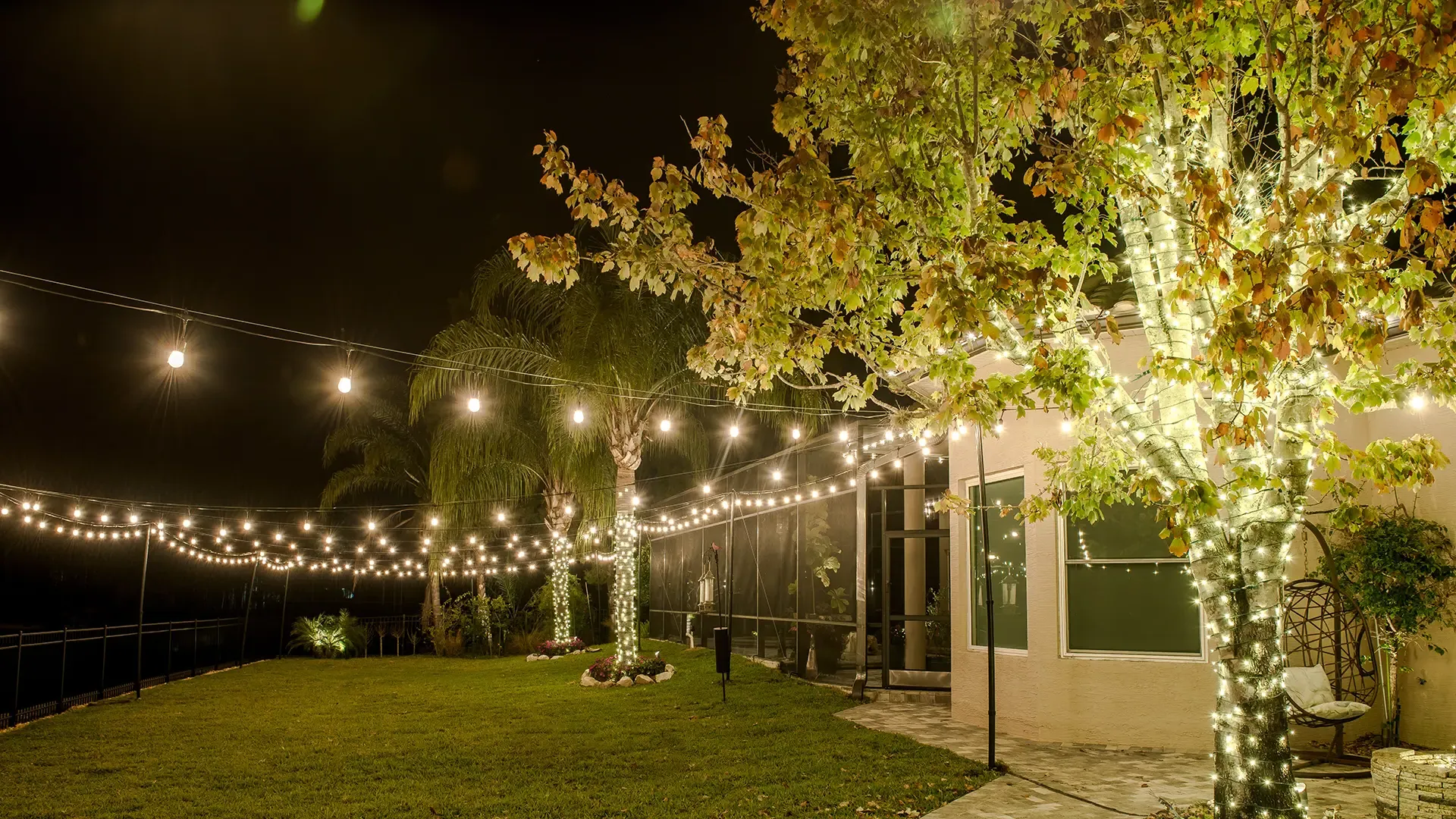
Storms in Tampa Bay are part of life, but what they do to outdoor lighting often gets overlooked. Strong wind, heavy rain, and flying debris can turn a beautiful lighting system into a safety risk in just one afternoon. Checking your lights after a storm protects your family, your guests, and your curb appeal at the same time.
Here, we will walk through what to look for once the weather clears, how to spot problems like water intrusion, corrosion, and grounding issues, and where a professional team can step in. With a simple safety checklist and a clear plan, you can keep your outdoor lighting working, safe, and attractive all summer and beyond.
Protect Your Curb Appeal and Safety After Tampa Storms
Summer storms and hurricanes in Tampa Bay bring wind-driven rain, flooding, salty air, and flying branches that can be tough on outdoor lighting. Fixtures can fill with water, shift in the soil, or get hit by debris. Wires can pull loose or get exposed. What looked flawless before the storm can quickly become uneven, dim, or even dangerous.
Post-storm inspection matters for two big reasons: safety and appearance. Outdoor lights help prevent tripping, discourage unwanted visitors, and light up entries and walkways at night. When they fail, you lose that sense of comfort and security. At the same time, damaged or leaning fixtures can drag down the look of your home or business.
The good news is that checking your system does not have to feel overwhelming. A calm, step-by-step approach keeps you safe and makes it easy to explain what you are seeing when you bring in an expert. Our team works with outdoor lighting across the Tampa Bay area, so we understand how local weather and soil conditions affect wiring, fixtures, and hardware over time.
Stay Safe First: A Step-by-Step Storm Aftermath Checklist
Before anything else, think about safety around electricity and water. Even low-voltage outdoor systems can be dangerous when damaged or soaked.
Power and safety basics:
- Turn off breakers for the affected lighting zones before you touch any fixtures, wires, or transformers, especially if there was flooding or standing water.
- From a distance, look for standing water near transformers, exposed wiring, or fixtures knocked over onto wet ground.
- Avoid stepping into puddles near any electrical component.
- If you have a non-contact voltage tester and know how to use it, check suspect areas from a safe distance. If anything feels risky, stop and wait for a professional.
Once power is off and the area seems safe, do a slow, daytime walk around your property. Keep your feet on the ground and avoid ladders after a storm, since soil can be soft and unstable.
During your visual inspection from the ground:
- Look for broken fixtures, loose path lights, low-hanging wires, or open junction boxes.
- Check around trees, gutters, fences, and rooflines, where falling branches, loose gutters, or stray objects might have hit your lighting.
- Take clear photos of anything that looks damaged or out of place so a lighting specialist can understand the situation quickly.
After that, when everything is dry and stable and you are comfortable turning the power back on, test your system at night. Turn each zone on one at a time.
Watch for:
- Fixtures or zones that do not come on at all.
- Lights that flicker, appear much dimmer than before, or cause a GFCI to trip when they turn on.
- Buzzing or humming transformers, which may signal stress or damage.
If you have a simple sketch or list of your lighting zones and fixtures, make notes next to each area. This makes it much easier for a technician to move through your system and pinpoint the trouble spots.
Diagnosing Water Intrusion Before It Becomes a Disaster
Stormwater finds weak points quickly. Outdoor fixtures can take on water through cracked lenses, loose gaskets, missing seals, or poorly sealed wire connections. Well lights and fixtures that sit low in planting beds are at even higher risk when heavy rain causes pooling.
When water gets inside, it does more than make things look foggy. Repeated exposure speeds up corrosion, damages LEDs and transformers, and can set up shock hazards if faults develop.
Common signs of water intrusion include:
- Condensation or fogging inside the lens of a fixture.
- Visible water pooling inside well lights.
- Rust streaks on the outside of fixtures or greenish corrosion on screws and metal parts.
- Lights that work on and off, or that cause a GFCI outlet to trip when they try to start.
Never open or try to dry out fixtures while the power is on. If you are unsure, it is safer to leave a wet fixture sealed and have it inspected by a professional. A trained technician can test each light, safely open and dry fixtures, replace damaged gaskets, and reseal everything correctly. In some cases, the best long-term fix is to upgrade to fixtures that are fully sealed and better suited to our damp, coastal conditions, and to improve drainage or adjust placement so they are not sitting in water after every storm.
Corrosion, Loose Connections, and Failing Hardware
Tampa Bay is hard on metal and plastic. Salt in the air, high humidity, heat, and blowing sand or debris all speed up corrosion and wear. Even solid brass or copper fixtures can show wear faster here than in drier areas. That corrosion is not just a cosmetic problem. It can increase resistance, cut down on light output, and lead to overheating or failure.
There are a few things homeowners can safely spot from the ground with power off:
- Rusted screws or brackets, or fixtures that wobble when gently touched.
- Green or white buildup on metal parts or terminals.
- Cracked housings or lenses.
- Wire insulation that looks brittle, split, or sun-faded.
If a path light is leaning after the storm, you might be able to straighten it in the soil and gently tighten an obvious mounting screw. But rewiring, splicing cables, or opening junction boxes is best left to trained hands. Poor connections are one of the main reasons systems fail early and can also raise fire risk.
Professionals will clean corrosion where possible, replace compromised hardware and connectors, and upgrade to better gel-filled connectors and weather-resistant parts. A full system check may also reveal deeper issues like underpowered transformers, voltage drop in long runs, or layout choices that are more likely to fail after heavy weather. Repair and redesign can extend the life of the system and improve performance at the same time.
Grounding, GFCI Protection, and Hidden Electrical Risks
Grounding is what helps send fault current safely into the earth instead of through a person or building when something goes wrong. After major storms, saturated soil, shifting ground, or physical damage can disturb grounding rods, clamps, and bonding connections.
If grounding or protection is poor, you can see:
- More frequent shocks from static or contact with metal parts.
- Nuisance tripping from GFCIs or breakers.
- More stress on transformers and control systems.
GFCI outlets and breakers are designed to shut off power fast when they sense a problem, especially in damp areas like patios, pool decks, or docks. If they trip over and over again after a storm, it may point to water in fixtures, partial shorts, or damage to underground wiring. It is not just “sensitive” equipment complaining. Never bypass a GFCI or swap it for a standard outlet to stop the tripping. That removes an important safety layer.
Some warning signs mean it is time to stop and call in a professional right away:
- GFCIs or breakers that keep tripping even after things look dry.
- Any tingling feeling when you touch a metal fixture, gate, or railing near lighting.
- Burning smells, smoke, or transformers that feel unusually warm.
- Visible sparks or arcing at any connection.
Licensed professionals have tools to test grounding, insulation resistance, and voltage safely. Outdoor lighting specialists can also work with electricians when deeper electrical repairs or upgrades are needed, and design new or updated systems with proper grounding and code-compliant protection from the start.
When to Repair, When to Replace, and How to Storm-Proof
After a strong storm, the big question is often: fix what you have, or use this as a chance to upgrade? The right answer depends on a few things.
Helpful points to consider:
- Age of your system and whether parts are still in good condition overall.
- How many fixtures, wires, or transformers were affected in the latest storm.
- Ongoing issues with corrosion, water intrusion, or loose connections over the years.
- Whether you are still using older lamps instead of modern LED options.
Sometimes, small repairs and a few upgraded fixtures are enough. Other times, repeatedly patching an older, poorly installed system can be more frustrating and expensive than designing a fresh layout that works with current LED technology. A professional assessment can sort fixtures into simple repair, repair with upgrades, and full replacement, so you can plan in a smart way.
To build a more storm-ready system, experts often:
- Choose higher-grade fixtures and hardware made for wet, coastal environments.
- Improve drainage and avoid placing fixtures in constant puddle areas.
- Set fixtures deeper and more securely in the soil.
- Use weatherproof connectors and smart zone planning to limit the effect of a single failure.
- Focus on low-voltage LED systems that run cooler, last longer, and handle damp conditions better when installed correctly.
Ongoing maintenance also matters. Many homeowners and property managers find it helpful to plan seasonal service, like a pre-summer tune-up and a post-storm or fall check. Professional maintenance often includes cleaning lenses, realigning fixtures after plant growth or storms, checking connections, testing voltage, and making sure timers, photocells, and controls are all set correctly. Treating outdoor lighting like any other important system on your property makes surprise failures less likely and keeps your home or business safely and beautifully lit through storm season.
Get Started With Your Project Today
Transform your property with professionally designed lighting that highlights what you love most about your outdoor spaces. Our team at Elegant Accents Outdoor Lighting will guide you through every step of your outdoor lighting installation in Tampa Bay, FL, from consultation to final walkthrough, so you know exactly what to expect. If you are ready to talk through ideas, budget, and next steps, simply contact us and we will help you create a plan that fits your home and lifestyle.