
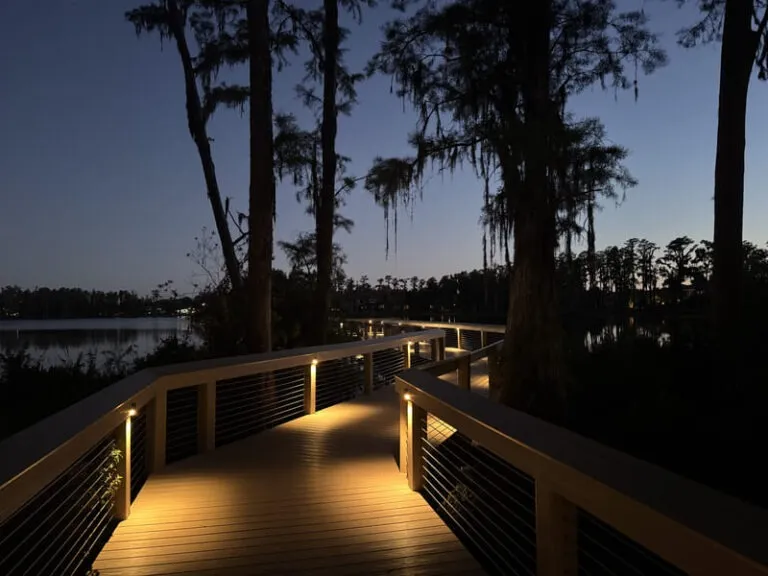
Safer Nights on the Water Start With Better Lighting
Safe dock lighting is about more than looks. On a busy Tampa Bay evening, people are carrying coolers, kids are excited to get on the boat, and guests may be walking your dock for the first time. One missed step in the dark can mean a serious fall into the water or onto hard boards.
Docks are tricky at night. Surfaces stay wet and shiny, water is always moving, there are gaps between boards, and small changes in height can disappear in low light. When lighting is poor, the whole dock can feel like guesswork under your feet.
We want to show how smart step and edge marking, good control of shadows and glare, and thoughtful fixture placement can turn a risky dock into a safer, more welcoming place. Professional dock lighting installation in Tampa Bay, Florida, also has to stand up to salt air, storms, and local rules, so good planning matters from the start.
Why Dock Falls Happen After Dark
Many hazards on a dock are there all day, but at night they are harder to see and easier to trip over. Common problem spots include:
- Slippery algae or mildew that grows on shaded, damp boards
- Warped or uneven planks that catch toes or heels
- Low or missing guardrails around edges and corners
- Hoses, ropes, buckets, and fishing gear left across the walking path
When lighting is not planned well, it actually adds to the danger. A few bright lights can create deep shadows where edges and steps disappear. Glare off wet boards and the water can blind boaters as they step up from the boat to the dock. Your eyes jump from bright hot spots to dark sections, so you miss subtle changes in height.
Around Tampa Bay, we deal with heavy humidity, spray from the water, and quick evening thunderstorms that can make surfaces slick and skies dark in minutes. All of this makes clear lighting even more important.
Lighting will not fix rotten boards or loose rails. Those issues need repairs. But good lighting can:
- Make uneven areas easier to spot
- Show where clutter is in the way
- Reveal where the dock ends and the water begins
- Help guests see ladders, cleats, and tie-off points without guessing
Step and Edge Marking That Guides Every Footstep
On a safe dock, nothing should be a surprise. Every change in height or direction should be easy to see from several steps away. This is especially true where:
- The dock meets the shore or seawall
- There are steps or ramps
- The main dock branches to slips
- The dock simply ends at open water
For steps, we like to use low-level lights that mark each riser or the edges of the treads. Small LED markers can:
- Outline the front edge of each step
- Highlight the first and last step in a run
- Add a soft glow to landings so you see where you are going next
Using slightly different lighting at the top and bottom of a stair run helps your eyes read depth, so you feel more sure of each step. It gives a gentle visual cue that says, “You are starting the stairs now” or “You are back on a flat surface.”
For dock edges, it helps to create a clear outline. This can be done with:
- Continuous or evenly spaced low-glare fixtures along the perimeter
- Extra points of light on corners and turns
- Subtle markers where ladders or swim areas are located
Because the dock itself is a walking surface, we focus on slip-resistant fixtures and mounting. That often means using:
- Flush or recessed lights that sit level with the boards
- Trim rings with texture so they are less slick when wet
- Sealed, corrosion-resistant housings built for salt air and spray
The goal is to mark edges and steps without adding new things to trip over.
Controlling Glare and Shadows Over Water
Many people think brighter is always safer, but that is not true on a dock. Harsh glare can wash out detail and hide obstacles. When a bare bulb reflects off wet wood or calm water, your pupils shrink and you lose the ability to see depth and texture.
Better shadow control usually comes from using more fixtures at lower brightness instead of a few very strong lights. We aim to:
- Overlap “pools” of light so there are no sharp cutoffs
- Fill in dark gaps around steps, joints, and cleats
- Aim fixtures so the light skims along the surface, not straight into your eyes
Water reflection is another big factor. The wrong color temperature can create a harsh, mirror-like effect on puddles and the bay. Softer, warmer light tends to be easier on the eyes and makes it simpler to see into the darker areas between boards and boats.
A professional dock lighting installation in Tampa Bay, Florida should also consider:
- Tide changes that shift where shadows fall
- Boat height and movement as people step on and off
- Nearby house, street, or marina lights that might clash or create extra glare
When all of that is planned out, the dock feels calm and readable instead of blinding and patchy.
Smart Fixture Placement for Tampa Bay Docks
Every dock has zones that need different types of light. We usually look at:
- The entry path from the house or yard
- The transition from land to dock or gangway
- Steps and ramps down to lower levels
- The main walking area and slips
- Seating, fishing, and lounging spots
We like to think in vertical layers. At knee level, lights can define the walking path and edges. On posts or rails, a few gentle fixtures help with overall orientation, so you always know where the shore, house, or main dock is. Farther out, soft ambient lighting keeps the water and boat slips from turning into black holes.
For Tampa Bay weather, fixture quality and installation methods matter a lot. Good design should include:
- Marine-grade materials that tolerate salt and humidity
- Protected wiring routes that stay out of the way of feet and gear
- Mounting methods that hold up when storms and wind roll through in summer
Local pros are also familiar with area codes, HOA rules, and dark-sky friendly practices, so your lighting improves safety without shining into neighbors’ homes or out across the bay.
Why Professional Installation Delivers Safer Results
DIY dock lighting kits can look simple, but they rarely address all the safety details we have covered. A professional design takes time to study your dock, then plan how to:
- Aim beams so they light edges, not eyes
- Balance brightness levels from house to dock to boat
- Predict shadow patterns from rails, piles, boats, and lifts
Proper installation is also about electrical safety and long-term reliability. That includes:
- Using low-voltage systems with appropriate protection
- Keeping connectors off the deck and away from standing water
- Securing fixtures and wiring so no one trips on a cable or stubbed housing
At Elegant Accents Outdoor Lighting, we work on outdoor spaces all around the Tampa Bay area, including many waterfront, dock, and pool projects. That local experience helps us design systems that handle salt air, humidity, and frequent use while still tying in nicely with your existing landscape and architectural lighting.
When your dock lighting is planned around step and edge marking, shadow and glare control, and smart fixture placement, the whole property feels calmer and easier to move through at night. Friends, family, and guests can enjoy summer evenings on the water with more confidence, whether they are tying up the boat, casting a line, or walking back to the house after a long day on the bay.
Get Started With Your Project Today
Transform your waterfront into a safer, more inviting space with our professional dock lighting installation in Tampa Bay, Florida. At Elegant Accents Outdoor Lighting, we design and install custom lighting solutions tailored to your dock, deck, and outdoor lifestyle. Reach out today so we can discuss your goals, answer your questions, and provide a clear path forward. If you are ready to take the next step, simply contact us to schedule a consultation.