
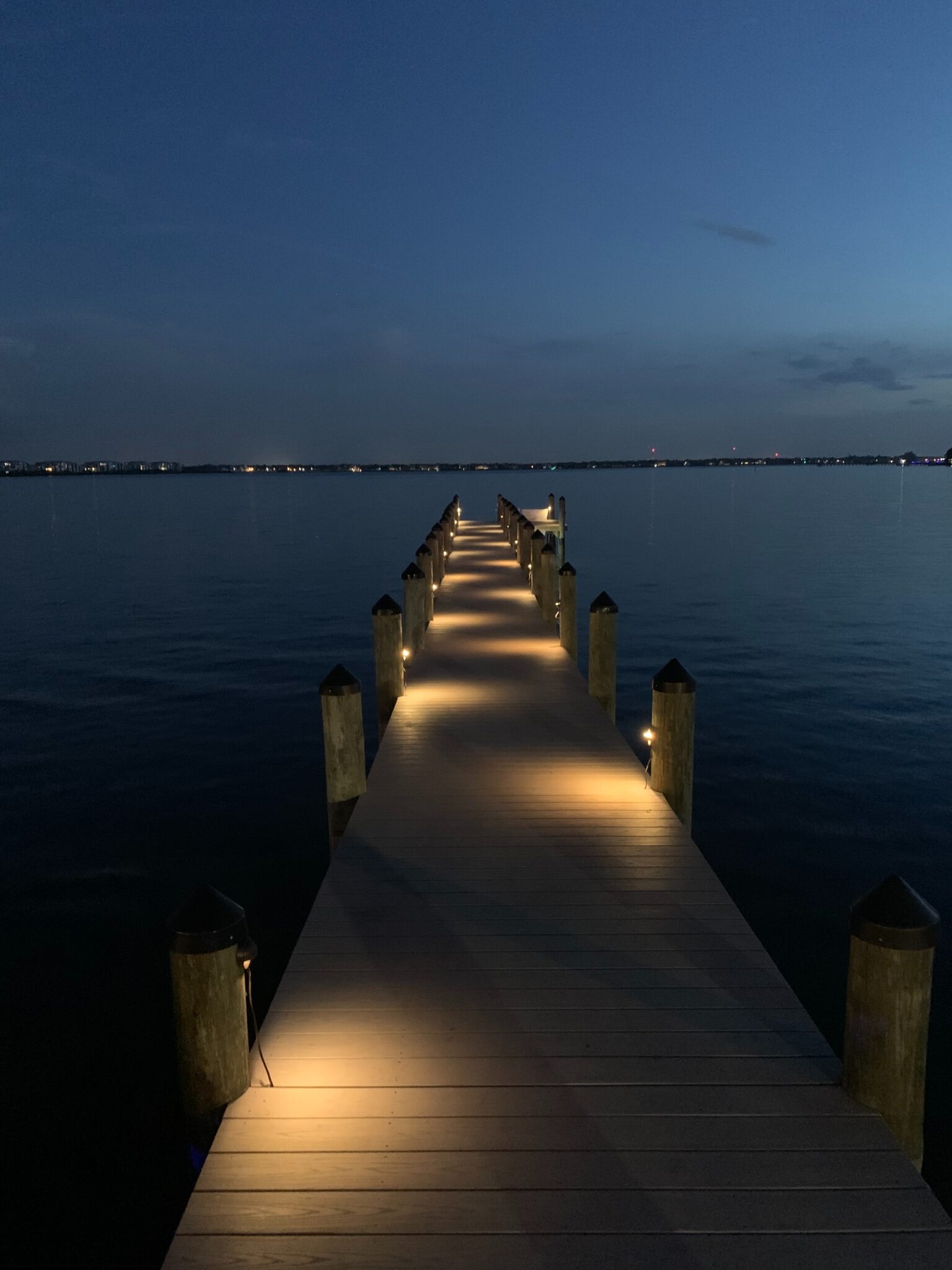
Safely Restoring Your Dock After Tampa Bay Storms
Strong summer storms, tropical systems, and hurricanes can be rough on any dock in Tampa Bay. High water, strong wind, and flying debris can damage dock lighting, wiring, and fixtures in ways that are not always obvious at first glance. After the clouds clear, it is tempting to flip the lights back on and get back on the water.
Before that happens, it helps to slow down and check whether your dock lighting is still safe. Damaged lights can create tripping hazards, shock risks, boat damage, and poor visibility when you need it most. This post-storm checklist walks through simple inspection steps, what often needs repair or replacement, and how professional dock lighting installation in Tampa Bay, Florida, can make your system more storm-ready in the future.
First 24 Hours: Safety Checks Before You Step on the Dock
The first day after a big storm is all about safety. If you suspect any damage at all, treat your dock like a construction zone until you know more.
Start with power and water safety:
- Turn off power to all dock circuits at the main panel before any inspection if there is any chance of water intrusion.
- Stay away from standing water around outlets, transformers, or fixtures.
- Skip any inspection during lightning, strong wind, or very high tide.
When you turn power back on later, watch and listen for warning signs such as:
- Burning or melting smells
- Sparking or crackling sounds
- Warm breakers or outlets
- Flickering or pulsing lights
If you notice any of these, stop and leave the power off to that circuit.
Before you walk onto the dock, do a quick visual structural scan from land. Use binoculars or your phone’s zoom, and look for:
- Leaning or twisted pilings
- Missing or broken deck boards
- Large floating debris caught on the dock
Fixtures or wiring hanging or dipping into the water
If you see any clear structural damage, stay off the dock and bring in a professional. Electrical checks should only happen once the structure itself is safe.
Then do a quick lighting triage from shore. Make a simple list or take photos of:
- Missing fixtures or covers
- Cracked or broken lenses
- Lights sitting under water
- Exposed or dangling wires
- Entire runs of lights that do not come on
This early list helps you decide what might need urgent attention and what can wait for a planned repair.
Step-by-Step Dock Lighting Inspection After a Storm
Once it is safe to walk the dock, move slowly and pay attention to each light and connection.
Start with fixtures, lenses, and mounts. Check each one for:
- Cracked or cloudy lenses
- Signs of salt water inside the lens
- Rust or corrosion on screws, brackets, or housings
- Loose, tilted, or twisted fixtures
Storm waves and wind can shove fixtures out of place so beams no longer hit the path, steps, or boat slip correctly. Even if a light still works, a beam pointed the wrong way can create new dark spots where people walk or board a boat.
Next, look at wiring, junction boxes, and connections. Without opening anything, look for:
- Exposed copper or nicked insulation
- Open or missing covers on junction boxes
- Gaskets or seals that are cracked or gone
- Green or white corrosion on terminals and metal parts
Any GFCI outlets or breakers on the dock are important safety tools. Use the test and reset buttons to make sure they trip and then reset properly. If a GFCI will not reset or trips again right away, stop there and plan to bring in a pro.
After the basic check, do a slow walk at dusk. This is the best time to see how the whole system behaves in real life. Look for:
- Flickering or buzzing fixtures
- Spots that are much dimmer than others
- Whole groups of lights that stay off
- Beams that no longer hit steps, ladders, or slip entries
If you have timers, photocells, or smart controls, make sure:
- Lights turn on as it gets dark
- Lights turn off again at the right time
- Any app-based controls still respond as expected
What to Repair, What to Replace, and When to Upgrade
After a full walk-through, you will likely see a mix of minor and serious issues.
Some simple repairs may be safe for a homeowner, as long as power is off and work stays above the waterline. These might include:
- Gently tightening loose fixture screws or brackets
- Swapping out intact bulbs or lamps in fixtures designed for that
- Wiping algae, salt, and debris off lenses with a soft cloth
If you replace any parts, stick with marine-grade, corrosion-resistant hardware and follow the manufacturer’s directions so you do not damage the fixture or void a warranty.
Certain components are usually better to replace than to patch. These include:
- Fixtures that have taken on water
- Housings with heavy rust or pitting
- Cracked or missing lenses
- Wiring with damaged or swollen outer sheathing
If the same spot on the dock keeps giving you trouble, that can be a sign of:
- Undersized wiring
- Poor protection from splash or tide
- Improper installation methods
There are also clear times to bring in a dock lighting professional:
- Any junction box that has been under water
- Breakers or GFCIs that will not reset and stay on
- Large portions of the system that do not work
- Any suspected shock hazard or tingling feeling near metal parts
A professional who works with dock lighting installation in Tampa Bay, Florida, can also step back and look at the bigger picture, such as coverage, energy use, and how your system stands up to our local storm patterns.
Designing Storm-Ready Dock Lighting in Tampa Bay
The best time to think about storm damage is before the next system forms in the Gulf. Good design choices make a big difference in how your dock lighting handles rough weather.
For hardware:
- Marine-grade LED fixtures designed for coastal use
- Fully sealed housings with quality gaskets
- Stainless steel or composite bodies and brackets
- UV resistant parts that can handle strong sun
Low-voltage systems with proper transformers and watertight, outdoor-rated enclosures add another layer of safety around water.
Smarter layout and wiring also help. Good practices include:
- Routing cables away from high-impact zones where waves hit hardest
- Securing lines so they do not rub, sag, or chafe on pilings
- Using the right conduit and drip loops to limit water entry
- Grouping fixtures into zones so one failure does not leave everything dark
Layered lighting can keep key areas safe even if part of the system goes out. For example:
- Path and step lights for walking surfaces
- Piling lights for the dock edges
- Waterline or slip lighting for boat approach and docking
A local dock lighting specialist understands how tide swings, salt exposure, and local codes affect your setup. A pro can retrofit an older dock, add controls like timers and photocells, and make sure GFCIs, grounding, and bonding are all handled the right way for a damp, coastal environment.
Long-Term Protection: Maintenance, Monitoring, and Insurance
In Tampa Bay, storms are not a one-time event. Regular care keeps your dock lighting ready all season.
Helpful seasonal habits include:
- A pre-season inspection before the most active months
- A quick check after any named storm or strong squall
- Cleaning lenses to keep light output strong
- Testing GFCIs and controls
- Watching for early rust or discoloration on hardware
Good records also matter. Before and after big storms, take clear, dated photos of your dock and lighting. Keep:
- Photos of fixtures, wiring paths, and controls
- Notes from any professional inspections
- Receipts for repairs, replacements, and upgrades
These records can help with insurance claims and also show that your dock has been cared for, which is helpful for long-term value.
Building an ongoing relationship with a trusted service provider means your dock gets faster post-storm checks and someone familiar with its history. Over time, planned maintenance and thoughtful upgrades usually cost less stress and money than repeating the same emergency fixes after every busy storm stretch.
Transform Your Dock Into a Safe, Stunning Waterfront Escape
If you are considering dock lighting installation in Tampa Bay, Florida, we are ready to design a solution that enhances both safety and ambiance on your waterfront. At Elegant Accents Outdoor Lighting, we carefully plan every fixture placement so your dock looks beautiful and functions reliably night after night. Reach out to us today through our contact page to schedule a consultation and start bringing your vision to life.