
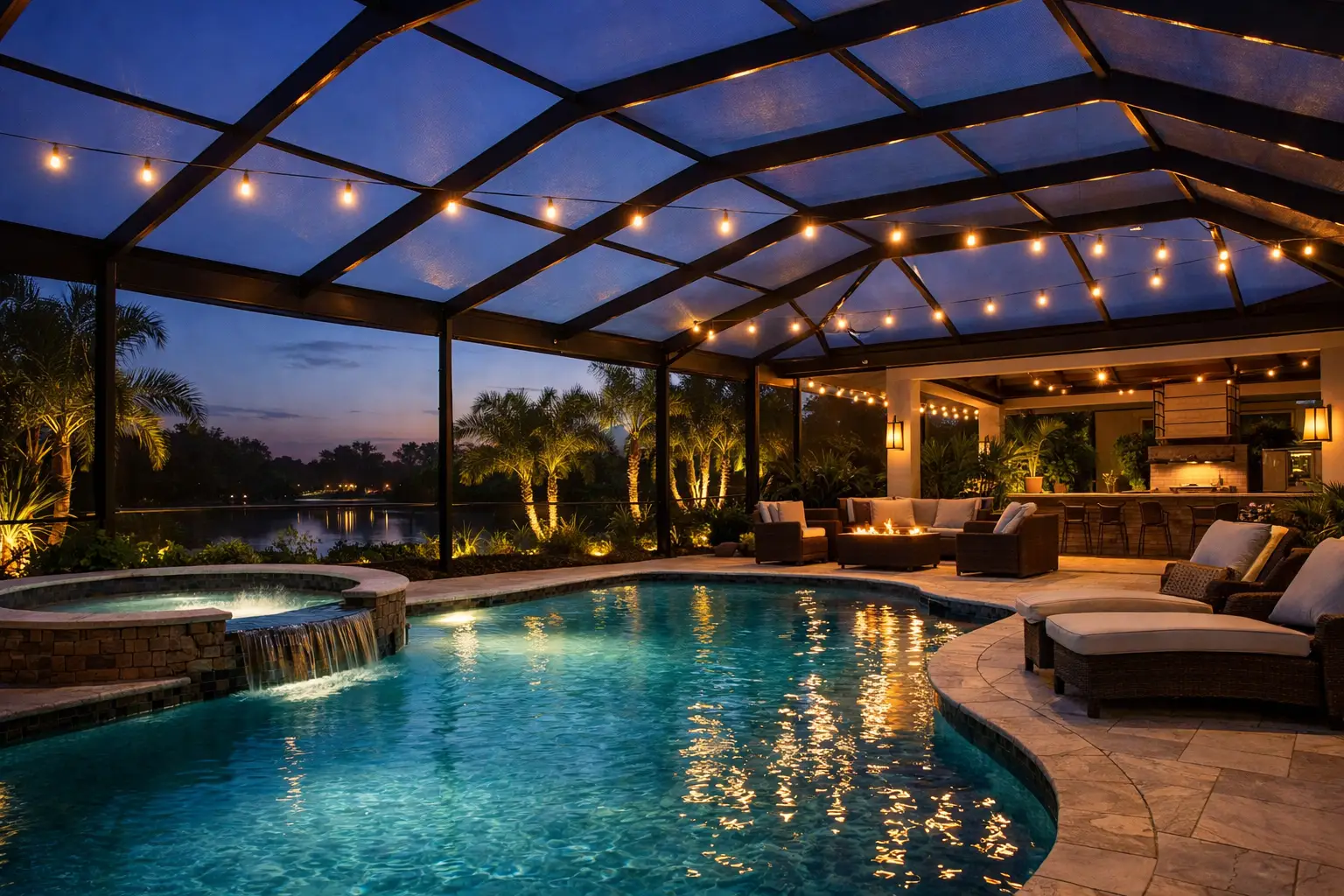
A beautiful Tampa Bay evening should not end when the sun drops behind the palms. Thoughtfully designed pool cage lighting lets the architecture of a screened enclosure recede into the background while the water, landscaping, dining area, and conversation spaces take on a warm, polished presence. The goal is not to flood the lanai with brightness. It is to create enough layered illumination to move comfortably, entertain confidently, and enjoy the view without sacrificing the relaxed character of the night.
For homeowners who have invested in a pool, outdoor kitchen, paver deck, or carefully designed landscape, lighting is often the finishing detail that makes the entire space feel complete. It adds practical visibility, certainly, but it also changes how the space is used. A pool deck that once felt closed after dinner becomes a natural place for a late swim, a quiet drink, or a gathering that continues well past sunset.
What Pool Cage Lighting Should Accomplish
A pool enclosure presents a unique lighting challenge. Screens, aluminum framing, reflective water, glass doors, and open views all react differently to light. A fixture that seems modest during installation can create glare on the water, shine into the home, or reveal every line of the cage if it is placed without a complete design plan.
The strongest pool cage lighting designs balance four priorities: safe movement, visual comfort, architectural definition, and atmosphere. Steps, transitions between deck levels, grill areas, and pathways need reliable illumination. At the same time, seating areas should feel soft and welcoming rather than overly bright. The pool itself should remain visually appealing, with light that enhances the surface of the water instead of competing with it.
This is why a single overhead fixture rarely delivers a satisfying result. It may make the deck visible, but it does little to create distinction. Layered LED lighting gives each part of the outdoor environment an appropriate role, allowing the space to feel intentional rather than simply lit.
Start With How You Use the Space
The right design begins with real habits, not a fixture catalog. A family that swims at night several times a week needs a different plan than homeowners who primarily host dinner parties beside the pool. A covered lanai with an outdoor kitchen may need focused task lighting near food preparation, while a waterfront pool area may benefit from subtle perimeter illumination that preserves the view.
Consider where people naturally gather after dark. The dining table, lounge chairs, fire feature, spa, bar seating, and doors leading into the home all deserve attention. So do the routes between them. Good lighting guides movement quietly. Guests should not have to search for a step, avoid a dark corner, or feel a harsh light source in their eyes as they cross the deck.
The surrounding property matters as well. Mature palms, specimen trees, garden beds, retaining walls, and water features can provide depth beyond the screen enclosure. When those elements are softly illuminated, the pool cage feels connected to the larger landscape instead of becoming a bright box surrounded by darkness.
The Pool Cage Is Part of the Composition
Aluminum framing can be useful as a mounting structure, but it should not become the main visual feature. In many cases, discreet fixtures mounted along the cage structure provide the most practical way to light the deck. The placement and beam direction matter greatly. Light should be aimed down toward usable surfaces and away from sightlines through the screen.
For some properties, indirect lighting from nearby landscape fixtures or architectural lighting on the home can provide much of the ambient glow. This approach reduces the number of fixtures needed inside the enclosure and creates a more refined result. It depends on the layout, screen height, roofline, landscaping, and the amount of light already present from the house.
Choose Warm, Controlled LED Light
Color temperature has an outsized effect on the mood of a pool area. Cool white light can make pavers appear stark, give skin an unflattering cast, and create a commercial feeling. Warm white LED lighting generally complements natural stone, travertine, pavers, stucco, wood ceilings, and lush Florida landscaping far more gracefully.
Brightness deserves equal care. More lumens do not automatically mean better lighting. A pool deck needs enough illumination for safety, but excessive output can flatten the space and diminish the evening sky. It can also create unwanted reflections across glass doors and the water’s surface. Professional-grade fixtures with controlled beam spreads allow light to be placed where it is useful instead of scattered indiscriminately.
LED technology is particularly well suited to Florida outdoor living. Quality fixtures are energy efficient, produce less heat, and offer long service life. Yet not all LED products perform the same way in heat, humidity, rain, and salt air. Weatherproof construction, corrosion-resistant finishes, secure connections, and properly managed wiring all contribute to how a system looks and performs years after installation.
The Most Effective Layers of Light
A well-composed pool area often includes several types of illumination, each used with restraint. Pool and spa lights create a natural focal point, especially when the water is visible from inside the home. Low-level deck lighting can define edges and walking routes without overpowering the setting. Carefully aimed downlights or cage-mounted fixtures can make seating and dining areas comfortable after dark.
Architectural lighting on columns, walls, and rooflines adds another dimension. It gives the enclosure a sense of structure and allows the home to feel as considered from the pool deck as it does from the street. Beyond the cage, subtle uplighting on palms or textured plantings expands the view and gives the entire yard a more spacious, resort-inspired character.
Task lighting should be specific. The outdoor kitchen, grill, and bar are places where clear visibility is genuinely needed, so a brighter but shielded light may be appropriate. It should not spill across the entire lanai. Separating task lighting from ambient lighting allows homeowners to prepare a meal without turning the whole outdoor area into a brightly lit workspace.
Avoid the Common Design Missteps
The most common mistake is treating the pool cage like a garage or utility area. Rows of exposed, high-output fixtures can make a large enclosure feel clinical. They often produce glare, deep shadows, and an uneven visual field that draws attention to the screen and frame rather than the pool and landscape.
Another issue is relying on one lighting zone for everything. An outdoor kitchen, pool, dining area, landscape, and architectural accents do not always need to be on at the same time. Separate zones give homeowners the freedom to choose a low-key evening setting, a well-lit entertaining arrangement, or a simple pathway mode when the pool is not in use.
Poorly planned wiring is also costly to correct later. Wires should be concealed where possible, protected from moisture and maintenance activity, and installed with service access in mind. A polished installation is about more than what is visible on reveal night. It is about ensuring the system remains dependable through summer storms, changing landscaping, and years of outdoor use.
Controls Make the Design Easier to Enjoy
A lighting system should feel effortless once it is installed. Timers, photocells, dimming, and app-based controls can make the transition from daylight to evening automatic. Homeowners may prefer a gentle everyday setting that activates at sunset, then a brighter scene for gatherings or pool parties.
Dimming is especially valuable in screened pool areas because it allows the atmosphere to change without changing the design. A soft setting can make a weeknight feel peaceful, while a higher setting supports entertaining, grilling, or active family time. The best control plan is simple enough for everyone in the household to use, with clearly defined zones and no unnecessary complexity.
Why Professional Design Changes the Result
Pool cage lighting is not merely an electrical project. It is a nighttime design exercise that requires an understanding of sightlines, reflections, fixture optics, mounting methods, and the way Florida homes are actually enjoyed after dark. A daytime walkthrough can identify locations, but a true lighting plan should anticipate what the property will feel like once the sun is gone.
Elegant Accents Outdoor Lighting approaches this process with a custom consultation, a transparent proposal, professional in-house installation, and ongoing maintenance support. That level of planning matters when a lighting system is intended to complement a significant property investment rather than simply add brightness to it.
A carefully lit pool enclosure gives you more than another outdoor feature. It gives the evening a place to go – one that feels comfortable, distinctive, and ready whenever you step outside.