
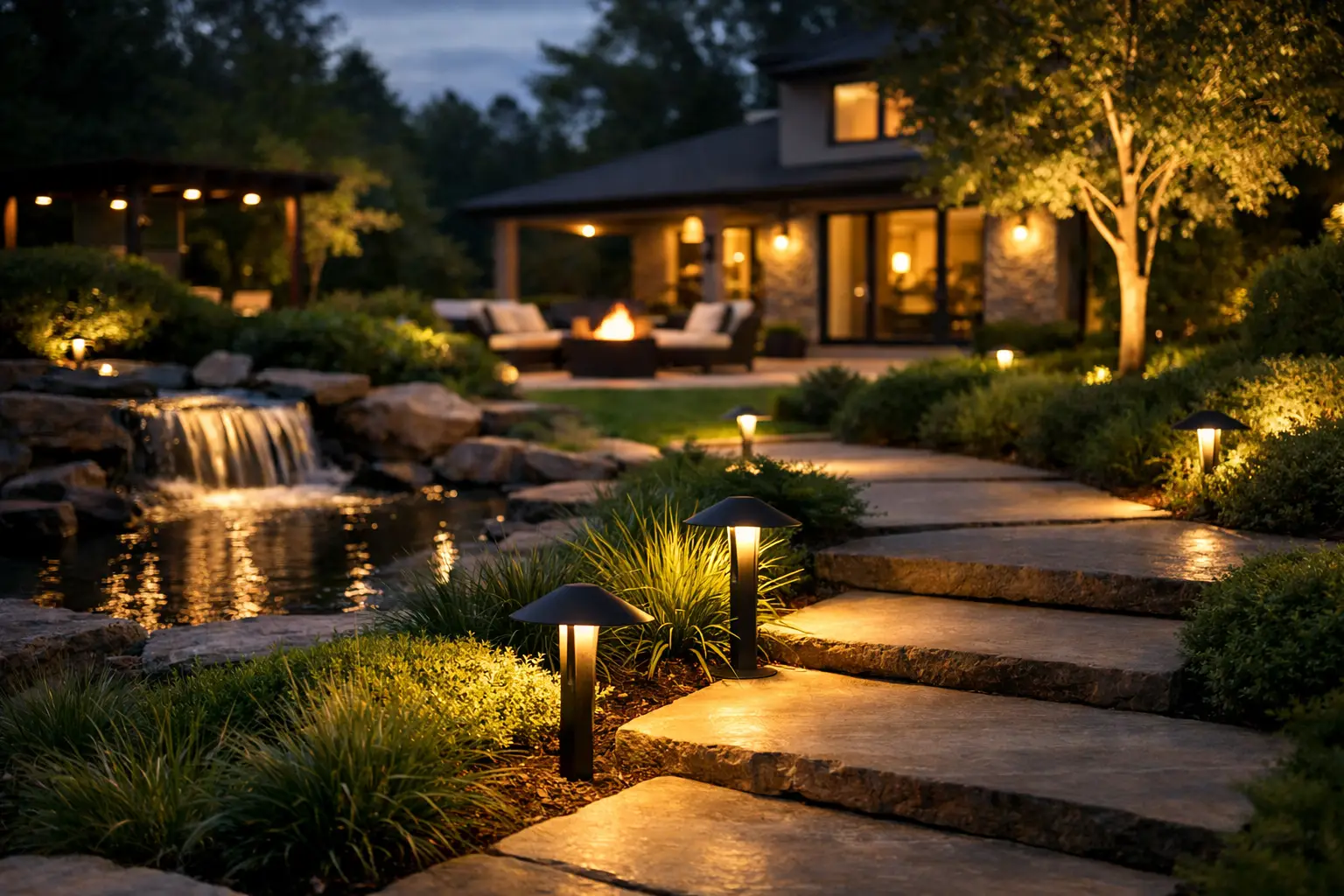
A beautiful Tampa Bay property should not disappear when the sun goes down. Planning luxury landscape lighting is the process of deciding what deserves attention after dark: the home’s architecture, a mature oak, a palm-lined drive, a pool terrace, or the welcoming path to the front door. The best result feels effortless, but that quiet elegance comes from deliberate choices about light placement, fixture quality, beam spread, brightness, and control.
Luxury lighting is not about making every feature equally bright. It is about creating hierarchy. A well-designed system guides the eye, makes movement around the property more comfortable, and gives outdoor spaces a finished presence long after daylight fades.
Start With the Evening Experience
Before selecting fixtures, consider how the property is used at night. A front elevation may need a graceful arrival sequence that improves curb appeal and visibility. A backyard designed for entertaining needs a different approach, with enough illumination for safe movement while preserving the relaxed atmosphere around seating, dining, and water features.
Walk the property at dusk whenever possible. Daytime plans reveal plant material, paving, rooflines, and architectural details, but dusk reveals where the property actually falls away into shadow. Notice the route from driveway to entry, the steps that need definition, and the areas where guests naturally gather. These observations become the foundation of a lighting plan with purpose.
For many established homes, the first priority is the architecture. Layered illumination can reveal stonework, columns, gables, arches, and textured finishes without flattening the façade in a wash of overly bright light. Mature landscaping then becomes a supporting element or a focal point in its own right, depending on what makes the property distinctive.
Define What Should Take Center Stage
A luxury landscape lighting design should have a few intentional focal points rather than dozens of competing ones. Perhaps it is the grand canopy of a live oak, a formal entry framed by palms, or a garden wall that adds depth to a courtyard. The eye needs areas of light and areas of rest.
Uplighting is often used to bring height and drama to trees, columns, and architectural surfaces. The fixture location and beam angle matter as much as the fixture itself. A narrow beam can emphasize the trunk and canopy of a tall palm, while a wider spread may be better suited to a broad oak or an expansive façade. Installing a fixture too close to a wall can create harsh scallops; placing it too far away can weaken the intended detail.
Downlighting offers another layer of refinement. Mounted thoughtfully in trees or structures, it can cast a gentle, natural-looking glow on walkways, planting beds, and seating areas. This approach is especially effective where homeowners want usable outdoor light without a visible row of path fixtures. It also depends on access, mounting conditions, and the long-term health of the tree, which is why professional assessment matters.
Water and reflective surfaces deserve careful treatment. Pool decks, fountains, and waterfront views can become remarkable nighttime features, yet reflection magnifies glare. The goal is to light the surrounding landscape, circulation areas, and architectural edges so the water remains inviting rather than visually busy.
Light the Path, Not Every Inch of It
Path and step lighting should help people move confidently, not create an airport runway. Selective pools of light make changes in elevation, turns, and transitions easy to see while maintaining a more sophisticated look. A low, shielded fixture or carefully aimed downlight can provide the necessary visibility without shining into guests’ eyes.
This is particularly important around pool decks, docks, and waterfront walkways. Safety is essential, but high output alone is not the answer. Glare reduces visual comfort and can make the surrounding darkness feel even deeper. Proper shielding, fixture placement, and restrained brightness create a safer result that still feels polished.
Choose Color Temperature With Restraint
Color temperature has a major effect on the character of a property. Warm white light generally complements natural stone, stucco, brick, wood, and lush Florida landscaping. It creates an inviting, elegant tone that suits dining terraces, entry gardens, and traditional or transitional architecture.
Cooler light can work for certain contemporary designs, pale materials, or crisp architectural lines, but it needs a disciplined hand. Used across an entire property without consideration, it can make a residence feel stark rather than refined. The right choice depends on exterior finishes, planting palette, surrounding ambient light, and the mood the owner wants to create.
Consistency matters. Mixing color temperatures across the front yard, pool area, and patio can make even expensive fixtures look unplanned. A custom design should establish a cohesive visual language, then allow subtle variation only where it serves the overall composition.
Planning Luxury Landscape Lighting Around Layers
The strongest systems are layered, much like a well-designed interior. Ambient light establishes the overall mood. Accent light gives visual importance to trees, architectural features, and garden art. Task light supports movement and activity at entries, steps, grills, gates, and outdoor kitchens.
Each layer should be adjustable to the scale of the property. A compact courtyard may need only a few precisely placed fixtures, while a larger estate can support distinct lighting zones for the arrival drive, front elevation, rear patio, pool, and garden perimeter. More fixtures do not automatically create a better result. In fact, over-lighting can erase contrast, waste energy, and diminish the sense of privacy homeowners value.
Control is part of the design, not an afterthought. Timers, astronomical scheduling, zone controls, and smart adjustments allow lighting to respond to changing seasons and routines. The front of the home may operate on a dependable evening schedule, while entertainment areas can remain available later for gatherings. Thoughtful controls make the system feel easy to live with while supporting energy-conscious operation.
Specify Fixtures for Tampa Bay Conditions
A luxury lighting plan must perform beautifully through heat, humidity, heavy rain, salt air near the coast, and active growing seasons. Fixture materials, seals, wiring methods, and installation practices all affect how well a system holds up over time.
High-quality, weatherproof LED fixtures offer long life, efficient operation, and consistent light output. They also make it possible to create nuanced effects with lower energy use than older lighting technologies. Still, LED quality varies widely. Color consistency, optical control, thermal management, and replaceable service components are worth considering before a system is installed across an entire property.
The wiring layout also deserves professional attention. Voltage drop can affect brightness across larger properties if the system is not properly engineered. Fixture placement must account for irrigation, root growth, mulch changes, drainage, and future landscape maintenance. A beautiful nighttime reveal should not come at the expense of a system that is difficult to service six months later.
Make Installation and Maintenance Part of the Plan
Landscape lighting is a living system because the landscape itself changes. Trees grow, hedges fill in, mulch shifts, and a once-open beam path can become obstructed. Seasonal adjustments keep the design looking intentional as the property matures.
Professional installation protects both appearance and performance. Clean cable routing, securely mounted fixtures, precise aiming, and carefully concealed equipment preserve the refined look homeowners expect. The final aiming session after dark is especially important. This is where a design becomes an experience, with small adjustments that soften glare, strengthen focal points, and establish the right balance between brightness and shadow.
Ongoing maintenance supports that original vision. Fixtures may need cleaning, repositioning, or trimming around; connections should be inspected; and controls may need seasonal updates. Elegant Accents Outdoor Lighting approaches this long-term care as part of the investment, helping a property retain its brilliance rather than allowing its lighting to slowly lose definition.
Budget for the Design, Not Just the Fixture Count
Luxury outdoor lighting is often priced according to the scope of the property, the number and type of fixtures, installation complexity, controls, and any specialized areas such as docks, pool cages, rooflines, or outdoor kitchens. A transparent proposal should explain what is being illuminated, why those choices were made, and what the finished system includes.
A phased plan can be a smart option when a property has several distinct outdoor areas. Begin with the front elevation and entry, for example, then extend the design to the backyard as future landscaping or pool improvements are completed. The key is to create an overall master plan first, so each phase feels connected rather than added on.
The right lighting plan does more than brighten a home. It preserves the character of the property after sunset, makes outdoor living feel more natural, and creates an arrival that leaves a lasting impression. Start with the features you would miss most at night, then let a careful design reveal them with confidence and restraint.