
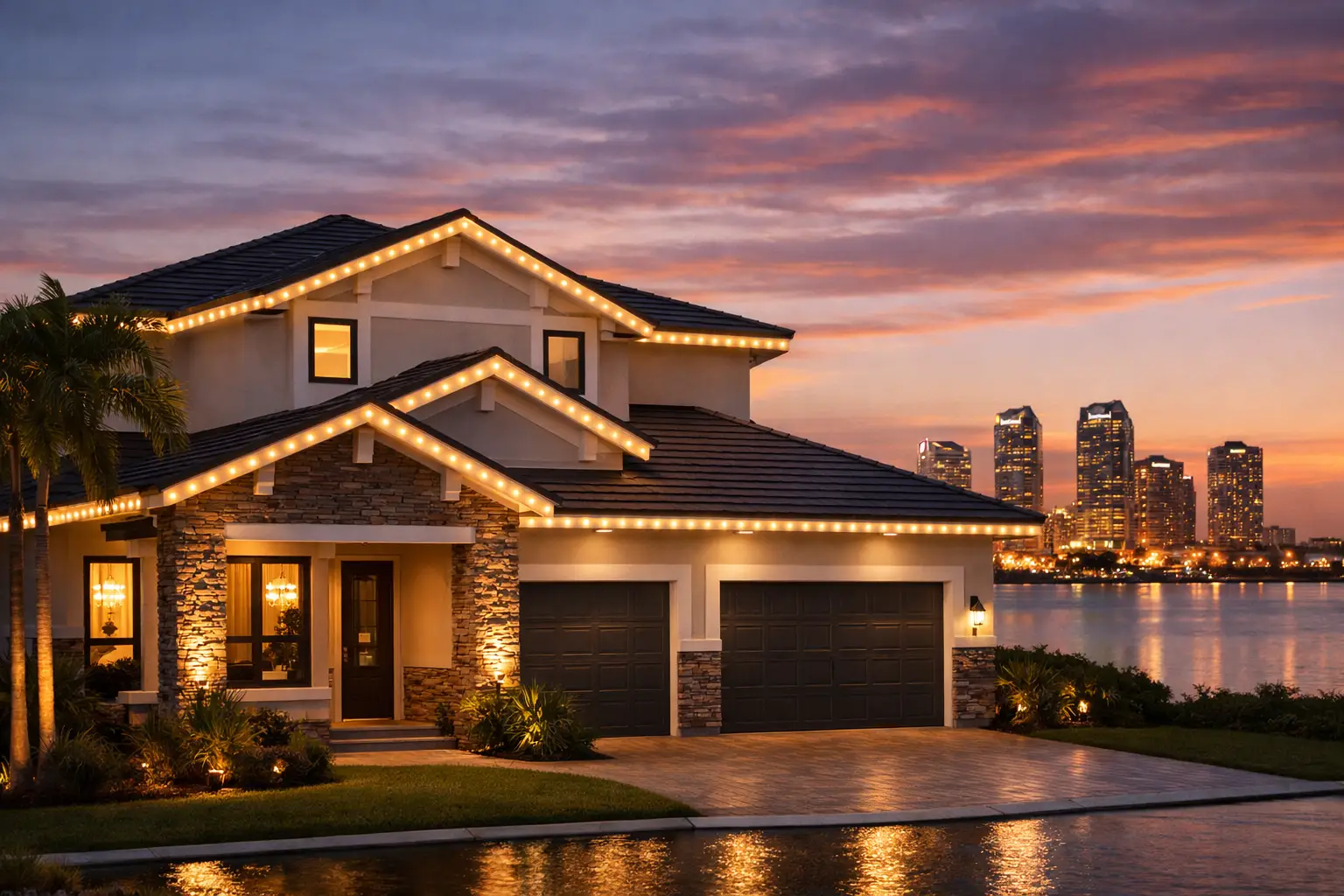
A beautifully finished home should not disappear after sunset. Permanent roofline lighting gives Tampa Bay homeowners a polished way to define roof peaks, gables, eaves, and architectural lines every night of the year, then shift into celebratory color when the season calls for it. The result is more than a holiday display. It is a tailored exterior lighting feature that brings distinction to the property after dark.
Unlike temporary strands that are installed, removed, stored, and replaced each year, a professionally designed permanent system is discreetly integrated along the roofline. During the day, the fixtures and tracks are intended to recede into the architecture. At night, they can create anything from a soft, warm-white outline to a vibrant scene for holidays, game days, family celebrations, or community events.
What Permanent Roofline Lighting Does for a Home
The appeal begins with convenience, but the lasting value is architectural. A well-designed system traces the lines that make a home recognizable: the front gable, covered entry, upper roofline, porch, or poolside structure. Instead of relying on a blanket of light, the design uses controlled placement and thoughtful spacing to create visual balance.
For many Tampa Bay properties, warm white lighting is the everyday choice. It complements stucco, stone, brick, tile, and modern exterior finishes without making the home feel overly decorated. It can also provide a welcoming sense of arrival for residents and guests, especially on homes set back from the street or located on darker roads.
Color control adds another layer of possibility. Homeowners may choose red, white, and blue for patriotic holidays, orange for autumn gatherings, school colors for a graduation celebration, or a subtle palette for a birthday or special event. Because the system is already in place, there is no ladder work, tangled wiring, or annual installation appointment required to create the look.
It Is Not the Same as String Lights
Temporary holiday lights are designed for a short season. They often rely on visible clips, exposed cords, uneven bulb spacing, and a setup that can become difficult around steep rooflines, landscaping, and gutters. They also need to be removed before Florida’s heat, rain, and storm season take their toll.
Permanent roofline lighting is a different category of exterior improvement. The components should be selected for outdoor exposure, installed with a clean and intentional finish, and positioned to protect the home’s appearance. The goal is refined illumination, not a row of obvious bulbs competing with the architecture.
That distinction matters most on established and upscale homes. A system that is too bright, too colorful, or poorly aligned can make an elegant facade feel busy. A custom plan should account for roof geometry, soffit depth, fascia color, sightlines from the street, and how the lighting relates to the rest of the property.
Why Professional Design Matters in Tampa Bay
Florida weather is demanding on every exterior system. Intense sun, heavy rain, salt air near the coast, humidity, and storm activity all influence which materials and installation methods make sense. Quality weatherproof LED fixtures, secure mounting, protected connections, and properly planned power access are not minor details. They are central to long-term performance.
Professional installation also makes the visual difference between a system that looks built into the home and one that looks added afterward. Straight runs must remain straight across changing roof elevations. Corners, peaks, and transitions need careful treatment. Wiring should be managed cleanly, and controls should be easy to use without becoming an eyesore.
Elegant Accents Outdoor Lighting approaches roofline projects as part of the property’s overall nighttime design. That means looking beyond a single illuminated edge. If the home already has landscape lighting, entry lighting, pool cage lighting, or dock and deck lighting, the roofline should complement those layers rather than overpower them. The most memorable properties have a sense of harmony from the curb to the backyard.
A Balanced Lighting Plan Prevents Overlighting
More light is not always better. Roofline lighting works best when it establishes a clear architectural outline, while lower-level lighting provides depth and texture. Uplighting on palms or specimen trees, soft illumination at the entry, and carefully placed path lights can make the property feel complete.
Brightness should also suit the setting. A waterfront home, a quiet neighborhood, and a busy commercial frontage each call for a different approach. Designers must consider nearby homes, street visibility, local expectations, and the homeowner’s preferred everyday look. The ability to create festive color is valuable, but a restrained warm-white setting is often what gives the installation its most timeless elegance.
What to Expect From the Installation Process
A premium result starts with a conversation at the property. During a consultation, the lighting professional evaluates the home’s architecture, roofline access, electrical considerations, finishes, and the areas a homeowner wants to highlight. This is also the time to discuss how the system will be used most often: everyday curb appeal, seasonal holidays, entertaining, security-minded visibility, or all of the above.
The next step is a custom plan and transparent proposal. A clear proposal should define the scope of the installation, the equipment included, the control options, and the expected investment. Pricing varies because every roofline is different. The number of peaks, linear footage, access conditions, electrical requirements, fixture type, and desired level of integration all affect the final cost.
Once the design is approved, experienced in-house crews can install the system with attention to both function and finish. Homeowners should expect professional care around landscaping, exterior surfaces, and clean jobsite practices. After installation, the nighttime reveal is where the planning becomes tangible: a home that holds its presence long after daylight fades.
Choosing Features That Fit Your Lifestyle
The right system should feel simple to enjoy. App-based controls are popular because they allow homeowners to change colors, adjust brightness, set schedules, and save favorite scenes from a phone or tablet. Automation can turn warm white lighting on at dusk, switch to a holiday palette for a set period, and return to the standard setting without daily effort.
Still, technology should serve the design, not become the focus. A homeowner who wants an understated year-round presentation may need only a few reliable presets. Someone who hosts often or enjoys seasonal decorating may appreciate greater color flexibility and custom scene control. The best recommendation depends on how the property is lived in.
It is also wise to ask about service after installation. Exterior lighting is a long-term investment, and even high-quality systems benefit from periodic inspection, adjustments, and support. A company that provides maintenance can help keep fixtures, controls, and connections performing as intended as the home and landscape evolve.
Questions Homeowners Should Ask Before Installing
Before selecting a provider, ask whether the system is designed specifically for permanent exterior use and how it will hold up to Florida weather. Ask how the fixtures will appear in daylight, where wiring and power connections will be located, and whether the installation team is employed in-house or outsourced.
Homeowners should also ask for a clear explanation of controls, warranties, and ongoing service. A thoughtful provider will discuss the trade-offs openly. For example, a lower-cost product may have less discreet hardware, fewer control options, or a shorter expected service life. A custom installation costs more than a seasonal light package, but it can eliminate recurring setup while adding a finished architectural feature that can be enjoyed throughout the year.
For commercial properties, restaurants, and hospitality spaces, the discussion should include guest experience and brand presentation. Roofline lighting can make an entrance easier to identify, create a more inviting evening atmosphere, and support seasonal promotions without requiring repeated installations. The lighting still needs restraint. Guests remember a property that feels welcoming and intentional, not one that feels visually overwhelming.
A home has its own character after dark. With a carefully designed permanent roofline system, that character can be expressed with quiet warmth on an ordinary evening or with celebration when the occasion deserves it. The right plan respects the architecture, stands up to the local climate, and makes every arrival home feel a little more exceptional.