
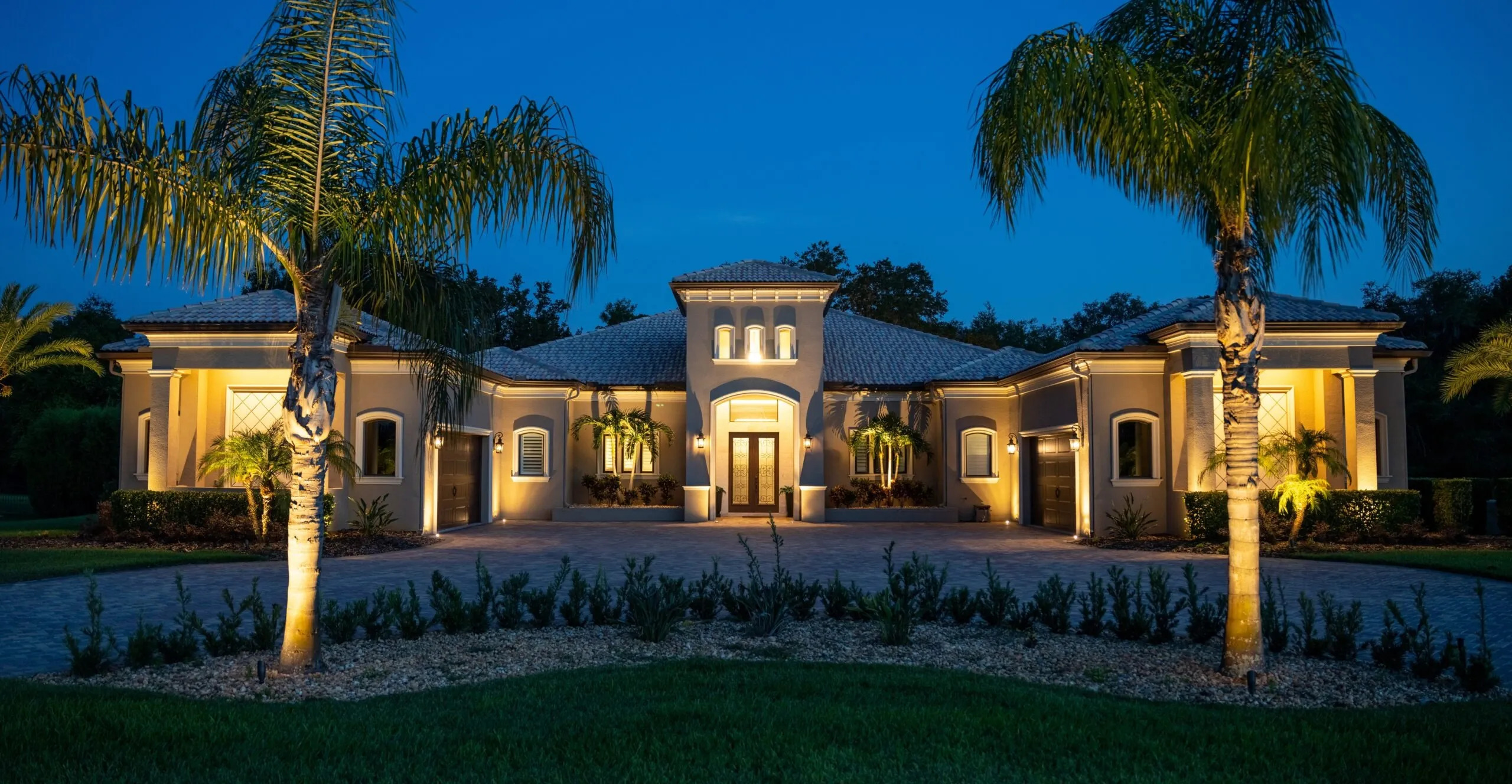
Light up Clearwater Nights Without Surprises
Outdoor lighting matters when the sun stays up late and you want to keep the evening going. Around the June solstice, Clearwater homeowners get long, bright days, then warm, dark nights that are perfect for pool time, cookouts, and quiet talks by the water. Good lighting turns patios, docks, decks, and walkways into comfortable nighttime spaces instead of dark, unused corners.
When you start planning, you will hear two main terms: low voltage and line voltage. In simple words, low voltage lighting runs on a smaller, safer amount of electricity, while line voltage uses the full power that runs your home. Choosing between them affects safety, how your property looks after dark, and what you deal with later in upkeep.
In this guide, we break down how each type works, when each one makes sense, what kind of permits may come into play in the Clearwater area, and how these choices can affect your long-term budget and peace of mind.
Low Voltage Landscape Lighting Basics in Clearwater
When people talk about low voltage landscape lighting in Clearwater, they are usually talking about 12-volt systems. Your home has standard 120-volt power. A transformer steps that power down to 12 volts, then sends it through special outdoor wire to your fixtures. The fixtures and connections are built to handle heat, humidity, and, for many homes here, life near saltwater.
Low voltage lighting fits most of the areas where you actually spend time at night, like:
- Garden beds and plantings
- Walkways and entry paths
- Pool and spa surroundings
- Palm and tree uplighting
- Outdoor kitchens and seating areas
- Docks, decks, and boat slips
These systems have clear advantages for Clearwater homes. The lower shock risk is a big deal around pools, wet pavers, and docks where bare feet and water are part of everyday life. It is also easier to add, move, or aim fixtures as your plants grow or you add a pergola, fire pit, or new seating.
Other benefits include:
- LED options that sip power and stay cool
- Flexible wiring that can snake around existing roots and hardscape
- The ability to expand later without starting over
- Softer, more controlled light that is great for mood and comfort
Because everything is designed to run at 12 volts, it gives you more design freedom and less stress about mixing kids, pets, and water with nighttime lighting.
When Line Voltage Lighting Makes Sense Outdoors
Line voltage lighting uses the same 120-volt power that runs your outlets and most indoor lights. Outside, these fixtures are hardwired into your electrical system. They are usually controlled by switches, timers, or smart controls that tie into the rest of the home.
Line voltage can be a good fit in certain situations, such as:
- Large commercial properties that need wide, bright coverage
- Long driveway entries where fixtures are spaced far apart
- Tall architectural features that require very powerful fixtures
- Tall trees or structures where fixtures are mounted high and rarely adjusted
Because line voltage is stronger, it can support some very bright, high-output fixtures. But it also brings tradeoffs. Installation is more complex. It often needs deeper trenching, rigid conduit, and careful planning around utilities. New line-voltage circuits usually call for permits and a licensed electrician.
You also want to think hard about safety. Around pools, docks, and play areas, high-voltage gear brings more risk if something gets damaged or installed the wrong way. For many homes in Clearwater, that is why low voltage becomes the main choice, and line voltage is kept for select areas where strong, fixed lighting is truly needed.
Cost and Permitting Differences Homeowners Should Know
The way each system is built affects what you spend upfront and over time. Low voltage systems often have simpler trenching, less heavy gear, and more flexible layouts. That can mean lighter labor and an easier path if you want to start small and grow your system in stages.
Line voltage systems usually involve:
- More planning around existing utilities
- Heavier conduit and deeper trenches
- More complex connections inside your electrical panel
- Extra time for inspections and approvals
Permitting is another key difference. In Clearwater and across the Tampa Bay area, new line-voltage work and new circuits often require permits and work by licensed professionals. Low voltage landscape lighting may be simpler from a permit point of view, but it still needs to be done correctly to meet local codes and safety guidelines.
Over the long term, LED technology helps both types of systems use less energy and last longer in Florida heat. Still, our coastal environment brings its own challenges:
- Salt air can corrode cheap metal fixtures more quickly
- Humidity and sun can wear down poor-quality wire and connections
- Storms and wind can shift fixtures and wiring
Professional design, careful installation, and regular maintenance can help protect your investment, catch small issues early, and keep your lights looking great through many seasons.
Choosing the Right System for Every Area of Your Yard
Instead of picking one voltage for everything, it helps to think by zone. Each part of your property has its own needs.
Front yard and curb appeal
For front entries, paths, and plantings, low-voltage lighting is usually the smarter pick. It offers gentle, layered light that flatters your home and helps guests walk safely without harsh glare.
Backyard entertaining spaces
Around patios, seating, outdoor kitchens, and play areas, low-voltage lighting gives you control, from soft, warm glows to brighter task lighting near grills and counters. It is easier to adjust as you add furniture or change how you use the space.
Pool, spa, docks, and decks
Anywhere close to water, the lower shock risk of low-voltage lighting is a major plus. It also makes it easier to create reflective light on the water, outline dock edges, and mark steps without big, bulky fixtures.
Side yards and service paths
Low-voltage path lights and small wall lights work well here, giving enough visibility to take out the trash, walk dogs, or move between gates and doors.
There are still times when line voltage might be considered, such as:
- Large estate entrances with tall columns or big gate structures
- Commercial facades that need strong architectural lighting
- Very tall palms or buildings where a lot of light must reach high surfaces
In some properties, a hybrid setup works best, with low voltage handling most areas and selected line-voltage fixtures used for a long driveway or a large entrance feature.
Outdoor lighting in Clearwater also has to respect:
- Intense summer storms and wind
- Coastal corrosion near the Gulf
- HOA rules about fixture style and brightness
- Dark-sky friendly habits, like aiming light down and avoiding glare
A skilled outdoor lighting designer can match the right fixtures, voltage, and beam spreads, so you get beautiful light where you want it and dark skies where you do not.
Plan Your Clearwater Outdoor Lighting with Confidence
Choosing between low voltage landscape lighting in Clearwater and line voltage is really about how you live outdoors. You want to think about safety around water, how big your project is, how much upkeep you are comfortable with, and how you might expand your system as your property changes. For most homes and many small businesses, low voltage checks the most boxes for comfort, safety, and flexibility.
As outdoor lighting professionals based in the Tampa Bay area, we work with these questions every day. We understand how Florida codes, salt air, strong sun, and coastal storms affect outdoor systems, and how thoughtful design can bring out the best in your home or business after dark. With the right mix of low voltage and, when it makes sense, line voltage, your property can stay welcoming and beautiful long after the sun slips past the horizon.
Brighten Your Clearwater Home With Custom Lighting Design
Transform your outdoor spaces with professionally designed low voltage landscape lighting in Clearwater that enhances safety, curb appeal, and evening enjoyment. At Elegant Accents Outdoor Lighting, we listen to your goals and craft a custom plan that fits your property and style. Ready to see your home in a better light? Schedule a consultation today through our contact page so we can get started.