
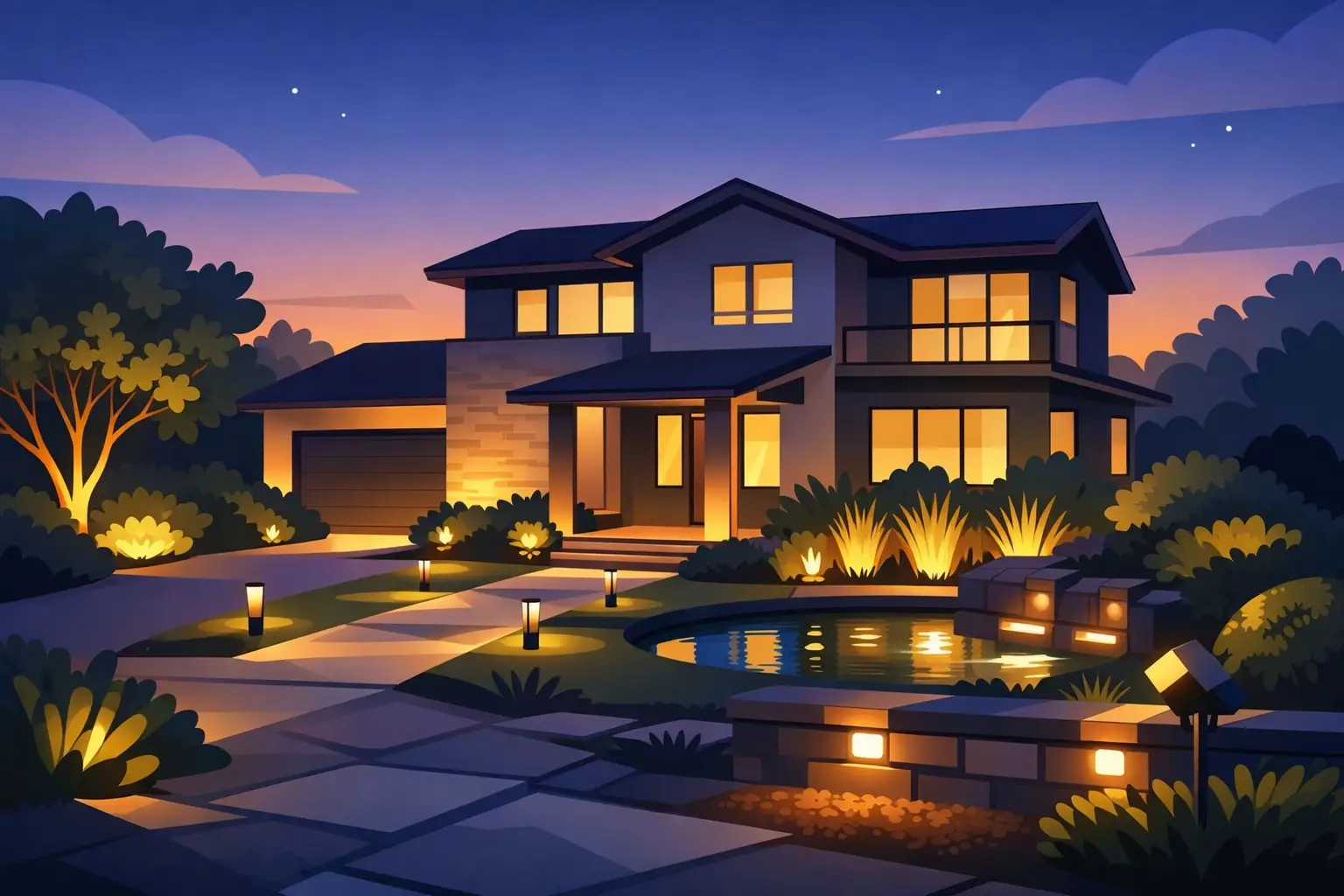
A beautifully maintained home should not disappear when the sun goes down. The right landscape lighting gives a Tampa Bay property a composed nighttime presence, drawing attention to architecture, mature palms, garden textures, and the outdoor spaces where people gather. More than a collection of fixtures, it is a considered design that makes a home feel welcoming, secure, and unmistakably refined after dark.
For established homes, lighting is often one of the most visible improvements a property owner can make. It changes the first impression from the street, extends the use of patios and pools, and helps guests move comfortably through the property. The difference lies in restraint, fixture quality, and a plan designed around the home rather than a one-size-fits-all layout.
Landscape Lighting Begins With What Deserves Attention
Every property has features worth revealing at night. A stately entry, a canopy of oaks, a stone facade, a fountain, or a carefully planted garden can take on an entirely different character under a layered lighting plan. The goal is not to illuminate every square foot. It is to create focal points, depth, and a natural progression from the front approach to the backyard.
At the front of the home, subtle uplighting can bring dimension to columns, gables, and textured walls. Carefully placed lighting at specimen trees gives the landscape height and drama without putting harsh brightness into neighboring windows. Along a walk or driveway, low-profile path fixtures define the route and reduce trip hazards while preserving the elegance of the setting.
The best designs also account for what should remain in shadow. Darkness gives light its contrast. When every tree, shrub, and roofline is equally bright, the result can feel flat and overdone. A professional lighting designer considers viewing angles from the street, the driveway, interior windows, and outdoor living areas to establish a balanced composition.
The Value Goes Beyond Curb Appeal
Curb appeal is often the first reason homeowners consider exterior lighting, and it is a meaningful one. A well-lit home looks cared for and distinguished, whether arriving after dinner, welcoming visitors, or viewing the property from the street. Yet the practical benefits are just as compelling.
Lighting improves visibility around steps, changes in grade, gates, pool decks, and walkways. It can make the route from a dock or detached garage feel more comfortable without flooding the entire yard with glare. A thoughtfully illuminated entry also supports security by reducing dark approach areas and making the property easier to navigate at night.
For Tampa Bay homeowners who entertain outdoors, lighting gives the evening more room to unfold. The pool cage, lanai, deck, and dining area become usable long after daylight fades. Warm, controlled illumination allows conversations to continue while preserving the relaxed atmosphere that makes outdoor living feel special.
There is also a long-term property consideration. Quality landscape lighting can reinforce the architectural and landscape investments already made around a home. It does not replace thoughtful landscaping or exterior improvements, but it allows those details to be appreciated for more hours of the day.
A Layered Design Creates a More Natural Result
A polished lighting system uses several techniques, each with a specific role. Uplighting directs light upward to define architectural elements and tree canopies. Downlighting from a tree or structure can create a gentle moonlit effect across a lawn, path, or seating area. Path lighting provides guidance at ground level, while grazing can emphasize the texture of stone, brick, or decorative walls.
These techniques should work together rather than compete. For example, an entry may need a softly lit walkway, a modest wash of light on the facade, and an accent on a nearby palm or oak. A pool area may benefit from carefully controlled deck lighting and illumination around transitions, while avoiding fixtures that shine toward the water or seating areas.
Color temperature matters as much as fixture placement. Warm white LED light often complements natural stone, stucco, wood, and lush Florida landscaping. Cooler tones can feel stark against a traditional or Mediterranean-style home. The right choice depends on the home’s materials, existing exterior finishes, and the mood the owner wants to create.
Brightness requires the same level of care. More lumens do not automatically create a better result. Overlighting can produce glare, flatten architectural details, and make a luxury property feel commercial. A skilled design uses only enough light to create definition, visibility, and atmosphere.
Why Professional Installation Matters in Florida
Tampa Bay’s climate asks a great deal of outdoor equipment. Heat, humidity, heavy rain, irrigation, salt air in coastal areas, and seasonal storms can expose weaknesses in low-grade fixtures and rushed installation practices. Durable, weatherproof LED fixtures and properly protected connections are essential for reliable performance.
Professional installation also protects the visual integrity of the system. Wiring should be thoughtfully routed, fixtures should be positioned precisely, and the transformer should be sized for current needs as well as potential future additions. A fixture that shifts over time, a poorly buried wire, or an improperly aimed beam can weaken the appearance of an otherwise beautiful design.
LED technology has made high-end systems more efficient and flexible than the exterior lighting of the past. LEDs use significantly less energy than older halogen systems, offer long operating life, and allow refined control over beam spread and light output. Still, product selection matters. Not all LED fixtures deliver the same color consistency, durability, or finish quality over time.
This is where a dedicated outdoor lighting specialist brings value. Elegant Accents Outdoor Lighting has focused exclusively on this craft since 1999, combining custom design with in-house installation crews and ongoing service. That level of specialization helps ensure the nighttime reveal looks as intentional years later as it did on the first evening.
Plan for Maintenance From the Start
Even an expertly designed system benefits from periodic attention. Landscaping grows, mulch shifts, storms occur, and a fixture that once highlighted a young tree may need adjustment as the canopy expands. Maintenance keeps the design aligned with the property as it evolves.
A regular service visit can include cleaning lenses, checking connections, adjusting fixture aim, trimming back plant material around lights, and replacing components when needed. These details are easy to overlook, but they are what preserve crisp illumination and dependable operation.
Homeowners should also consider how they want to control the system. Timers and photocells offer simple automation, while smart controls can add scheduling flexibility for travel, entertaining, or seasonal changes. The best option depends on the size of the property and how much control the homeowner wants, not simply on which technology has the most features.
Common Mistakes That Undercut a Beautiful Property
The most common mistake is treating outdoor lighting as an afterthought. Adding fixtures one at a time may solve a short-term visibility issue, but it rarely produces a unified look. Beginning with a complete plan creates a more coherent result and makes future additions easier to accommodate.
Another frequent issue is relying on fixtures that are too bright, too cool in color, or too exposed from key viewing angles. If the eye sees the source before it sees the effect, the lighting can feel distracting. Good designs conceal fixtures where possible and direct the beam with precision.
Finally, avoid choosing solely by initial price. A lower-cost system may use materials that fade, corrode, or fail under Florida conditions, creating more expense and frustration over time. A transparent proposal should explain fixture quality, installation scope, controls, and maintenance expectations so the investment is clear from the beginning.
A home takes on a new character at night when its best features are revealed with care. Start by noticing what you love most about the property after sunset: the arrival experience, the garden, the poolside gathering space, or the view from inside. Those observations are the foundation for lighting that feels personal, enduring, and beautifully at home.