
A beautifully illuminated home should not look brilliant only on installation night. In Tampa Bay, outdoor lighting must perform through intense sun, salt air, heavy rain, humidity, and fast-growing landscapes. Knowing how to maintain outdoor lighting protects the investment you have made in your home’s architecture, outdoor living spaces, and after-dark curb appeal.
Quality LED fixtures are built for the elements, but even the finest system benefits from thoughtful, regular attention. The goal is not constant tinkering. It is preserving the clean lines, balanced illumination, and dependable performance that make a professionally designed lighting plan feel effortless.
Start With a Seasonal Lighting Walk-Through
The simplest maintenance habit is also one of the most valuable: walk your property after dark at least twice a year. Early spring and early fall are ideal times in Florida, with an additional check after a major storm or landscaping project.
Stand at the curb first, then view the property from the driveway, patio, pool deck, and primary interior sightlines. Look for dark areas, fixtures that appear brighter or dimmer than the rest, glare shining into windows, and trees or shrubs interrupting a beam. A system can still be operating while no longer presenting the home as its designer intended.
During the daytime portion of the walk-through, inspect fixtures for leaning stakes, exposed wire, cracked lenses, loose mounting hardware, and accumulation of mulch or pine straw. Pool cages, docks, decks, and rooflines deserve particular attention because wind, moisture, and regular use can affect alignments and connections over time.
Keep Fixtures Clean Without Damaging Their Finish
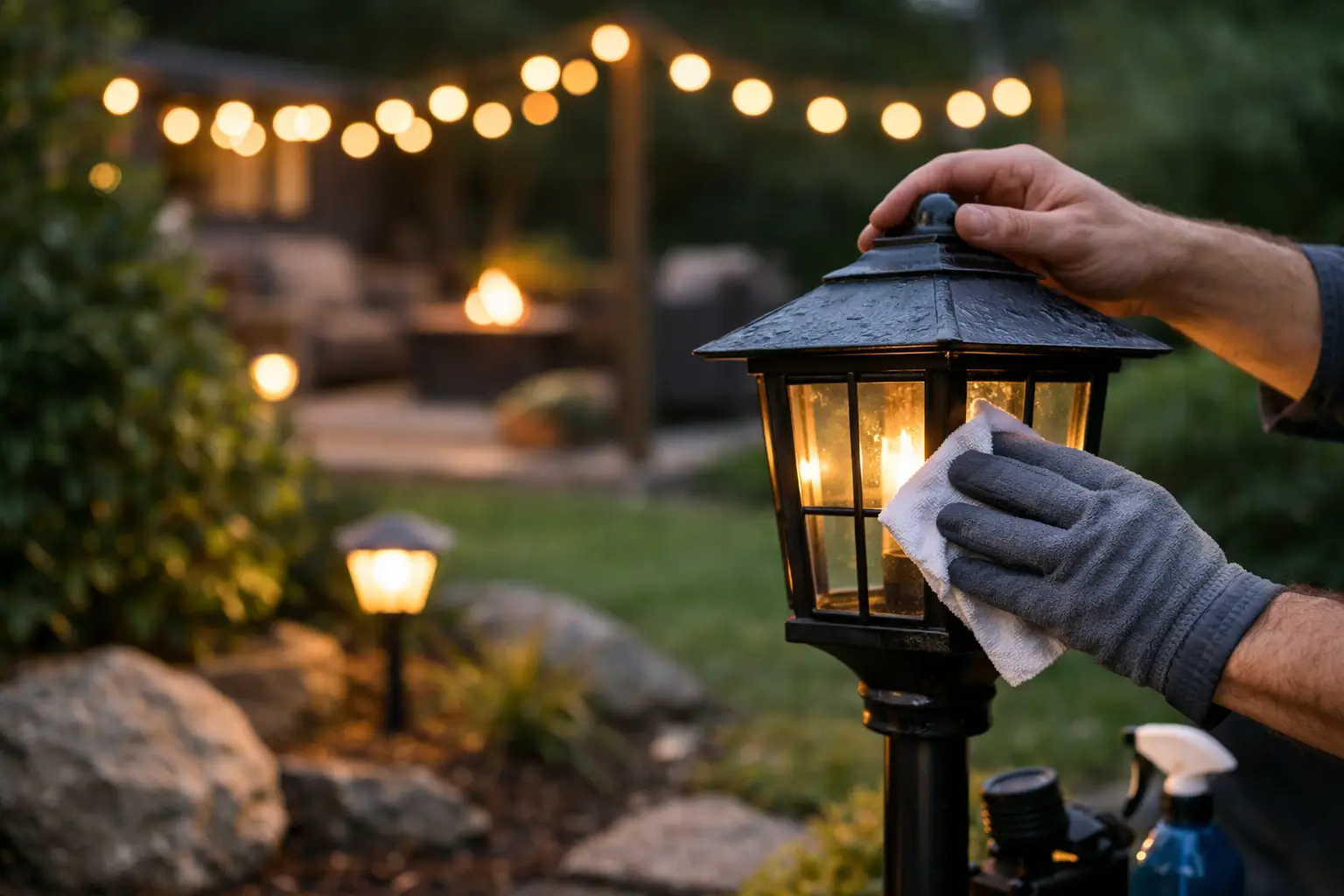
Outdoor fixtures gather pollen, dust, cobwebs, lawn debris, and mineral residue. In coastal and near-coastal Tampa Bay communities, salt exposure can add another layer of wear. A dirty lens reduces light output and can make a carefully composed lighting effect look dull or uneven.
Turn the system off before cleaning. Use a soft microfiber cloth with water and a mild, non-abrasive soap to wipe fixture housings and lenses. Rinse gently and dry the surface rather than allowing residue to remain. Avoid abrasive pads, harsh degreasers, and pressure washers. They can scratch lenses, damage protective finishes, or force water where it does not belong.
Do not assume every patina is a problem. Brass and copper fixtures often develop a natural aged finish, especially in Florida’s humid climate. That change can add character and distinction, while white or green corrosion, flaking coatings, and pitted hardware may signal that a fixture needs professional attention. The right approach depends on the fixture material and the appearance you want to preserve.
Clear Lenses and Drainage Areas
While cleaning, check that lenses are seated correctly and free of cracks. Remove leaves, mulch, and soil from around in-ground fixtures and well lights so moisture can drain away. A fixture buried under landscape material will produce less attractive light and may hold water against components longer than intended.
For uplights near lawn edges, keep sprinkler heads from repeatedly soaking the fixture. Modern weatherproof equipment is designed for rain, not unnecessary direct irrigation every day.
Control Landscape Growth Before It Changes the Design
Landscape lighting and landscaping are connected by design. The palm, oak, hedge, or flowering tree that looked perfectly framed six months ago may now block a path light or cast an unintended shadow across the façade.
Trim foliage that has grown across lenses or into the path of a beam. Keep plants several inches away from fixtures to reduce trapped moisture and heat. If a fixture was installed to highlight a tree canopy, do not simply cut the branches back aggressively without considering the overall effect. It may be better to have the fixture repositioned or its aiming adjusted as the landscape matures.
This is especially true for established luxury properties. Mature landscaping gives a home depth and privacy, but it also changes the way light travels. A small adjustment can restore a dramatic trunk wash, a subtle hedge glow, or the architectural definition that has gradually disappeared behind new growth.
Check Lamps, Connections, and Controls Carefully
LED lamps last far longer than older halogen systems, yet they do not last forever. If one fixture is out, first confirm that its lens is clean and that landscaping is not concealing the light. Then check whether the issue is isolated or part of a larger zone outage.
A single dark fixture may have a failed lamp, a loose connection, or a damaged wire. Several lights out in one area may point to a transformer, connection, timer, photocell, or circuit issue. Do not keep replacing lamps if new ones fail quickly. Repeated failure can indicate voltage concerns, moisture intrusion, or a connection that needs repair.
Controls need attention as well. Test timers and astronomical settings after daylight saving time changes and after power interruptions. If your system uses a photocell, make sure it is not shaded by foliage, roof debris, or a newly added decorative element. Smart controls can make scheduling easier, but they still need occasional review to ensure the system turns on and off when your household actually uses the space.
Know When Not to Make the Repair Yourself
Homeowners can safely clean fixtures, clear plant growth, and make basic visual observations. Electrical repairs are different. Leave work involving transformers, buried wire, low-voltage connections, corroded terminals, or water inside fixtures to a trained outdoor lighting technician.
Low-voltage systems are safer than line-voltage exterior installations, but poor repairs can compromise system performance and shorten equipment life. A professional service visit can identify small issues before they create a larger disruption across the property.
Protect Lighting After Storms and Seasonal Weather
Florida weather is one reason recurring maintenance is worthwhile. Following heavy rain, tropical weather, or high winds, inspect the system once conditions are safe. Look for displaced fixtures, fallen limbs, standing water around in-ground lights, and wires exposed by erosion or digging.
Do not pull on exposed cable or attempt to rebury it without understanding the original layout. Landscape wire may have been placed intentionally to allow for drainage, plant growth, and service access. Take note of the location and schedule an inspection if anything appears damaged.
Before hurricane season, it is wise to confirm that deck lights, dock lighting, pool-area fixtures, and roofline components are secure. For properties near the water, regular checks for salt-related wear are particularly valuable. Preventive service is usually more straightforward than restoring a neglected system after a storm.
Preserve the Balance of Your Lighting Design
Outdoor lighting is more than a collection of fixtures. It is a composition of brightness, shadow, direction, and visual hierarchy. When a homeowner adds a brighter replacement lamp to one fixture, rotates an uplight toward a window, or moves a path light to accommodate new planting, the result can feel less refined even when every light is technically working.
Use replacement lamps with the correct voltage, wattage, beam spread, and color temperature specified for the system. Warm white light is often chosen for residential architecture and landscaping because it complements stone, stucco, natural foliage, and warm exterior finishes. A cooler lamp installed in one location can immediately disrupt the cohesive appearance of the property.
Aim is equally significant. Uplights should reveal texture and form, not create harsh hotspots or glare. Path lights should guide guests comfortably without placing bright points directly in their line of sight. On a pool deck or patio, illumination should support safe movement while preserving the relaxed atmosphere that makes the space inviting at night.
Schedule Professional Maintenance for Lasting Performance
A professional maintenance visit brings a level of precision that routine homeowner care cannot always provide. Technicians can test voltage, inspect waterproof connections, diagnose intermittent outages, reset fixture angles, replace aging lamps with matched components, and refine the system as the property evolves.
For homes with extensive architectural lighting, large landscapes, docks, pool cages, or permanent roofline lighting, regular service is particularly beneficial. These systems have more zones, more visible sightlines, and more opportunities for seasonal change to affect the final presentation.
Elegant Accents Outdoor Lighting has focused exclusively on outdoor lighting in Tampa Bay since 1999, and that specialization matters during maintenance as much as it does during design. The best service work does not merely restore power. It restores the intended nighttime experience, from the first impression at the curb to the final glow across the patio.
A well-maintained system continues to make a quiet statement every evening. Give it a few attentive checks each year and professional care when conditions call for it, and your lighting will keep defining your home with beauty, safety, and lasting distinction.