
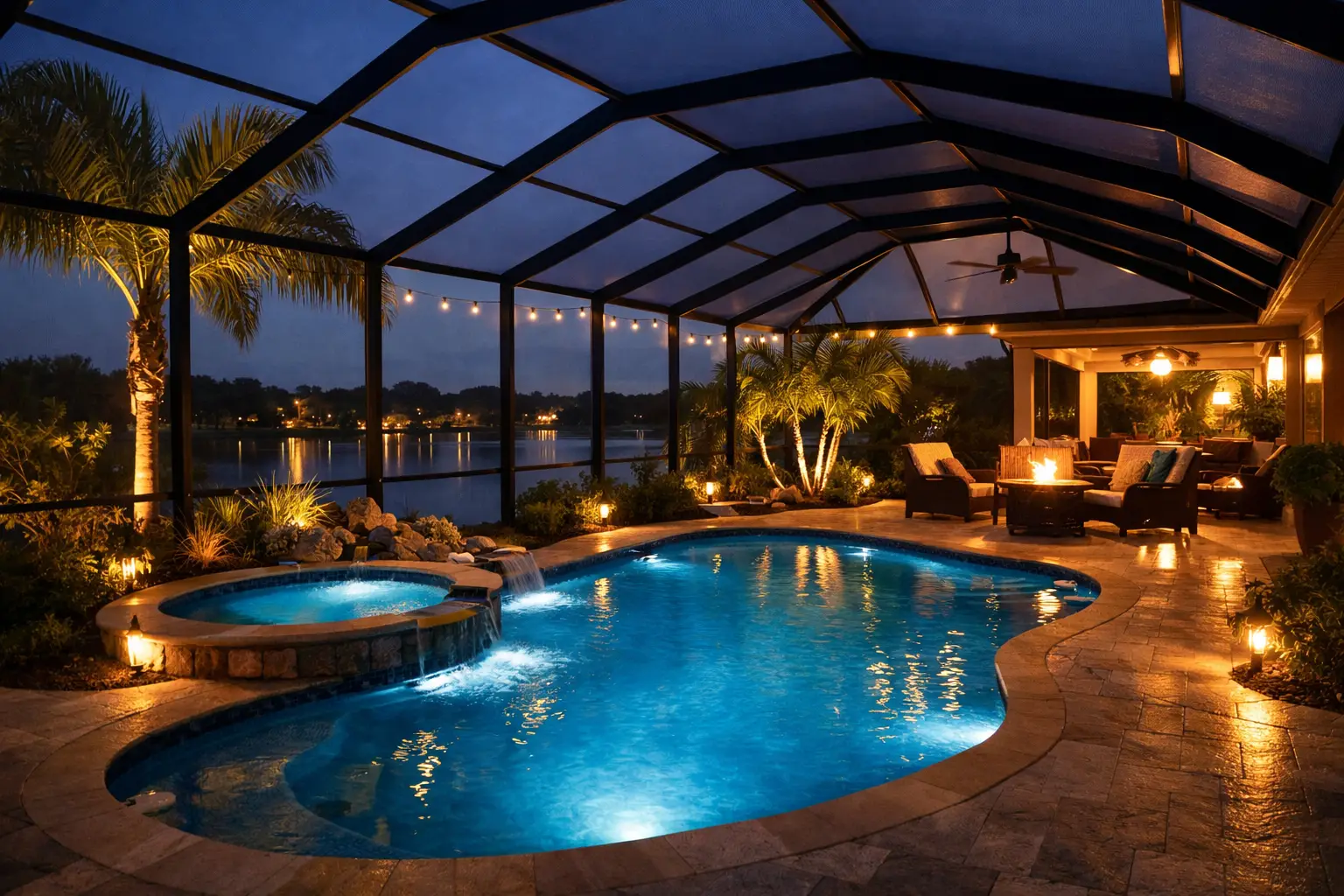
A pool cage should feel like an extension of the home after sunset, not a dark enclosure surrounding the water. Learning how to light pool cages starts with a simple shift in perspective: the goal is not to flood the screen enclosure with brightness. It is to create a comfortable, layered setting where guests can move safely, the pool becomes an inviting focal point, and the architecture retains its calm, refined presence.
For Tampa Bay homeowners, the right lighting also needs to perform through humidity, salt air in coastal areas, summer storms, and year-round outdoor use. A thoughtful plan balances beauty with durable materials, proper fixture placement, and professional electrical installation.
How to Light Pool Cages Without Creating Glare
The most common mistake in pool cage lighting is placing a bright fixture high on the enclosure and calling the job complete. While that approach may illuminate the area, it often creates harsh glare, bright reflections on the water, and an atmosphere that feels more utilitarian than relaxing.
A better design uses layers of low-glare LED light. Each layer has a purpose: one supports safe movement, another defines the cage and deck, and another creates visual depth around the pool. The result is enough light to enjoy dinner, supervise children, and walk the deck confidently, without losing the relaxed character that makes an evening by the pool special.
The screen enclosure itself should usually be treated as a frame, not the brightest feature in the space. Subtle downlighting from cage beams can establish an even wash of illumination across the deck. Carefully aimed fixtures should direct light downward and away from seating areas, so guests see the pool, landscaping, and architectural details rather than the source of the light.
Warm white LEDs in the 2700K to 3000K range are often the most flattering choice for residential pool areas. They complement natural stone, pavers, stucco, wood ceilings, and lush Florida landscaping while avoiding the stark blue cast associated with older outdoor lighting. Cooler temperatures can work in very contemporary settings, but they require restraint to keep the area from feeling clinical.
Build the Design in Layers
A polished pool cage lighting plan rarely relies on one fixture type. The most successful designs coordinate the enclosure, pool deck, landscape, and home so every element feels intentional.
Start With Safe, Even Deck Lighting
Pool decks need enough illumination to make changes in elevation, steps, furniture edges, and wet surfaces easy to see. Downlights mounted along selected cage beams are often an elegant solution. Positioned thoughtfully, they create soft pools of light across walking paths and seating zones without overwhelming the entire deck.
The spacing matters as much as the fixture itself. Too few fixtures can leave distracting dark gaps. Too many can create a grid of bright circles and draw attention to the cage structure. A lighting professional considers beam spread, mounting height, fixture output, deck material, and the location of doors, steps, and furnishings before determining placement.
For stairs leading from a lanai to the pool deck, dedicated step or tread lighting may be appropriate. These fixtures improve visibility at a natural transition point while adding a discreet architectural detail.
Use Accent Lighting to Give the Pool Area Depth
Once the deck is safely lit, accent lighting creates the atmosphere. Uplighting palm trunks, ornamental trees, specimen plants, or a textured privacy wall beyond the cage adds depth to the view from inside the home. Instead of looking out at a black perimeter, you see a composed nighttime landscape.
This is particularly valuable for screened pool areas because the cage can otherwise feel visually flat at night. Light beyond the enclosure draws the eye outward, making the space feel larger and more connected to the property.
A pool water feature, spillway, fire feature, or sculptural planter can also become a focal point. These details deserve restrained illumination, not excessive brightness. The water should catch light and shimmer naturally rather than reflect glaring fixtures directly into the seating area.
Define Dining and Lounge Areas Separately
A dining table, outdoor kitchen, and lounge area have different lighting needs. A table benefits from gentle overhead light that makes food and conversation comfortable. A lounge area often feels best with lower, softer illumination from nearby architectural or landscape fixtures.
If the cage includes a covered lanai, recessed ceiling lights, decorative fixtures, or strategically placed downlights can establish the main gathering zone. The uncovered deck should remain slightly quieter in brightness, allowing the pool and landscape to provide visual interest.
Dimmer controls are especially valuable here. The level that works for a family dinner may be brighter than the setting preferred for a late-night swim. Zoned controls allow homeowners to adjust the experience without compromising safety.
Choose Fixtures Made for Florida Conditions
Pool cage lighting is exposed to more than ordinary outdoor wear. Fixtures must withstand heat, moisture, wind-driven rain, pool chemicals, and constant use. Near the coast, salt air adds another layer of corrosion risk.
High-quality, weatherproof LED fixtures are the practical choice for long-term performance. Look for corrosion-resistant materials, sealed components, durable finishes, and professional-grade LED modules. Low-voltage systems are popular for landscape and accent lighting because they are energy efficient, flexible, and well suited to detailed design work. Line-voltage fixtures may be needed in certain locations, particularly for specific overhead or architectural applications.
Fixture selection should never be based on appearance alone. A beautiful fixture that is not rated for its environment can discolor, corrode, or fail prematurely. Likewise, a fixture with excessive output can diminish the entire design. Quality means choosing the right product, in the right finish, with the right beam angle and output for its exact location.
Plan Around the Cage Structure, Not Against It
Aluminum pool cages present practical installation considerations. The frame is not automatically a suitable electrical pathway, and screen panels should not be compromised simply to add a fixture. Wiring needs to be routed cleanly, protected from weather and damage, and installed in accordance with applicable electrical requirements.
This is one reason a custom consultation is so valuable. The design should account for the cage beam layout, access points, existing switches, outdoor outlets, ceiling areas, landscaping, and pool equipment from the beginning. A well-planned installation keeps wiring as discreet as possible and avoids the improvised look of exposed cords, mismatched fixtures, or awkwardly placed junction boxes.
The pool itself also introduces additional safety considerations. Electrical work near water requires careful attention to fixture ratings, clearances, grounding, bonding, and local code requirements. Homeowners can certainly identify the mood and functionality they want, but electrical installation around a pool enclosure is work best handled by qualified professionals.
Avoid These Pool Cage Lighting Mistakes
Bright white light is not always better light. Overlighting can flatten the space, attract attention to screens and aluminum framing, and make it harder to enjoy the night sky. It can also create uncomfortable glare when viewed from inside the home.
Another frequent issue is aiming fixtures toward the water. Although the pool is a natural focal point, direct light pointed across the surface often produces reflection and visual discomfort. Aim light down toward the deck, across a wall, or into surrounding landscaping instead. Let the pool lighting and water movement create their own presence.
Color-changing lights have their place for celebrations and special occasions, but they should not replace a timeless everyday lighting plan. A warm, architectural foundation will feel sophisticated every night of the year. Color can be added as an optional layer rather than becoming the defining feature.
Finally, do not overlook maintenance. Leaves, insects, moisture, shifting landscaping, and occasional storm impacts all affect outdoor lighting over time. Periodic service keeps fixtures aimed correctly, lenses clean, connections secure, and the system performing as designed.
A Professional Design Brings the Nighttime View Together
The best pool cage lighting is difficult to reduce to a fixture count or a single product recommendation because every property has different architecture, landscaping, cage dimensions, and entertaining habits. A compact screened pool may need a few carefully placed downlights and landscape accents. A large estate-style pool area with an outdoor kitchen, spa, fire feature, and expansive planting beds may call for several coordinated lighting zones.
At Elegant Accents Outdoor Lighting, the design process begins with how you use the space after dark. A custom plan can account for your preferred ambiance, safety priorities, architectural features, and the views you enjoy from indoors. The installation should feel refined in daylight and even more impressive once the sun sets.
The most memorable pool cages are not the brightest ones. They are the spaces where every pathway feels comfortable, every gathering area feels inviting, and the pool becomes part of a broader nighttime setting defined by warmth, depth, and lasting distinction.