
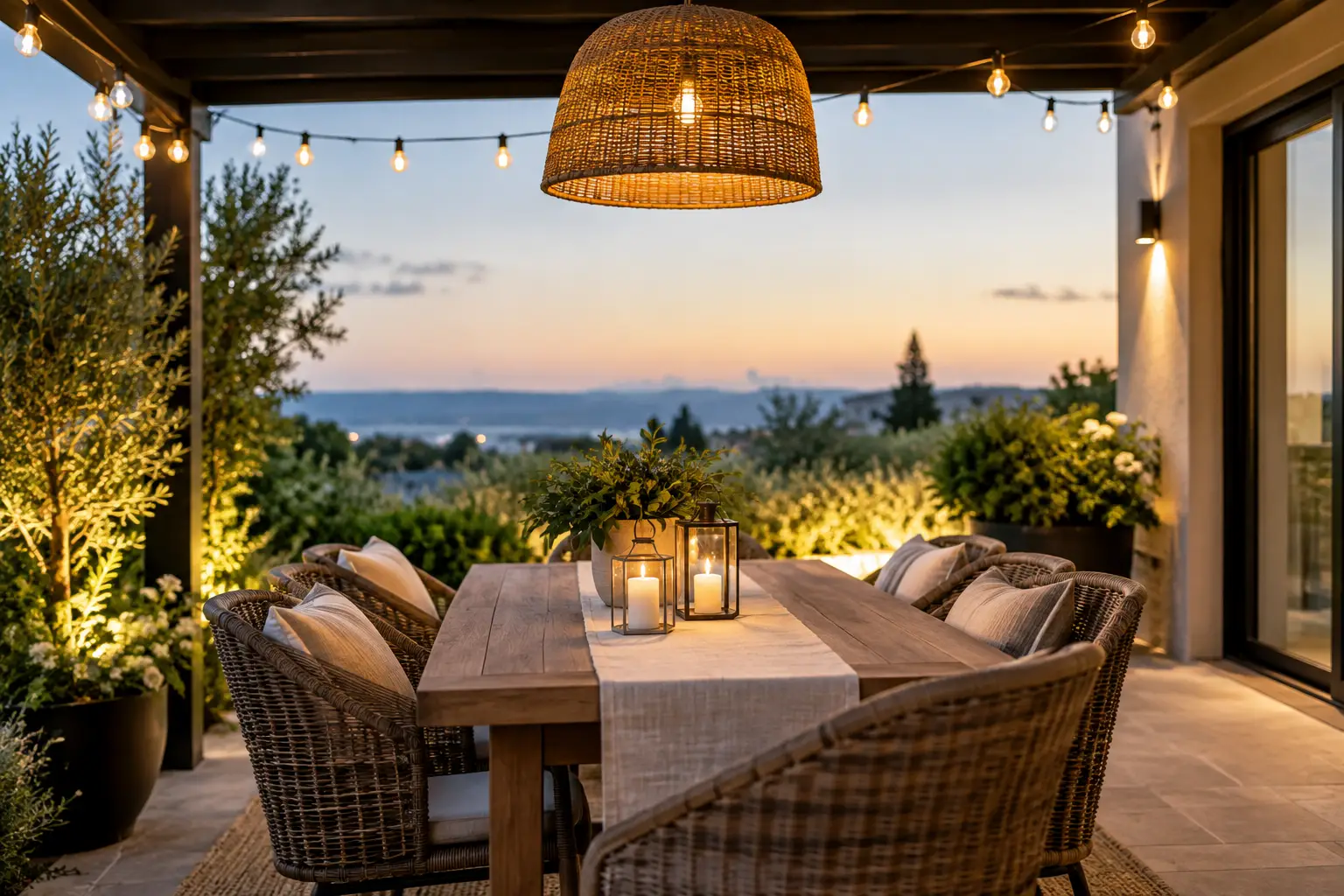
A beautiful patio can lose its purpose the moment the sun goes down. The table may be perfectly set, the landscaping may frame the space, and the pool may shimmer nearby, yet a single harsh fixture or a string of uneven lights can make dinner feel more like an afterthought than an occasion. Knowing how to illuminate dining patios means designing for the people gathered at the table, while preserving the architecture, landscape, and relaxed atmosphere around them.
For Tampa Bay homes, that balance matters year-round. Outdoor dining areas are used for quiet weeknight meals, long weekends with family, and celebrations that continue well after sunset. The right lighting makes the patio feel intentional, comfortable, and distinct – not merely visible.
Start With the Dining Experience
A dining patio needs enough light to see a menu, serve food, and move safely around chairs and steps. It does not need to be bright from every angle. In fact, broad, unshielded light often creates the opposite of luxury: glare in guests’ eyes, washed-out finishes, and a flat view of the surrounding property.
Begin by identifying the center of activity. Is the table beneath a covered lanai, an open pergola, beside the pool, or at the edge of a garden? Does the space host six people for dinner or twenty people for larger gatherings? The answers determine where illumination is needed and where darkness should remain.
A well-composed plan creates a gentle hierarchy. The dining table receives the most useful light, the paths and transitions receive quieter guidance, and architectural details or landscaping form a polished backdrop. This layered approach gives the patio depth and visual calm.
How to Illuminate Dining Patios in Layers
The most successful outdoor dining areas use several subtle light sources rather than one dominant fixture. Each layer has a job, and together they make the space feel inviting without overwhelming it.
Give the tabletop soft, usable light
The table is the functional heart of the patio. Downlighting from a covered ceiling, pergola beam, or carefully placed overhead fixture can provide comfortable illumination for dining. The fixture should be shielded and positioned to avoid shining directly into seated guests’ eyes.
Warm LED light is usually the strongest choice for residential entertaining. It complements natural stone, wood, stucco, brick, and outdoor furnishings far better than a cool, bluish tone. It also makes food, faces, and surrounding greenery appear more flattering after dark.
If the patio has a high ceiling or open roofline, fixture placement becomes especially important. Light mounted too high can create hard shadows on the table, while a fixture that is too low may obstruct sightlines. Professional planning considers beam spread, mounting height, ceiling color, and the table’s actual location rather than relying on a one-size-fits-all placement.
Light circulation without creating a runway
Guests should be able to move confidently from the home to the dining patio, pool deck, grill, and yard. Low-level path lighting, step lights, and discreet under-cap lighting on retaining walls can define these routes with refinement.
The goal is guidance, not a row of bright dots. Fixtures should be spaced according to the width and turns of a walkway, the presence of elevation changes, and the darkness of surrounding surfaces. A pale paver may reflect more light than a dark travertine or brick path, so the same fixture will not perform identically on every property.
Steps deserve particular attention. A beautifully lit dining patio still feels unfinished if guests must search for the edge of a stair after dinner. Recessed step lights or concealed lighting beneath a tread, bench, or wall cap can improve safety while maintaining a clean architectural appearance.
Build a view beyond the table
When darkness begins directly beyond the patio, the dining area can feel smaller and enclosed. Thoughtful landscape and architectural lighting extends the view, making the entire setting feel more expansive.
Soft uplighting on a signature palm, layered illumination through planting beds, or a gentle wash across a textured wall gives the eye places to rest. A pool cage, outdoor fireplace, water feature, or mature oak can become part of the evening composition when illuminated with restraint.
This is where professional design makes a visible difference. More fixtures do not automatically create more beauty. The best results come from selecting focal points that deserve attention and allowing the rest of the property to recede naturally. Contrast gives a patio its atmosphere.
Control Glare Before It Reaches the Table
Glare is one of the fastest ways to undermine an otherwise exceptional outdoor space. It occurs when the light source itself is too visible or too intense for the viewer’s line of sight. On a dining patio, common offenders include exposed bulbs, poorly aimed landscape fixtures, and floodlights positioned across from seating.
Shielded fixtures, careful aiming, and appropriate lumen output are essential. Landscape lights should illuminate the intended tree, wall, or planting material rather than sending light toward the chairs. Overhead fixtures should direct light downward and be selected with the ceiling height and seating arrangement in mind.
Reflective surfaces deserve a close look as well. Water, glass doors, polished countertops, and light-colored pool decking can amplify brightness after dark. A lighting plan should be tested from the perspective of someone sitting at the table, standing at the grill, and walking toward the home. The nighttime reveal is where proper adjustments turn good lighting into a lasting impression.
Choose Fixtures Built for Florida Evenings
Tampa Bay’s humidity, driving rain, heat, salt air in coastal areas, and active outdoor lifestyles demand more than decorative fixtures. Outdoor lighting should be weatherproof, corrosion-resistant, and installed with connections designed to perform through changing conditions.
High-quality LED fixtures offer a practical advantage as well as a visual one. They use less energy, produce less heat, and provide dependable illumination over a long service life. The quality of the fixture housing, lens, wiring, transformer, and installation method matters just as much as the LED itself. A beautiful lighting design should remain beautiful after seasons of storms and frequent use.
For covered patios, fans, ceilings, and electrical junctions must be evaluated carefully. For open dining areas, fixtures may need more durable finishes and a plan that accounts for irrigation, landscaping growth, and future furniture changes. A custom proposal clarifies these details before installation begins, so the finished system is built for the property rather than adapted to it later.
Add Flexibility for Different Evenings
A patio used for a Tuesday dinner should not have to look the same as one hosting a holiday gathering. Zoning allows different areas to be controlled independently: dining illumination, landscape accents, pool deck lighting, and pathways can each be adjusted to suit the occasion.
Dimming is particularly valuable near the table. Brighter settings can support serving and cleanup, while a lower level creates a more relaxed setting once guests are seated. Timers, smart controls, and professionally designed zones add convenience without cluttering the patio with switches or relying on temporary solutions.
For commercial dining patios, flexibility can be even more important. Restaurants need clear guest circulation, attractive curb appeal, and enough ambient light for service staff, all while protecting the mood that encourages guests to linger. The design principles remain the same, but fixture durability, code requirements, operating hours, and brand presentation require added coordination.
Avoid the Most Common Patio Lighting Shortcuts
Temporary string lights can be charming for a casual event, but they rarely provide the consistent, layered illumination a finished patio deserves. They may sag, cast uneven shadows, and become visually distracting when left in place year-round. They work best as a decorative accent, not the entire lighting plan.
Solar fixtures are another common compromise. Their output can vary with weather and placement, and many lack the warm, controlled beam quality needed for an upscale entertaining space. They can be useful in limited applications, but they are not a substitute for a professionally installed low-voltage system.
The biggest mistake, however, is treating patio lighting as a collection of individual products. A fixture may look appealing in a showroom and still be wrong for the patio’s scale, the surrounding materials, or the view from inside the home. Design should begin with the property and the experience you want to create.
Let the Patio Feel Like Part of the Home
The most memorable outdoor dining spaces do not feel like a backyard with lights added afterward. They feel like a natural extension of the home, with architectural definition, comfortable visibility, and a view worth lingering over.
At Elegant Accents Outdoor Lighting, a custom consultation considers how a patio is used, what should be highlighted, and how each lighting layer will perform after dark. From durable LED fixtures and professional installation to ongoing maintenance, the focus is on lighting that continues to enhance the property long after the first evening reveal.
A dining patio should invite people to stay for one more conversation, one more glass of wine, or one more quiet moment outside. When the light is designed with that feeling in mind, the space becomes part of the home’s signature after sunset.