
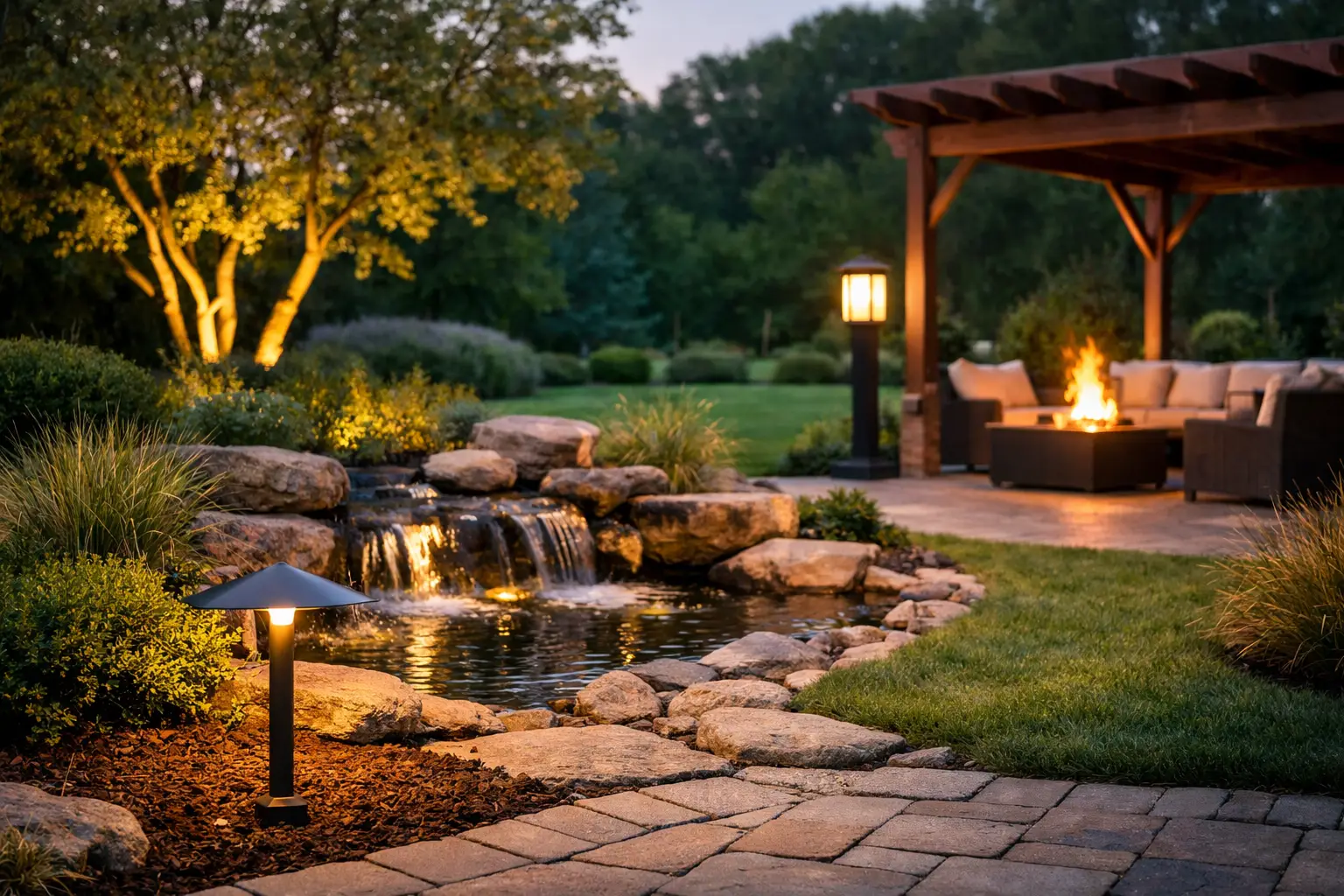
A beautiful outdoor lighting system should never feel like a collection of fixtures scattered across the property. It should feel composed. Knowing how to choose lighting zones begins with understanding how you want to experience your home after sunset: the arrival, the view from inside, the path to the patio, and the places where family and guests naturally gather.
For a Tampa Bay property, zoning also brings practical control. You may want the front elevation illuminated every evening, while the pool deck, dock, or entertaining area needs light only when it is in use. Thoughtful zones give each part of the property the right purpose, intensity, and schedule without sacrificing the refined, unified appearance that makes outdoor lighting such a meaningful investment.
Start With the Way You Use the Property
The most effective lighting plans begin with lifestyle, not fixture selection. Walk the property at dusk and consider where people arrive, move, relax, and look. A formal front entrance has different needs than a casual outdoor kitchen. A pool cage may need a soft, low-glare glow for evening conversations, while a side gate requires clear illumination for safety and access.
Think about the property in moments rather than in a single overhead view. The drive home should feel welcoming. The walk from the garage to the front door should feel secure. Dinner on the lanai should be comfortable without harsh brightness. From the living room, the landscape beyond the glass should remain visible and inviting instead of disappearing into darkness.
This approach prevents a common mistake: treating every portion of the yard equally. Not every tree, planting bed, or wall needs illumination. A well-designed system uses contrast. Areas of light create visual focus, while quieter areas give the composition depth.
The Core Outdoor Lighting Zones to Consider
Most luxury residential properties benefit from several distinct lighting zones. These zones do not have to correspond exactly to the property lines or landscaping beds. They should follow how the home functions and where lighting adds the most value.
Arrival and Front Elevation Zone
The arrival zone creates the first impression. It may include the driveway approach, front walk, entry steps, address area, and the architectural face of the home. This is often the zone homeowners use most consistently because it strengthens curb appeal and provides dependable visibility every night.
Architectural lighting can define columns, stonework, rooflines, dormers, entry arches, and textured facades. The goal is not to flood the home with brightness. It is to reveal proportion, craftsmanship, and distinctive details with controlled beams and carefully placed fixtures.
For homes on larger lots, the driveway and front elevation may be separate zones. This allows the architecture to remain elegantly lit while pathway lighting operates on a different schedule or at a different level.
Walkways, Side Yards, and Access Zone
A circulation zone covers the routes people take around the property: walkways, side gates, service entrances, detached garages, and transitions from the driveway to the backyard. Safety matters here, but the lighting should still feel intentional.
Low, shielded path lights can define movement without creating a runway effect. Step lights, downlights mounted in trees, and discreet fixtures along planting edges often provide more comfortable guidance than a line of identical bright path fixtures. The right choice depends on the width of the walkway, nearby plantings, and whether the route is visible from the street or interior rooms.
For homes with pets, frequent guests, or waterfront access, this zone deserves particular attention. The safest route is not always the most obvious one in daylight.
Outdoor Living and Entertaining Zone
Your lanai, patio, outdoor kitchen, dining terrace, fire feature, and seating areas should be designed as an outdoor room. This zone needs layered light because a single source rarely serves every purpose. Guests need enough illumination to move comfortably, prepare food, and see steps, but not so much that the setting loses its warmth.
Task lighting is useful around grills, serving counters, and cooking areas. Softer ambient lighting supports dining and conversation. Accent lighting can define a feature wall, specimen palm, water feature, or garden beyond the seating area. Separating these functions into controllable zones makes the space more versatile.
For example, a family may use brighter kitchen and pathway lighting during a gathering, then lower the overall mood by leaving only the landscape and seating-area accents on after dinner. This is where zoning turns lighting from a utility into atmosphere.
Pool, Pool Cage, and Water Zone
Pool areas require special planning because water reflects light, screens can create glare, and wet surfaces demand careful attention to visibility. Pool cage lighting should help define the enclosure and surrounding landscape without turning the area into a brightly lit box.
A pool deck zone may include downlighting from the structure, gentle illumination at steps and grade changes, and accent lighting for palms, planting beds, or water features. If there is a spa, tanning ledge, or outdoor bar, those features may warrant their own controls depending on how often they are used.
The best pool lighting often feels understated from within the water. Light should be directed away from the eyes whenever possible. A fixture that looks dramatic from the deck may be uncomfortable for someone floating in the pool and looking toward it.
Landscape and Perimeter Zone
Landscape lighting gives the property depth after dark. Mature oaks, palms, ornamental trees, hedges, garden walls, and focal-point plantings can become part of the evening view. On established Tampa Bay properties, this zone often delivers the most dramatic transformation because it extends the visual boundaries of the home beyond the patio doors.
Perimeter lighting can also support security by reducing deep shadows around the edges of the property. Still, security does not require indiscriminate brightness. Selective illumination at gates, side yards, rear access points, and significant landscape features creates awareness while preserving a polished appearance.
If your home backs onto water, a golf course, preserve land, or neighboring properties, the design should be especially sensitive to spill light. The goal is to enjoy the view while respecting the darkness beyond your property.
Deck, Dock, and Waterfront Zone
For waterfront homes, dock and deck lighting should be planned separately from the main landscape system. These areas have unique moisture exposure, changing levels, and navigation needs. Lighting at transitions, steps, handrails, and gathering spaces can make the waterfront usable long after sunset.
A dock zone should prioritize safe movement while keeping the setting calm. Excessive brightness can interfere with the natural character of the water and create unwanted glare. Durable, weatherproof LED fixtures and professional installation are essential in this demanding environment.
Decide Which Zones Need Independent Control
A zone is most valuable when it can operate independently. Ask a simple question: Would I ever want this area illuminated while another area is off? If the answer is yes, separate control is likely worthwhile.
The front elevation often operates nightly. The pool and entertaining areas may be used only on weekends or when guests are present. A side-yard access route may need a later schedule than decorative landscape lighting. Independent controls allow the system to match your routine and reduce unnecessary energy use.
There is a trade-off. More zones provide greater flexibility, but they also require more planning, components, and programming. The right number is not the maximum possible number. It is the number that gives you useful control without making the system complicated to operate.
A professional lighting designer can also consider dimming and timer settings within each zone. Sometimes one well-planned zone with adjustable intensity is more practical than splitting a small area into multiple controls.
Design From the Best Viewing Angles
Outdoor lighting is experienced from multiple perspectives. The view from the street matters, but so does the view from the foyer, kitchen, primary suite, and outdoor living area. Before choosing zones, identify the sightlines that deserve attention.
From indoors, uplighting a canopy tree or softly highlighting a garden wall can create a sense of depth and calm. From the street, balanced architectural lighting and layered landscaping establish distinction. From the patio, the focus may shift to the pool, the edge of the lawn, or a mature tree that frames the property.
This is why fixture placement should not be determined solely by daylight conditions. A feature that appears prominent at noon may disappear at night, while an unremarkable tree or textured wall may become remarkable under carefully directed light.
Choose Fixtures for Florida Conditions
Lighting zones are only as dependable as the fixtures and installation behind them. Tampa Bay heat, humidity, seasonal storms, irrigation, salt air near the coast, and fast-growing landscapes all affect long-term performance.
High-quality weatherproof LED fixtures are a sound choice for efficiency, color consistency, and longevity. The installation should also account for drainage, wire protection, tree growth, mower access, and future landscape changes. A fixture placed perfectly today can become hidden by a hedge or overtaken by mulch if maintenance is not part of the plan.
Elegant Accents Outdoor Lighting approaches zoning as part of a complete design, installation, and maintenance strategy. That means considering not only the nighttime reveal, but also how the system will perform beautifully through changing seasons and years of use.
Let the Plan Leave Room to Grow
Your first lighting phase does not need to illuminate every possible feature. A focused plan may begin with the front elevation, primary walkways, and outdoor living area, then expand later to a pool deck, dock, or additional landscape features. Planning the infrastructure with future zones in mind can make that expansion more efficient and visually cohesive.
The finest outdoor lighting is not defined by how many fixtures a property has. It is defined by how naturally the home, landscape, and lifestyle come together after dark. Choose zones around the moments you value most, and the result will feel less like lighting added to a yard and more like your property finally showing its full character at night.