
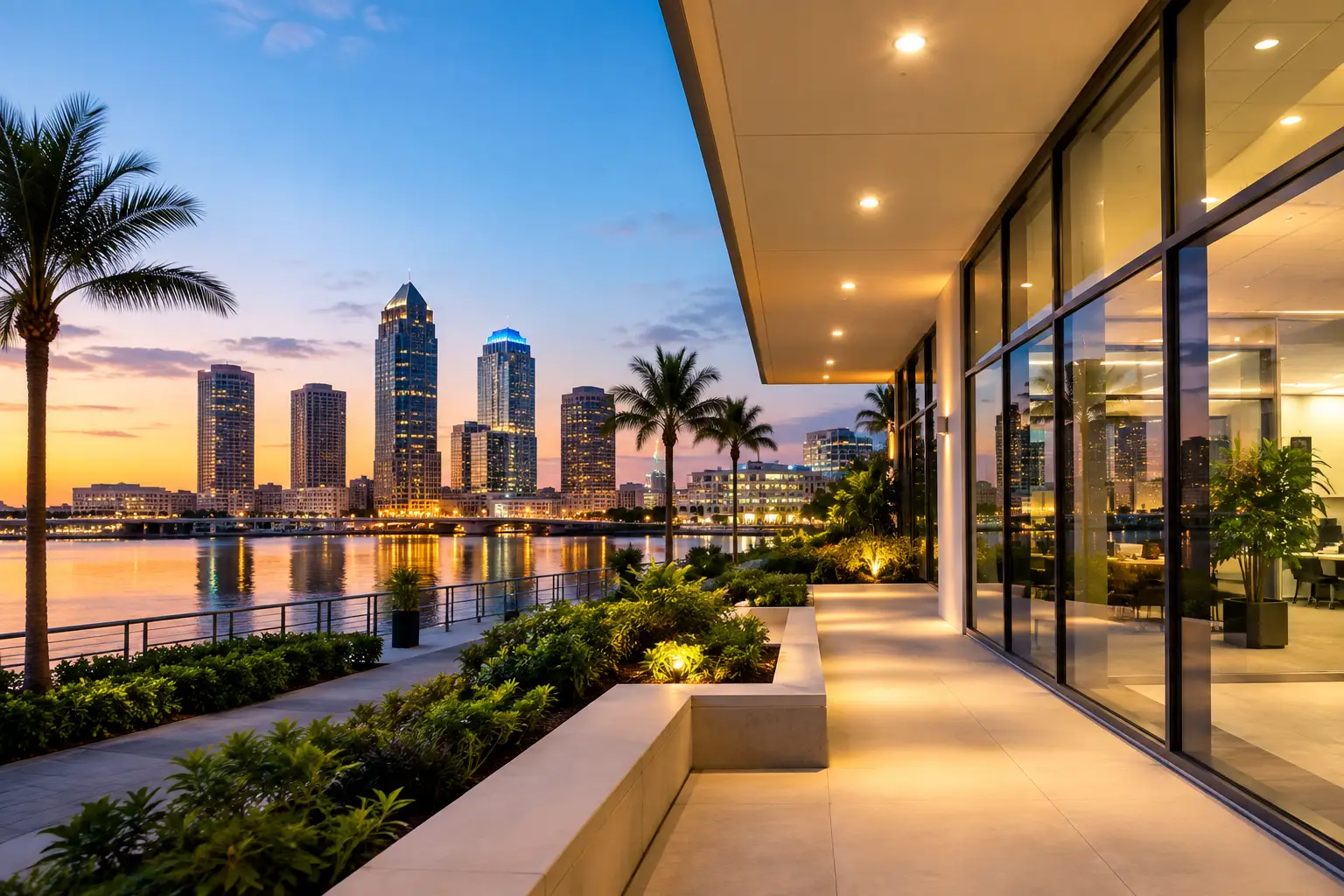
A guest’s impression of a restaurant, clubhouse, hotel entrance, or professional office often begins in the parking lot. After sunset, commercial lighting determines whether that first approach feels clear and welcoming or dim, uncertain, and forgettable. For Tampa Bay businesses, a thoughtfully designed exterior lighting system is not simply a utility. It is a visible expression of the care behind the property.
The right illumination gives architecture presence, guides people comfortably through the site, and keeps outdoor areas useful well beyond daylight hours. It can also distinguish a business from the properties around it without making the landscape feel overlit or harsh. The difference comes down to intentional design, quality fixtures, and a plan built around how the property is actually used at night.
What Commercial Lighting Should Accomplish
A successful lighting plan balances beauty with practical performance. Brightness alone is not the goal. A building washed in indiscriminate light may be visible, but it rarely feels refined. The stronger approach is to create layers of light that establish a natural hierarchy: safe paths and entries first, architectural focal points second, and atmosphere throughout.
For a restaurant, that may mean a graciously illuminated arrival area, low-glare path lighting, subtle planting accents, and warm illumination around a patio or waterfront dining space. For an office or medical facility, it may mean clear parking-lot transitions, a confident entrance, visible signage, and architectural lighting that supports a professional identity after business hours.
The needs change from property to property, but a well-considered system generally serves four purposes: it improves wayfinding, supports security, enhances curb appeal, and extends the usefulness of outdoor spaces. When those goals are addressed together, lighting becomes part of the property’s character rather than an afterthought added for visibility.
Design Around the Guest Experience
Before selecting a fixture or determining a beam angle, consider the nighttime journey from the street to the front door. Where do visitors turn in? Where do they park? Which walkways, changes in elevation, gates, and entrances need to be immediately legible? These questions create the foundation for a lighting design that feels effortless to guests.
The approach from the road deserves particular attention. Illuminated monument signs, entry landscaping, and distinctive façade features can help visitors recognize the property without relying on excessive brightness. At the same time, lighting should direct attention toward the destination rather than compete with it. A striking palm, textured stone wall, or architectural column may need only a carefully aimed accent to make a lasting impression.
At the entrance, the design should transition from broad site visibility to a more welcoming scale. Softly lit walkways, doorways, and gathering areas make people feel expected. This is especially valuable for hospitality properties and restaurants, where a beautiful exterior sets expectations before a guest is greeted by staff.
Safety Without the Harsh Glare
Security lighting is often treated as a separate category from decorative lighting. In reality, the best commercial properties combine the two. Dark gaps, poorly defined sidewalks, and shadowed building edges can create safety concerns, while harsh floodlights can produce glare that makes it harder to see and less pleasant to arrive.
Strategic lighting focuses illumination where it matters: entrances, stairs, ramps, side passages, service areas, parking transitions, and pedestrian routes. Shielded fixtures and proper aiming help control glare and keep light on the intended surface. The result is a property that appears cared for and actively managed, without the institutional look of over-lighting.
This balance matters in Tampa Bay, where outdoor dining, evening events, waterfront settings, and poolside amenities are part of daily business for much of the year. A design that makes guests squint or casts bright light into neighboring properties can undermine the very atmosphere the business is trying to create.
Choosing Fixtures Built for Florida Conditions
Florida’s heat, heavy rain, humidity, salt air in coastal areas, and intense sun are demanding conditions for outdoor equipment. Commercial lighting should be selected for more than appearance. Fixtures need durable materials, weather-resistant construction, dependable connections, and finishes that hold up over time.
High-quality LED systems are a strong choice for most commercial applications because they offer long service life, energy efficiency, and excellent control of light output. LEDs also allow a designer to select warmer or cooler color temperatures based on the property’s style. Warm white light often complements hospitality settings, traditional architecture, and lush landscaping. Neutral tones may be more appropriate for contemporary commercial façades, signage, or areas requiring crisp task visibility.
Color temperature is only one decision. Beam spread, fixture placement, shielding, and mounting height all shape the final effect. A narrow beam can add drama to a tall palm or building column, while a wider wash may be better suited to a stone wall or broad canopy. Using the wrong fixture in the wrong location can create hot spots, dark voids, or distracting glare, even when the equipment itself is high quality.
Energy Efficiency and Operating Costs
A polished lighting design does not require wasteful energy use. Modern LED fixtures consume significantly less electricity than older lighting technologies and reduce the frequency of lamp replacements. Timers, photocells, zoning, and smart controls can further tailor operation to the property’s schedule.
A restaurant may want its entrance, signage, and patio lighting to operate through closing, while certain landscape accents can be reduced later in the evening. A multi-tenant office property may need brighter illumination during arrival and departure periods, then a lower level of ambient lighting overnight. Controls make those distinctions possible without compromising safety or appearance.
The lowest initial price is not always the best value. Inexpensive fixtures may fade, corrode, fill with moisture, or fail prematurely in Florida’s climate. Replacing poor-quality equipment repeatedly can cost more than investing in a durable system from the beginning. A transparent proposal should account for fixture quality, installation scope, control options, and the long-term service required to protect the investment.
Why Installation Details Matter
Even an exceptional lighting plan can fall short when installation is rushed. Wires, transformers, connections, fixture bases, and aiming all influence system reliability and nighttime appearance. Professional installation crews understand that the work is both technical and visual. The wiring must be protected, the fixtures must be securely positioned, and the light must be adjusted after dark to achieve the intended effect.
Nighttime adjustment is especially important. A fixture that looks properly aimed in daylight can throw unwanted glare or miss its focal point after sunset. Fine-tuning allows the installer to soften a wash of light, eliminate a distracting hot spot, highlight texture, or improve visibility along a route.
At Elegant Accents Outdoor Lighting, the design process begins with how a commercial property should feel and function after dark. From there, a custom plan can address the practical demands of the site while creating a more distinguished arrival, stronger visual identity, and a setting guests remember.
Maintenance Protects the Original Design
Landscape growth, storms, seasonal changes, and normal wear can gradually alter a lighting system’s performance. Plants may block fixtures, mulch can shift around equipment, and a single damaged connection may affect an entire zone. Regular maintenance keeps the property looking intentional instead of slowly becoming uneven and neglected.
A professional service visit can include checking fixture alignment, cleaning lenses, trimming back vegetation as appropriate, inspecting wiring and connections, testing controls, and replacing components before small issues become visible failures. For commercial property owners and managers, this ongoing attention offers consistency. The lighting continues to support the brand and the guest experience night after night.
A Better Standard for Exterior Presence
Commercial exterior lighting should never be treated as a final item on a construction checklist. It has the power to frame a property, improve comfort, support safer movement, and create a sense of confidence long before someone reaches the door. The most effective systems do this quietly, with deliberate layers of illumination rather than a blanket of brightness.
When a property’s lighting is designed for its architecture, landscape, operating hours, and audience, the result is more than visibility. It is a lasting nighttime presence that tells guests they have arrived somewhere worth remembering.