
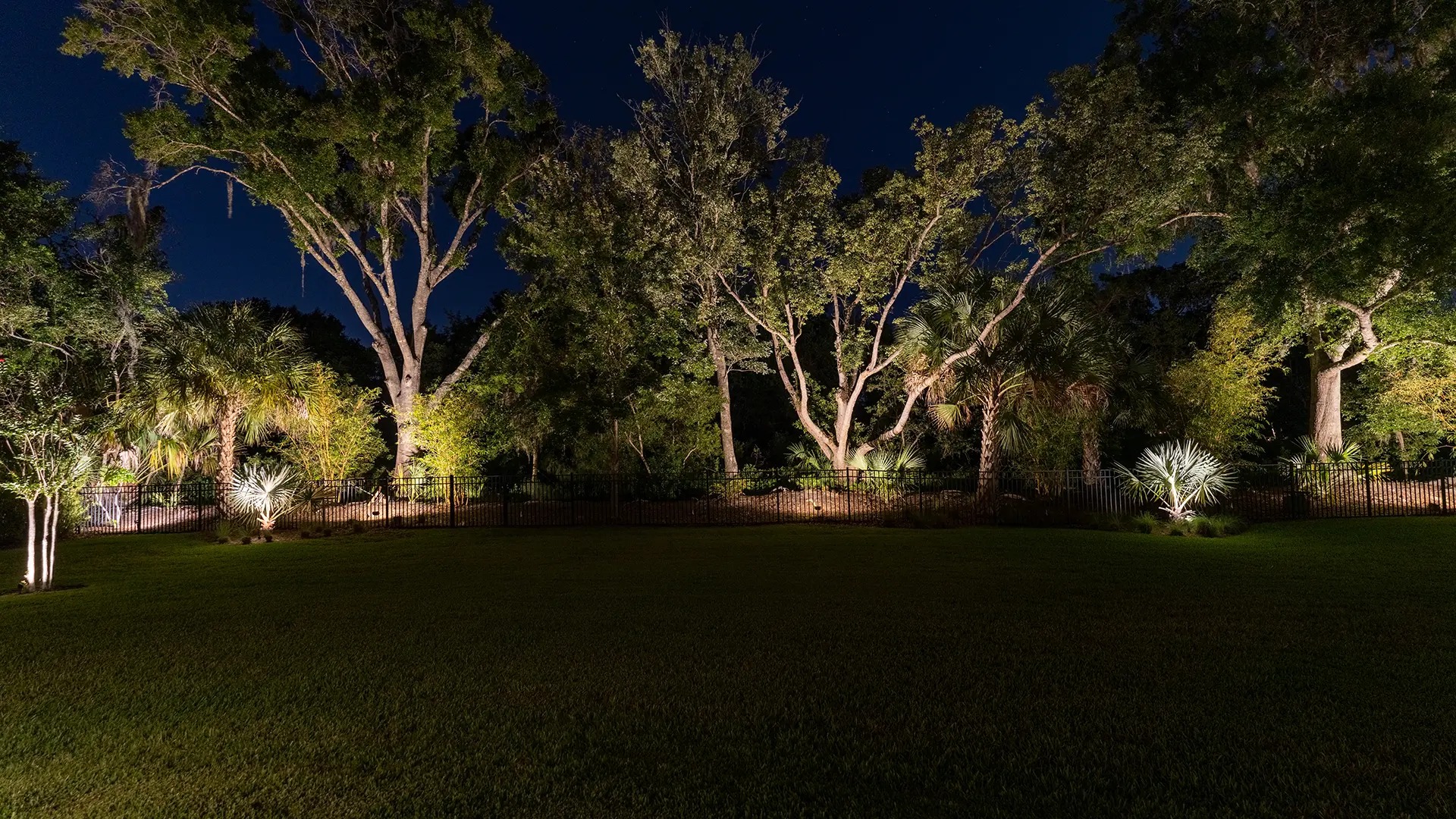
Light up Clearwater Nights with Salt-Smart Design
Good outdoor lighting can change how your Clearwater home looks and feels after the sun goes down. Warm pools of light on palms, a soft glow across the pool deck, and safe paths to the dock all make evenings outside more relaxed and inviting. When the right lights are in the right places, your home feels like a small resort every night.
On the coast, good design is not just about looks. We have to think about safety, glare, and how well fixtures stand up to salt air, humidity, and coastal storms. A lighting system that ignores those things may look good for a short time, then quickly fade, pit, or fail. A salt-smart design keeps your home beautiful and your system working year after year.
We work with homes across the Tampa Bay area, so we see how Clearwater’s coastal conditions affect every piece of a lighting system. In this guide, we will talk about how salt air changes your lighting choices, which materials do well by the water, design ideas for summer entertaining, and why planning with local experience makes such a big difference.
How Salt Air Changes Your Lighting Choices
Salt air is tough on outdoor lighting. Tiny salt crystals from the Gulf and Intracoastal settle on fixtures, then mix with humidity and start to eat away at finishes and metal. The closer you are to the water, the faster this happens.
That is why standard fixtures often do not last long near the coast. With cheaper or big-box options, homeowners often see:
- Peeling or faded paint on fixtures
- Cloudy or spotted lenses that block light
- Screws and hinges that seize or rust solid
- Loose or unreliable connections inside the fixtures
When those problems show up, lights get dim, uneven, or stop working at all. The system that once looked clean and sharp now looks tired, even if it is only a few seasons old.
For Clearwater’s salt air, we lean on materials and finishes made for this type of environment, such as:
- Marine-grade metals that slow corrosion
- Heavy-duty powder coating that resists chipping
- Composite fixtures that stand up to salt and UV rays
Just as important are sealed housings and weatherproof connections. Proper gaskets, seals, and waterproof connectors help keep moisture and salt out of the LEDs, wiring, and transformers. When those key parts are protected, the whole system stays stronger.
Coastal-Proof Materials and Installation Techniques
Choosing the right materials is the first step to a long-lasting system on the coast. Some of the strongest options in our area include:
- Solid brass, which develops a natural patina but keeps working
- Copper, which ages with a soft color but stays sturdy
- Marine-grade stainless steel in the right locations
- Quality composite fixtures for extreme exposure or wet areas
Each has its place. For example, brass or copper can be great for path lights and uplights around the yard, while composite fixtures can be smart around pools, docks, or spots that get constant spray.
How fixtures go into the ground matters almost as much as what they are made of. In Clearwater, we often deal with sandy or shell-filled soil. To keep fixtures from leaning, sinking, or popping up, we focus on:
- Proper depth for stakes and mounting posts
- Solid contact with stable soil
- Conduit protection where needed to shield wiring
We also design most systems with low-voltage LED lighting. Low voltage adds safety in wet areas, uses less energy, and puts less load on transformers and wiring. Transformers, junctions, and splices are placed in smart, protected locations and sealed to stand up to coastal weather.
Not every Clearwater home faces the same exposure. A beachfront property needs a different plan than a home that is a few miles inland. We adjust materials, fixture types, and mounting methods based on how much wind, salt, and sun each part of the property gets.
Designing for Beauty, Safety, and Summer Entertaining
Once the system is built to handle salt and storms, we can focus on how it feels to live with the lighting every night. A great landscape lighting design in Clearwater, Florida uses layers of light to create depth and comfort.
We often mix:
- Path lights to guide feet along walkways
- Uplights to highlight palms, trees, and columns
- Downlights from trees or rooflines to mimic moonlight
- Accent lights to show off water features or special plants
Done well, this soft layering makes your home stand out without feeling harsh or over-lit.
Safety and security are just as important as looks. Thoughtful lighting can gently cover:
- Steps, slopes, and changes in elevation
- Driveways and entry walks
- Pool decks, docks, and boat lifts
- Side yards and darker corners around the home
The goal is to see clearly without blasting bright light into neighbors’ windows or washing out the night sky.
Clearwater’s long summer evenings are perfect for outdoor living. We use light to shape “rooms” outside, such as a cozy sitting area by the pool or a dining spot under the lanai. Warm, lower-intensity lighting helps keep things calm and can reduce the bright glare that often draws more bugs.
We usually lean toward warm color temperatures that flatter palms, tropical plants, and stucco exteriors. With smart dimming or zones, you can have different looks: bright and lively for parties, a softer level for family time, and a gentle glow for quiet nights.
Tackling Glare, Neighbors, and Wildlife Concerns
Coastal homes bring unique lighting challenges. Water reflects light, so a fixture that would be fine inland might create unwanted glare off the bay or pool here. We use careful aiming and shielding to keep light where it should be and out of your line of sight.
Common issues we plan around include:
- Reflections on large windows and glass doors
- Glare off the water surface in pools or on the bay
- Light drifting into neighbors’ yards or bedrooms
Good design respects neighbors and the shared coastal view. That means choosing beam spreads, mounting heights, and angles that light your property without becoming a nuisance across the fence.
We also pay attention to wildlife. Near the Gulf and bays, it is wise to limit strong uplighting and use warmer, more directed light when possible. Timers, dimmers, and zone controls help reduce unnecessary light late at night, which can be better for birds and sea life that move near the waterline.
The right balance gives you a luxurious outdoor space that still feels respectful to the community and natural environment.
Keep Your Coastal Lighting Looking New Year After Year
In Clearwater’s salty, humid air, regular maintenance is not a nice extra; it is what keeps your system looking good. Even the best fixtures will collect salt, sand, pollen, and bugs over time.
Ongoing care often includes:
- Gently cleaning lenses so light output stays bright
- Removing salt buildup on fixtures and mounts
- Checking and tightening wire connections
- Re-aiming and adjusting as plants grow or are trimmed
Seasonal checks also matter. As we move toward the heart of storm season, we like to confirm that fixtures and transformers are firmly mounted, wiring is not exposed, and connections are secure. A small fix today can prevent larger repair work after a heavy storm.
A professional maintenance plan from a local team helps catch early signs of wear before they affect the look of your home. Over time, we can also suggest LED upgrades, smarter controls, or fixture changes that better match new plantings, a rebuilt deck, or a refreshed pool area.
With the right design, materials, and care, a salt-smart lighting system can give your Clearwater home a soft, welcoming glow every evening, season after season.
Transform Your Outdoor Space With Expert Lighting Design
Bring your home to life after dark with professional landscape lighting design in Clearwater, Florida tailored to your property and lifestyle. At Elegant Accents Outdoor Lighting, we take the time to understand your goals, highlight your architecture, and create a warm, welcoming ambiance. If you are ready to explore what is possible for your home, reach out and let us plan a custom solution that fits your needs and budget. Have questions or want to schedule a consultation now? Simply contact us to get started.