
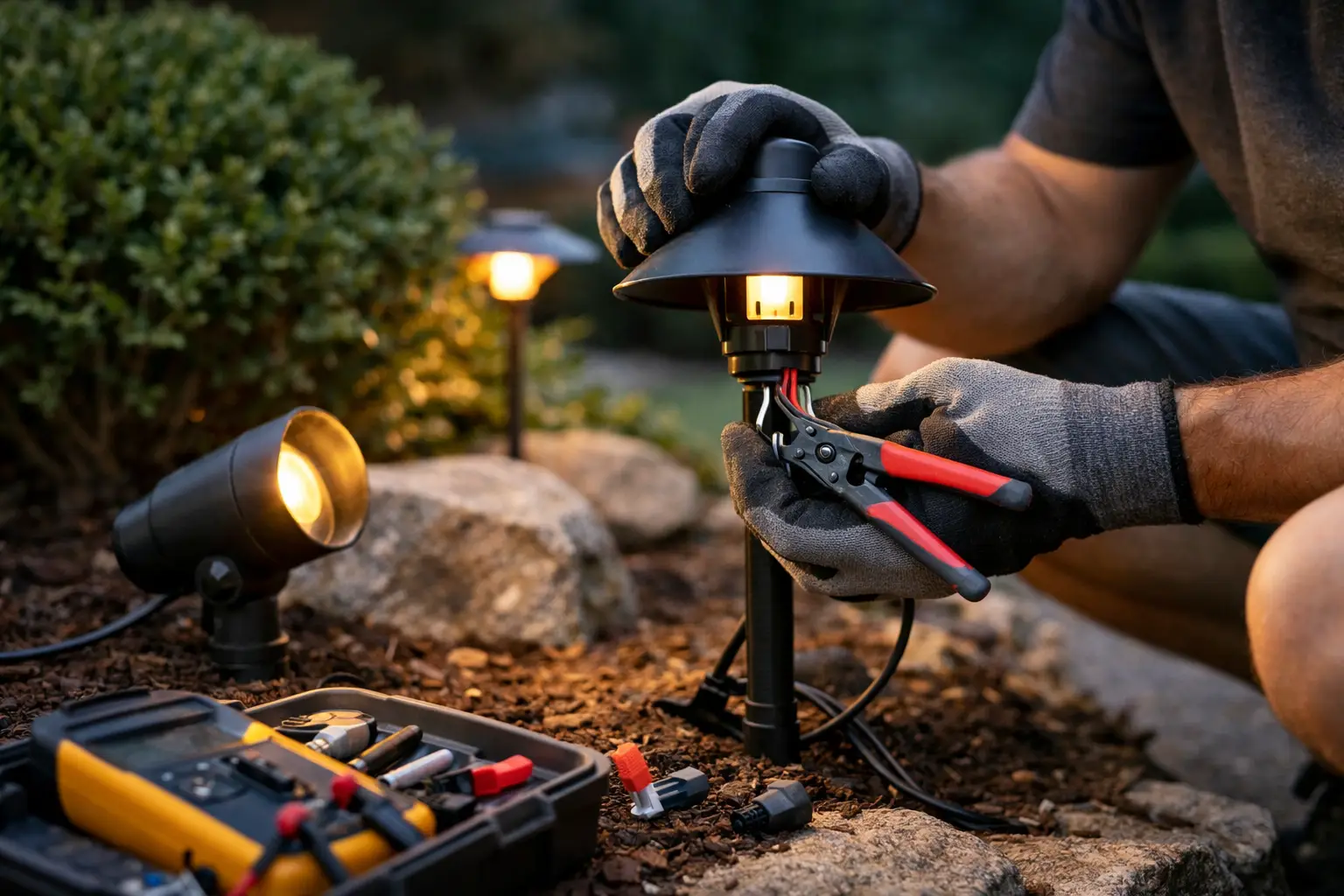
A beautifully lit home can lose its nighttime presence quickly when a path light goes dark, a tree uplight flickers, or an entire zone stops working. To fix outdoor landscape lights properly, begin with a methodical inspection rather than replacing fixtures at random. Most problems come down to a handful of causes: a power interruption, a failed connection, a damaged cable, moisture, or a fixture that has reached the end of its useful life.
For Tampa Bay properties, heat, seasonal rain, irrigation, mulch movement, and active landscaping all place added demands on an outdoor lighting system. A careful repair protects more than visibility. It preserves the architectural definition, curb appeal, and welcoming atmosphere your lighting was designed to create.
Start With Safety and the Right Expectations
Low-voltage landscape lighting is generally safer to troubleshoot than line-voltage lighting, but it still deserves respect. Turn off power at the transformer before handling exposed wire, opening fixtures, or moving connections. If your system is connected to a GFCI outlet, confirm that it has not tripped before assuming the transformer or fixtures have failed.
Avoid digging or cutting into cables until you understand where the issue begins. A single dark fixture is often a local problem. Several fixtures dark on the same run may point to a loose splice, a cut wire, or voltage loss farther upstream. When the whole system is out, start at the power source.
There is also a practical line between a simple repair and a service call. Replacing a compatible LED lamp or reseating a loose fixture connection may be straightforward. Repeated breaker trips, damaged transformer wiring, water inside electrical components, or a system that has been modified over time should be evaluated by a qualified outdoor lighting professional.
How to Fix Outdoor Landscape Lights: Follow the System
The fastest way to find the issue is to work from the source outward. This avoids spending time on fixtures when the actual problem is at the transformer, timer, photocell, or cable connection.
Check the outlet, transformer, and controls
First, verify that the outlet supplying the transformer has power. Test the GFCI reset button and the circuit breaker. Then inspect the transformer itself. Many systems include a timer, photocell, digital schedule, or app-based control. A changed setting, dead backup battery, unplugged photocell, or inaccurate dusk-to-dawn setting can make a fully functional system appear broken.
If the transformer has a visible display or status light, look for error messages or signs of overload. A warm transformer can be normal during operation. Excessive heat, buzzing, corrosion, a burnt odor, or visible damage is not. Shut the system down and arrange professional service if you see any of these conditions.
It is worth checking the lighting schedule after a power outage or daylight-saving time change. A timer that turns the system on in broad daylight can make homeowners think the lights are failing, while a timer set too late can leave the property dark when guests arrive.
Identify whether the problem affects one fixture or a full run
Turn the system on after dusk, or cover the photocell temporarily if the system uses one. Walk the property and note exactly what is working. A pattern tells the story.
When one fixture is dark while surrounding lights operate normally, inspect that fixture first. The LED lamp may have failed, the socket may be corroded, or the connector may have loosened. If several fixtures go out after one point on a cable run, inspect the wire connections near the last working fixture and the first dark fixture. A failed splice or severed cable is a common culprit.
If fixtures are dim at the far end of a long run, the concern may be voltage drop rather than a failed light. This is especially common when a system has been expanded over the years without adjusting wire gauge, transformer capacity, or fixture placement. Simply installing brighter lamps can make the imbalance worse.
Inspect fixtures for water, debris, and physical damage
Florida weather is demanding on exterior components. Open the affected fixture only after the power is off. Look for standing water, condensation, cracked lenses, loose gaskets, rusted contacts, insect nests, mulch packed around the housing, or landscaping that has shifted into the beam path.
A fixture designed for outdoor use should handle normal weather exposure, but seals and connections can deteriorate. Water intrusion can shorten LED life, create intermittent flickering, and corrode internal contacts. Replace damaged gaskets, lenses, or fixtures rather than trying to seal cracks with tape or household caulk.
For uplights installed in planting beds, keep the fixture head clear of heavy mulch and soil. Burying it too deeply traps moisture and heat while compromising the intended beam spread. For path lights, straighten leaning stems and make sure mower or edging equipment has not struck the fixture or cable.
Examine wire connections and cable runs
Most low-voltage failures occur at connections, not in the cable itself. Landscape lighting connectors may loosen as soil settles, roots grow, fixtures are moved, or service work is performed nearby. Disconnect power, then inspect each suspect connection for corrosion, incomplete contact, brittle insulation, or exposed copper.
A proper outdoor splice should be secure, weatherproof, and appropriate for direct burial. Twisting wires together and wrapping them with electrical tape is not a lasting repair in Tampa Bay’s heat and moisture. It may restore a light briefly, but it leaves the system vulnerable to corrosion and future outages.
Trace cables carefully where landscape crews, fence work, irrigation repairs, or new plantings have occurred. A shovel cut can be small enough to escape notice yet large enough to interrupt a circuit. If a cable has been nicked, crushed, or cut, use a rated direct-burial repair method or have the section professionally restored.
Replace Lamps and Fixtures With Compatible Components
Not every LED lamp or fixture belongs in every landscape lighting system. Before replacing a lamp, confirm its voltage, base type, wattage, beam spread, and color temperature. A mismatch may cause poor performance, uneven color, overheating, or an undesirable visual result.
For refined residential lighting, consistency matters. Replacing one warm-white fixture with a cooler, brighter lamp may technically solve the outage while disrupting the property’s overall composition. The eye notices color variation on columns, palms, entryways, and textured stone more than most homeowners expect.
If an older halogen system needs frequent lamp changes, a thoughtfully planned LED upgrade can be the better long-term decision. LEDs use less energy, generate less heat, and typically require less ongoing attention. The trade-off is that a quality upgrade should include an assessment of transformer load, existing wiring, fixture condition, and the desired nighttime effect, not just a fixture-for-fixture swap.
Know When a Professional Repair Is the Better Choice
Outdoor lighting should feel effortless once the sun goes down. If repairs have become repetitive, the issue may be system design, aging materials, or years of additions made without a unified plan. A professional assessment can determine whether a targeted repair will restore performance or whether select improvements will provide a more dependable result.
Consider service when you notice recurring flicker, widespread dimming, multiple failed connections, exposed wiring, transformer problems, or fixtures that no longer produce the intended effect. Professional maintenance also helps preserve the design itself. Trees mature, hedges fill in, and outdoor living areas change. Lighting that was perfectly aimed five years ago may now need repositioning, relamping, or recalibration.
Elegant Accents Outdoor Lighting has focused exclusively on outdoor illumination since 1999, with in-house crews who understand both the technical requirements and the visual standards of a finished property. The goal is not merely to get a fixture glowing again. It is to restore the balance of light, shadow, safety, and distinction that makes the property memorable after dark.
A well-maintained lighting system should quietly do its work every evening: welcoming visitors, defining architecture, guiding movement, and extending the enjoyment of your outdoor spaces. When a light fails, treat it as an opportunity to restore that lasting impression with the same care that went into the original design.