
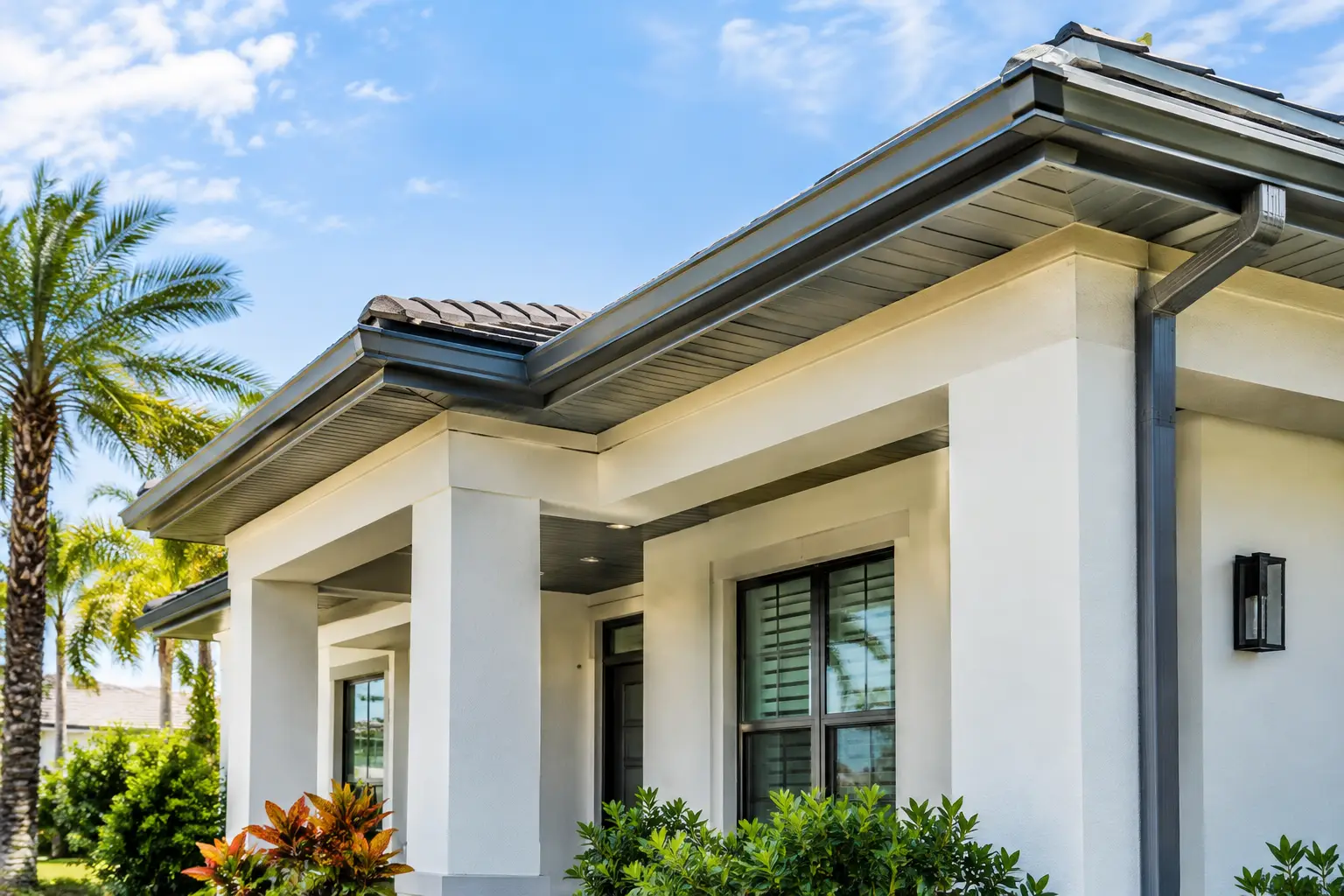
A beautifully lit roofline changes the way a home arrives at night. It gives a Tampa Bay property a composed, finished presence from the street, highlights the architecture homeowners invested in, and makes welcoming guests feel effortless. This permanent roofline design guide explains how to create that effect with discretion, durability, and a plan tailored to the home rather than a one-size-fits-all lighting pattern.
Permanent roofline lighting is not simply holiday lighting left in place. The best systems are designed to disappear during the day, perform reliably through Florida heat and storms, and produce light that feels intentional on ordinary evenings as well as special occasions.
Start With the Architecture, Not the Fixture
The roofline should complement the home’s strongest visual features. On a Mediterranean-style residence, that may mean tracing warm white light along prominent eaves and entry arches without competing with stucco texture or tile. On a contemporary home, clean linear runs can reinforce crisp roof geometry and create a striking silhouette. A coastal property may call for a softer presentation that feels polished without looking overly formal.
The goal is rhythm. Roof peaks, gables, dormers, columns, and entryways should read clearly, but not every edge requires illumination. Covering every available line can flatten the architecture and make the home feel visually busy. Selective placement creates contrast, allowing the eye to appreciate the property’s proportions.
This is where a professional nighttime design matters. A lighting layout that looks sensible on a daytime elevation can behave very differently after dark. Roof color, façade materials, neighboring homes, mature trees, and the distance from the street all influence how bright the system should be and where it should stop.
Choose a Look That Works Beyond the Holidays
A permanent system earns its place by being useful all year. Before selecting colors or controls, consider how the home should feel on a typical Tuesday evening. For many established Tampa Bay homes, a restrained warm white setting is the foundation. It provides elegant architectural definition, supports visibility around the front approach, and feels appropriate through every season.
Color should be treated as an option, not an obligation. A well-designed system can shift to festive combinations for holidays, team colors for a celebration, or subtle seasonal tones for gatherings, then return to a refined everyday setting. The difference is in the programming and the placement: color should enhance the occasion without turning the roofline into the focal point at the expense of the home itself.
Brightness is equally important. More output is not automatically more impressive. Excessively bright points can create glare, reflect sharply off pale soffits, and spill into neighboring properties. The ideal result is visible from the street yet comfortable from the driveway, front walk, and interior rooms.
Warm White Is the Everyday Standard
Warm white lighting generally offers the most timeless result for rooflines. It pairs naturally with warm exterior finishes, landscape lighting, and porch fixtures while giving the home a welcoming glow. Cooler whites can suit a distinctly modern palette, but they require care. In the wrong setting, they may appear stark against traditional materials or create a bluish cast that feels less inviting.
A thoughtful plan also coordinates the roofline with existing outdoor lighting. If the landscape is illuminated in a warm tone, the roofline should not feel disconnected. Architectural lighting works best as a layered composition, with the roofline defining the upper structure and landscape fixtures adding depth at ground level.
Plan for Tampa Bay Weather and Roof Conditions
Florida’s climate places real demands on exterior lighting. Heat, humidity, intense sun, wind-driven rain, salt exposure near the coast, and frequent storms can expose weaknesses in low-grade products and rushed installations. The system should use weatherproof LED components, properly protected connections, and mounting methods suited to the roofline material.
The installation approach matters as much as the product. Permanent roofline lighting should be carefully positioned beneath or along architectural elements so it is discreet in daylight and aligned consistently at night. Wires, channels, power supplies, and transitions should be planned around the home rather than treated as an afterthought.
Roof type also affects the design. Tile, metal, shingle, and specialty roofing materials each require different considerations for attachment and access. A qualified lighting specialist evaluates these conditions before presenting a proposal, helping protect the roof and avoid visual inconsistencies around peaks, returns, and gutter lines.
Do not overlook drainage and service access. Components should not interfere with gutters or areas where water routinely collects. Controls and power equipment should remain accessible for service without compromising the finished appearance. A system that is difficult to maintain may look attractive on installation day but become frustrating over time.
Put Control Where It Belongs: In Your Routine
Permanent lighting should be easy to enjoy. App-based controls, timers, schedules, dimming, and preset scenes allow homeowners to move from everyday architectural lighting to holiday displays without climbing a ladder or handling seasonal strands.
Still, technology should simplify the experience rather than create another device to manage. During planning, decide who will use the controls, what schedules are genuinely useful, and whether the system should integrate with existing smart-home routines. Some homeowners want a few dependable scenes they can select in seconds. Others enjoy adjusting colors and patterns for each event. Both approaches can work when the controls are configured clearly from the beginning.
For commercial properties, restaurants, and hospitality settings, scheduling becomes especially valuable. A roofline can reinforce brand presence after sunset while operating on a consistent schedule that respects neighboring residences and local operating needs.
Avoid the Most Common Design Missteps
The most frequent mistake is treating permanent roofline lighting as a product purchase rather than a design decision. The fixture may be technically capable, but the effect depends on spacing, alignment, color temperature, brightness, and the architecture it serves.
Another misstep is using a highly animated pattern as the default setting. Movement and changing colors have a place during celebrations, but a static or gently programmed scene is usually more elegant for daily use. It preserves the home’s distinction rather than competing with it.
Homeowners should also be cautious about prioritizing the lowest initial price. Permanent exterior lighting is exposed to demanding conditions and installed in difficult-to-reach locations. Product quality, professional wiring, careful mounting, and responsive service all affect the long-term value. A transparent proposal should explain the scope of the design, equipment, installation, controls, and maintenance expectations so there are no surprises after the system is in place.
A Permanent Roofline Design Guide for a Lasting Result
The most successful permanent roofline design begins with a property consultation. A lighting professional should walk the site, consider street views and nighttime use, identify architectural focal points, and discuss the homeowner’s preferred everyday look. From there, the plan can establish fixture placement, control options, color capabilities, and a clear installation path.
At Elegant Accents Outdoor Lighting, that consultative approach is central to creating lighting that defines distinction without sacrificing practicality. Experienced in-house crews, durable outdoor-rated LED products, and ongoing maintenance support help ensure the final reveal remains as dependable as it is beautiful.
After installation, spend time living with the system. Adjust the dimming level from the street, test the warm white setting against the landscape lighting, and reserve bolder scenes for occasions that call for them. The right permanent roofline lighting does not ask for attention every night. It quietly gives your home a signature presence that feels considered, welcoming, and unmistakably yours.