
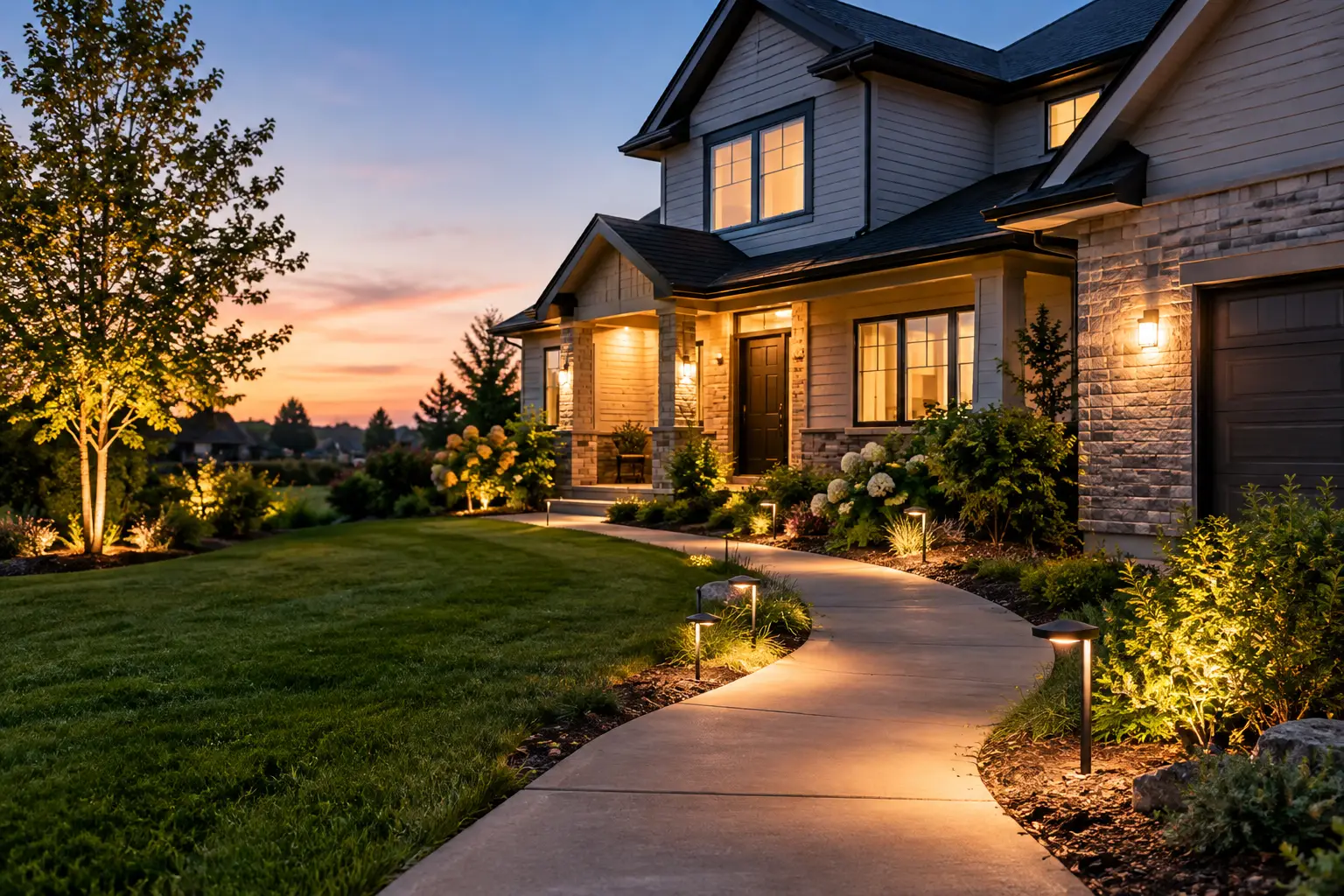
A beautiful property should not disappear when the sun goes down. Perimeter lighting gives a home a refined after-dark presence by defining its boundaries, guiding movement, and bringing a sense of calm security to the spaces beyond the front door. Done well, it does more than illuminate an edge. It makes the entire property feel considered, protected, and distinctly yours.
For Tampa Bay homeowners, that distinction matters. Mature palms, long driveways, waterfront lots, garden walls, pool enclosures, and architectural facades all deserve lighting that feels intentional rather than excessive. The right plan creates a graceful transition from street to entry, from patio to garden, and from home to the surrounding landscape.
What Perimeter Lighting Is Designed to Do
Perimeter lighting refers to the carefully placed fixtures that illuminate the outer edges of a property or its key exterior zones. Depending on the home, that may include a driveway entrance, walkways, fence lines, garden borders, retaining walls, gates, dock approaches, pool cage edges, or the transition between a lawn and wooded area.
Its purpose is not to flood every inch of the yard with brightness. A luxury lighting design uses layers of light to establish visual order. Soft illumination along a path helps guests move confidently. Gentle light at a gate or drive entrance makes arrival feel welcoming. Accented landscape features create depth beyond the home itself, so the property retains dimension after dark.
Security is part of the equation, but it should not dictate every design decision. Harsh glare can create deep shadows, diminish the view from inside, and make an otherwise elegant property feel commercial. Thoughtful fixture placement produces useful visibility while maintaining the warm, composed atmosphere homeowners expect from a custom outdoor lighting system.
Security Without the Floodlight Effect
There is a meaningful difference between lighting for security and simply installing bright lights. A single powerful floodlight may cover a broad area, but it can also create glare that makes it harder to see beyond the illuminated zone. It often draws attention to itself rather than to the property.
A better approach uses controlled pools of light at decision points and vulnerable areas: driveway entries, side-yard gates, exterior steps, rear access points, and routes between the house and outdoor living spaces. Low-voltage LED fixtures can be aimed and shielded with precision, helping reduce shadows without spilling unnecessary light into neighboring homes or toward the night sky.
For properties with a longer approach or a more secluded setting, perimeter lighting can also make the home feel occupied and cared for when residents are away. That visual reassurance comes from consistency, not intensity. A balanced system looks deliberate from the street while remaining comfortable for those enjoying the patio, pool deck, or lanai.
Where Perimeter Lighting Makes the Greatest Difference
Every property has its own priorities. A home on a prominent corner lot may benefit most from subtle definition at the front landscape edge and architectural lighting at the façade. A larger estate may need a more extensive plan that carries light from the entry drive to the rear entertaining area. Waterfront properties often require special care to preserve views while safely illuminating decks, docks, and transitions near the water.
Driveways are often the natural place to begin. Lighting an entry monument, gate, planting bed, or curve in the drive creates a polished arrival sequence. It also helps family and guests recognize edges, changes in elevation, and turning points without relying on overhead fixtures that can feel stark.
Walkways deserve equal attention. The goal is not a runway of evenly spaced lights. Instead, a designer considers the width of the path, nearby planting, steps, destination points, and the amount of existing ambient light. Fixtures should create comfortable guidance, with enough illumination to support safe footing while keeping the view open and elegant.
Side yards and rear boundaries call for more restraint. In many cases, a softly lit gate, a few carefully placed downlights, or illumination on a specimen tree provides the needed orientation. If privacy is the primary concern, lighting can enhance the feeling of enclosure without making the boundary itself a visual focal point.
Pool, Patio, and Outdoor Living Boundaries
Perimeter design is especially valuable around the spaces homeowners use most after sunset. Pool decks, outdoor kitchens, dining terraces, and screened enclosures benefit from lighting that makes the edges of the space easy to read. This is where practical safety and atmosphere meet.
For example, a pool cage can feel much more open and sophisticated when its framework and adjacent landscaping are thoughtfully illuminated. Step lights may define a change in elevation, while gentle uplighting on palms or privacy plantings gives the area depth. The pool itself can remain the visual centerpiece rather than competing with bright fixtures around it.
The same principle applies to decks and docks. Lighting should support safe movement near water and stairs, but glare can interfere with the relaxing experience of an evening outdoors. Warm, low-level illumination with well-concealed fixtures is often the better choice, particularly where the view is part of the property’s appeal.
A Design Should Follow the Property, Not a Formula
The most successful perimeter lighting plans begin with observation. Where do residents and guests arrive? Which routes are used after dark? What does the home look like from the street, from the pool, and from inside the main living areas? Which trees, walls, or architectural details deserve emphasis, and which areas should remain quiet?
These questions prevent a common mistake: treating perimeter lighting as a separate security feature rather than part of a complete exterior design. When boundary lighting is coordinated with architectural and landscape illumination, it becomes one composed experience. The front elevation gains definition, the landscape gains depth, and exterior living areas remain inviting long after sunset.
Fixture finish, beam spread, color temperature, and mounting location all affect the result. Warm white LEDs usually complement residential architecture, natural stone, and lush Florida landscapes more gracefully than cool, bluish light. Narrow beams can highlight a column or tall palm, while wider distributions are better for broad planting beds and transitions. The right selection depends on what is being illuminated and how far away it will be viewed.
Quality also matters in Tampa Bay’s heat, humidity, heavy rain, and coastal conditions. Weatherproof fixtures, properly protected connections, professional wire routing, and accurate transformer sizing are not glamorous details, but they determine whether a lighting system continues to perform beautifully season after season.
Why Professional Installation Protects the Investment
A refined lighting system should look effortless, but the installation behind it requires precision. Fixtures need stable placement, wires need to be concealed without harming established landscaping, and each light must be adjusted after dark to achieve the intended effect. A fixture that looks properly aimed in daylight can cast an unwanted shadow or glare once night falls.
Professional crews also account for irrigation lines, drainage patterns, planting growth, electrical load, and access for future maintenance. This is particularly valuable for established properties, where preserving the landscape is as important as improving it. A transparent custom proposal should explain the scope, fixture selections, and expected investment before work begins.
At Elegant Accents Outdoor Lighting, the design process is built around that level of care: a property consultation, a tailored lighting plan, professional installation, and continued service to keep the system performing as intended. The nighttime reveal is not an afterthought. It is the moment when placement, craftsmanship, and design are tested together.
Maintenance Keeps the Effect Intact
Outdoor lighting is exposed to the elements every day. Landscaping grows, mulch shifts, storms move fixtures, and lenses can collect debris. Even high-quality LED systems benefit from periodic adjustments to preserve both appearance and performance.
Maintenance may include straightening fixtures, trimming plant material away from light paths, checking connections, cleaning lenses, adjusting aiming angles, and reviewing timers or controls. These small details protect the original design. A palm that has grown outward, for instance, may block a beam that once created a dramatic canopy effect. A quick adjustment restores the intended composition.
Homeowners should also consider how their lighting needs may change. A new patio, renovated entry, expanded pool deck, or updated landscape can create an opportunity to extend the system with matching fixtures and consistent control. A well-planned foundation makes those future improvements easier.
The finest perimeter lighting does not announce itself with brightness. It quietly establishes order, beauty, and confidence around the places that matter most. When each boundary, pathway, and outdoor destination is given the right measure of light, the property feels just as welcoming at 9 p.m. as it does at noon.