
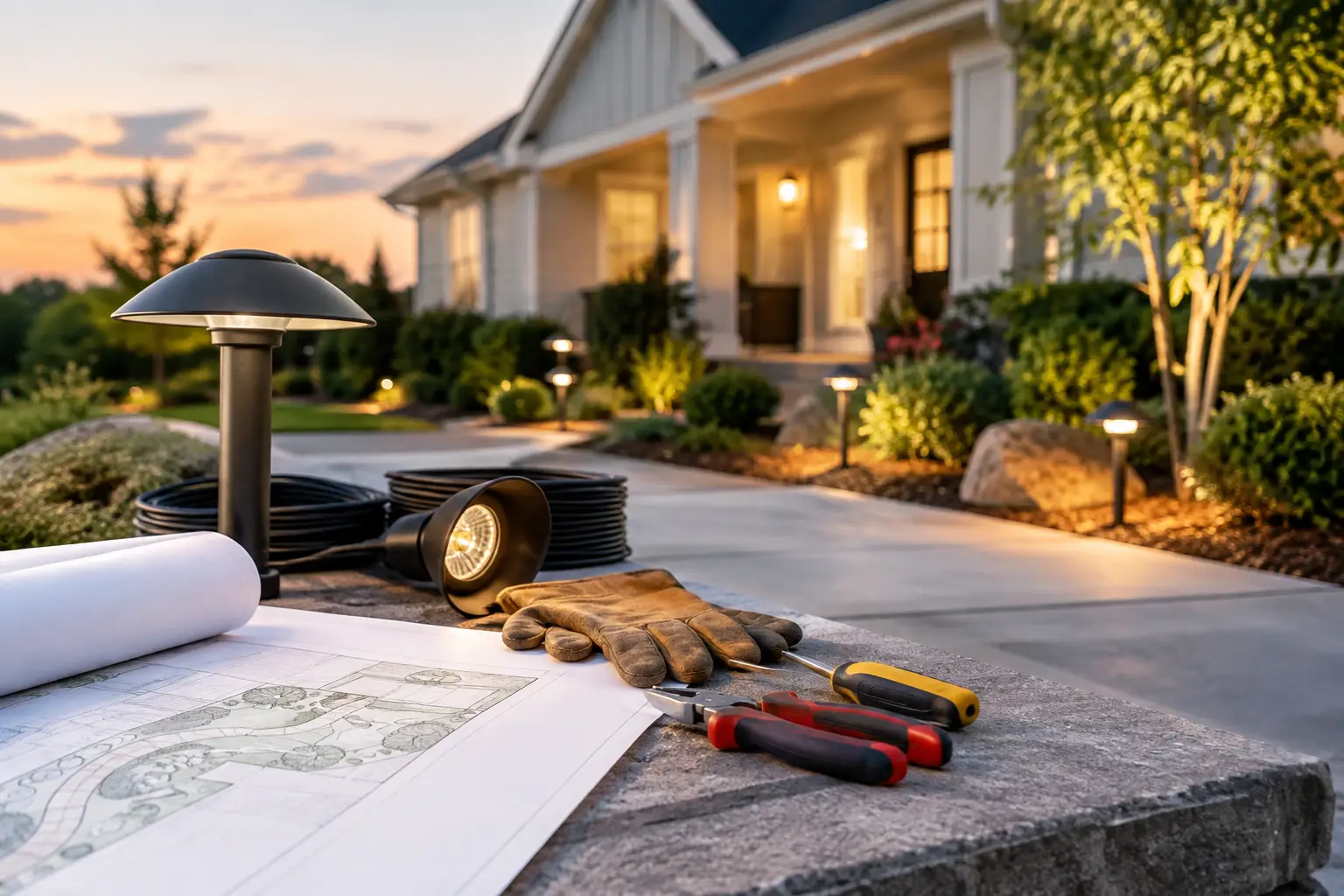
A beautifully illuminated home does not happen by placing a few fixtures along a walkway. It begins with a thoughtful plan for how your property should feel after dark, then follows a lighting installation timeline built around design, craftsmanship, and the details that make the finished result look effortless.
For most Tampa Bay homes, a professional outdoor lighting project moves from consultation to nighttime reveal in one to three weeks. The installation itself may take only a day or two, but the best results depend on careful design, clear approvals, fixture availability, weather, and the scale of the property. A custom system for a waterfront estate, pool enclosure, or heavily landscaped residence naturally requires more coordination than a focused front-entry enhancement.
What Shapes an Outdoor Lighting Installation Timeline?
Every property has its own architecture, landscape maturity, electrical conditions, and priorities. That is why a precise schedule starts after an on-site review rather than with a one-size-fits-all promise.
A modest landscape lighting plan may include path lights, uplighting for a few palms or oaks, and architectural illumination at the entry. A larger design may extend to a long driveway, outdoor kitchen, pool deck, dock, lanai, mature canopy trees, and multiple elevation views. More fixtures do not simply add installation time. They also require more intentional placement, wire routing, transformer capacity planning, and nighttime adjustment.
Tampa Bay weather is another practical consideration. Afternoon storms, saturated soil, and high winds can affect outdoor work, especially when crews need to protect established turf, planting beds, and hardscape areas. Professional planning builds reasonable flexibility into the schedule without compromising the care given to the property.
Permit requirements can also affect timing. Most low-voltage landscape lighting projects do not require the same permitting process as major electrical work, but code considerations can vary when a project includes new line-voltage circuits, permanent roofline lighting, pool-area electrical work, or commercial applications. A qualified lighting specialist will identify those requirements before installation is scheduled.
The Lighting Installation Timeline, Step by Step
Week One: Consultation and Property Walkthrough
The first visit is where the project begins to take shape. Rather than asking homeowners to choose fixtures from a catalog, a lighting designer studies the property after dark when possible, or evaluates it with a clear understanding of how the evening environment will change.
The conversation should cover more than curb appeal. Homeowners may want better visibility at the front walk, a welcoming arrival sequence, safer steps around the pool, or more usable space for outdoor entertaining. They may also want to soften a dark side yard, highlight a signature tree, bring dimension to stonework, or create a polished view from inside the home.
During this phase, the team considers existing electrical access, irrigation lines, plant material, drainage, pathways, and areas that need discreet wire routing. It is also the time to discuss maintenance expectations, desired levels of brightness, color temperature, and whether the system may be expanded later.
Week One: Custom Design and Transparent Proposal
Following the walkthrough, the design is translated into a custom plan and proposal. This step often takes a few business days, depending on project complexity. It should clearly outline the proposed fixture types, locations, system components, installation scope, and investment.
A refined design balances focal points with restraint. Too much light can flatten architectural details, create glare, and diminish the sense of luxury homeowners are trying to achieve. The goal is selective brilliance: warm illumination that reveals texture, depth, and important features while preserving shadow and nighttime comfort.
This is also when decisions are made about fixture quality. Weatherproof LED fixtures, durable connections, and properly sized transformers may not be the most visible parts of a project, yet they have an enormous effect on long-term performance. Choosing quality components from the beginning can reduce future service needs and help the system maintain its appearance through Florida heat, rain, salt air, and seasonal landscape growth.
Once the proposal is approved, materials can be reserved and installation dates confirmed. For common residential projects with standard fixtures in stock, this transition can happen quickly. Specialty finishes, custom mounting conditions, extensive dock lighting, or permanent roofline systems may require additional lead time.
Installation Day: Precision Below the Surface
For many homes, the physical installation takes one full day. Larger properties and multi-zone designs may take two or more days. Experienced in-house crews arrive with the design plan, fixtures, cable, transformers, and the tools needed to work carefully around the property.
Installation generally includes setting fixtures, running low-voltage cable, making weather-protected connections, mounting transformers, and programming controls. Cable is placed with attention to landscape preservation and future service access. Fixtures are positioned for the intended effect, but they are not simply locked into place and forgotten.
This distinction matters. A fixture aimed at a live oak must account for branching structure, seasonal growth, and the viewpoint from the street or patio. A light near a pool cage must enhance the area without reflecting harshly off screens or shining into neighboring homes. Lighting on a dock or deck must improve footing and atmosphere while respecting the surrounding water and shoreline environment.
A skilled crew works cleanly and methodically, restoring disturbed areas as carefully as conditions allow. On properties with dense planting beds or established hardscapes, this attention to detail often matters as much to homeowners as the finished illumination.
The Nighttime Reveal: Aiming, Balancing, and Fine-Tuning
The most important adjustments happen after sunset. Daytime installation establishes the equipment, but nighttime reveals the design.
During the final appointment, technicians assess beam spread, fixture angles, brightness, shadows, glare, and sightlines from key viewing areas. A light may need to be moved a few inches, tilted slightly, shielded, or dimmed to produce a more elegant result. This fine-tuning separates basic exterior lighting from a composed nighttime environment.
The team should also walk the property with the homeowner, explain controls and timer settings, and answer questions about routine care. Elegant Accents Outdoor Lighting treats this moment as more than a final check. It is when a property takes on its intended presence: inviting from the street, comfortable for guests, and distinctive from every meaningful angle.
When a Project May Take Longer
A longer schedule is not necessarily a sign of a complicated experience. It often reflects a more detailed project or conditions worth handling correctly.
Projects may require additional time when they involve large estates, complex architectural elevations, commercial venues, restaurants, extensive tree lighting, docks, or pool environments. Scheduling can also shift during the holiday season, when seasonal lighting demand increases, or after prolonged storms that make landscape work impractical.
Homeowners should also allow more time when coordinating lighting with a new pool, landscape renovation, paver project, exterior paint work, or construction. Lighting is often best installed after major grading and hardscape work are complete but before new landscaping becomes fully established. Coordinating early protects the design and can prevent unnecessary rework later.
How to Keep Your Project Moving Forward
The simplest way to support an efficient schedule is to make design decisions early and provide clear access to the property. Share any planned renovations, irrigation changes, gate codes, HOA requirements, or areas of concern during the consultation. If you have a preferred completion date for a party, holiday gathering, listing photography, or seasonal arrival, mention it from the start.
It also helps to focus first on the experience you want rather than a fixture count. A clear goal such as a more dramatic front elevation, a safer pool deck, or an inviting entertainment area gives the designer a stronger foundation than trying to select individual lights before the overall composition is understood.
Plan for Lasting Beauty, Not Just Installation Day
The installation date is the beginning of your system’s life, not the end of the relationship. Florida landscapes grow quickly, storms can shift fixtures, and seasonal changes alter how light interacts with foliage and architecture. Periodic maintenance keeps lenses clean, connections protected, lamps performing as intended, and focal points properly aimed.
When you allow time for a considered design, professional installation, and a true nighttime adjustment, outdoor lighting becomes more than an improvement project. It becomes a lasting expression of how your home welcomes, protects, and impresses after sunset.