
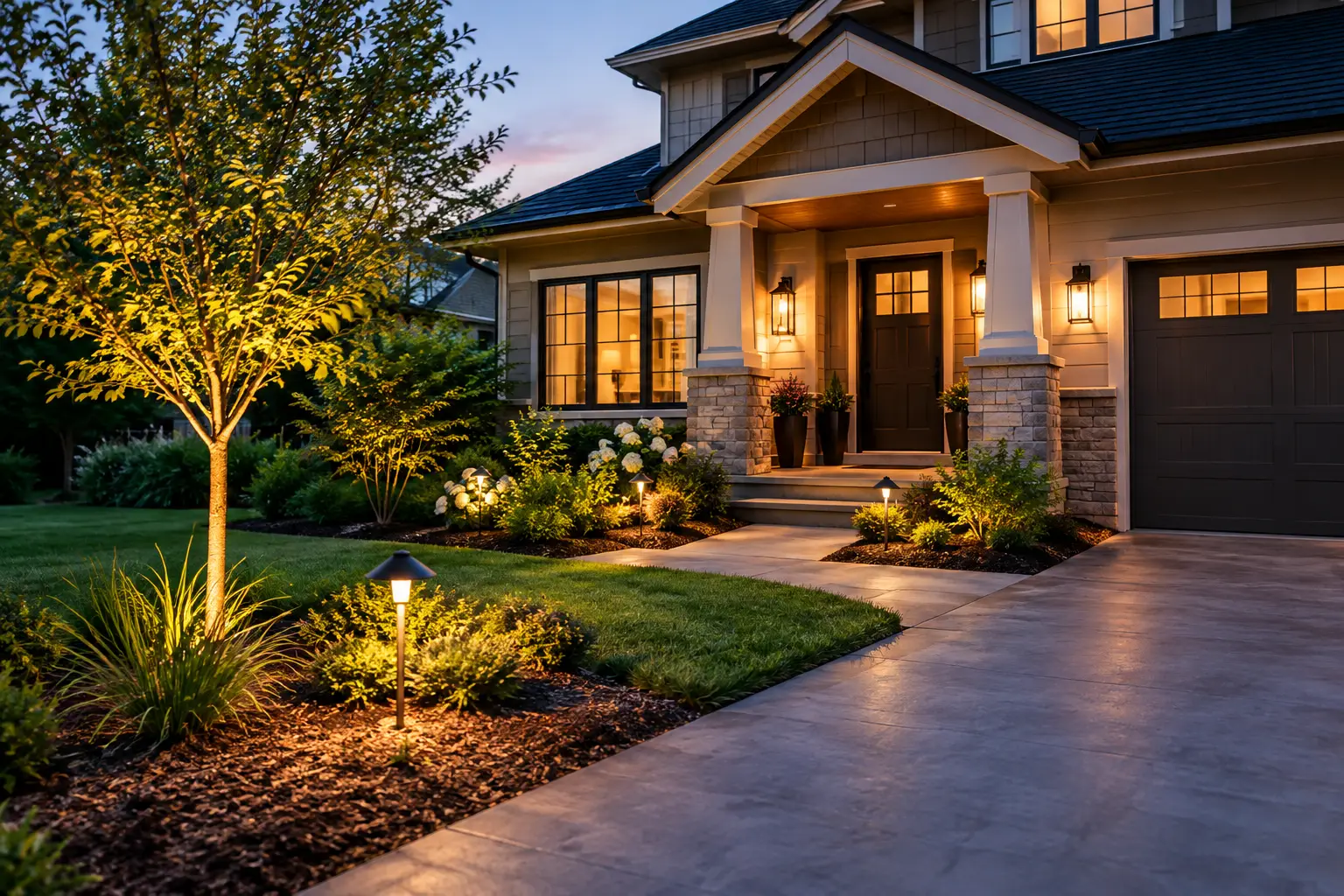
A beautifully maintained Tampa Bay home can lose much of its presence after sunset if its best features disappear into shadow. To improve home curb appeal lighting, the goal is not to make every corner brighter. It is to create a composed nighttime view that guides the eye from the street to the entry, reveals the character of the architecture, and makes the property feel welcoming, established, and secure.
The most memorable exterior lighting feels intentional. It creates contrast, depth, and warmth without exposing the fixtures or washing the home in glare. Done well, it becomes part of the property’s identity – a refined first impression for guests, neighbors, and anyone arriving after dark.
Start With the View From the Street
Curb appeal is judged from a distance before a visitor ever reaches the front walk. Stand across the street or at the end of the driveway at night and consider what is visible. Is there a clear focal point? Can someone recognize the roofline, entryway, mature palms, oaks, or distinctive stonework? Does the front of the home look balanced, or does one bright fixture leave the rest of the property flat and dark?
This perspective should direct the lighting plan. A strong design usually begins with the home’s most distinctive elements: architectural columns, gables, textured façades, a prominent front door, landscape beds, and specimen trees. Not every feature needs illumination. Selective lighting creates hierarchy, which is what gives a property its sense of distinction.
For homes set farther back from the road, the driveway approach and front landscape may deserve more attention than fine architectural detail. For a home close to the street, carefully aimed fixtures and controlled brightness matter even more. The right approach depends on lot size, surrounding ambient light, and the architectural style of the residence.
Improve Home Curb Appeal Lighting With Layers
A single floodlight may provide visibility, but it rarely provides elegance. Layered lighting gives an exterior dimension and visual comfort, much like a thoughtfully furnished interior. Each layer has a purpose, and together they create a polished scene rather than a collection of bright spots.
Architectural lighting defines the home
Soft uplighting can bring stone, stucco, brick, columns, arches, and roof peaks into view. The fixture should be positioned and aimed to reveal texture or shape, not create harsh streaks across the wall. A narrow beam may accent a tall column or palm trunk, while a wider beam can gently illuminate a broad façade.
Rooflines are a common area for overlighting. The goal is typically to suggest the home’s scale and form, not outline it like a commercial building. Warm, controlled illumination around key elevations often looks more timeless than lighting every peak, corner, and eave.
Landscape lighting creates depth
Landscaping is one of the easiest ways to make a front elevation feel more dimensional at night. A well-placed light under a crape myrtle, palm, or oak canopy can add graceful shadow patterns to the façade. Low plantings, ornamental grasses, and flowering beds benefit from subtle accents that reveal shape without turning the yard into a stage set.
Avoid placing a fixture directly in front of every shrub. Repetition can make a landscape appear dotted with light rather than naturally composed. Instead, choose a few focal plantings and use darkness as part of the design. Shadow gives illuminated features more presence.
Path and entry lighting offers a gracious welcome
The route from driveway or sidewalk to front door should be easy to follow, especially for guests arriving after dark. Path lights can establish a gentle rhythm along walkways, but they should not be crowded together or placed in a rigid runway. Their job is to define the edge of the path and illuminate changes in elevation, not cast harsh pools of light into a visitor’s eyes.
The front door deserves special consideration. Sconces, pendant lights, recessed ceiling fixtures, or carefully positioned landscape lighting can all work, depending on the entry architecture. The best choice provides enough light to welcome guests and use the lock comfortably while supporting the style of the home. A grand entry may call for decorative fixtures with architectural presence; a more contemporary entry may look best with discreet, integrated light.
Choose Warm Color Temperature and Controlled Brightness
For most luxury residential exteriors, warm white LED light creates the most inviting result. A color temperature around 2700K often complements traditional homes, warm-toned stone, lush landscaping, and outdoor entertaining areas. A slightly crisper 3000K can suit modern architecture, clean stucco elevations, and homes with cooler material palettes.
Brighter is not always better. Excessively powerful fixtures flatten architectural detail, create glare for drivers and neighbors, and can make a home feel less inviting. The right fixture output depends on mounting distance, beam spread, nearby surfaces, and the amount of existing street or security lighting.
Quality also matters. Low-grade LEDs may shift color, fade unevenly, or create visible hot spots. Professional-grade, weatherproof fixtures are designed for consistent color, durable performance, and precise beam control in Florida’s heat, heavy rain, humidity, and coastal conditions.
Balance Beauty, Safety, and Security
A refined lighting design should make the property feel safer without making it feel fortified. Illuminate front walks, driveways, steps, gate entries, and transitions between outdoor spaces so family and guests can move confidently after dark. This is particularly valuable around uneven pavers, stairways, and mature landscape roots that may be difficult to see at night.
Security benefits come from eliminating deep, unintentional shadows near entry points and side yards while maintaining a residential appearance. Motion-activated floodlights have a role in certain service areas or side yards, but they are rarely the best primary lighting solution for the front of a home. Their sudden glare can disrupt the calm, welcoming impression that curb appeal lighting is meant to create.
Consider timers and smart controls as part of the plan. A professionally designed system can turn on reliably at dusk, adjust to seasonal changes, and remain easy to manage. Consistent operation matters. A beautiful lighting design loses impact when half the fixtures are off, lamps have failed, or overgrown plant material blocks the beams.
Do Not Forget the Driveway, Mailbox, and Address
Small details influence how finished a property feels. If the driveway is long or curves through landscaping, carefully positioned fixtures can guide arrivals and reveal the approach without lining every inch of pavement. A decorative mailbox, address marker, gate, or landscape monument can also become an elegant visual anchor when illuminated with restraint.
These features are practical as well as attractive. A visible address helps guests, deliveries, and emergency responders find the home more easily. The key is proportion. A modest address plaque needs a subtle, narrow accent, while a substantial entrance monument may support broader landscape lighting.
Protect the Investment With Professional Design and Maintenance
Outdoor lighting is a system, not simply a set of fixtures. Wire runs, transformer capacity, fixture placement, voltage management, drainage, planting growth, and nighttime aiming all affect the finished result. A plan that appears straightforward in daylight often requires adjustment after dark to achieve the right balance from the street and at the front door.
Elegant Accents Outdoor Lighting has focused exclusively on outdoor lighting in Tampa Bay since 1999, bringing design, installation, and ongoing service together under one experienced team. A professional consultation can clarify what should be illuminated, what should remain dark, and how the system can evolve as landscaping matures or the home is updated.
Maintenance is equally valuable for a lasting impression. Fixtures may need cleaning after storms, branches may alter a beam path, and landscape growth can conceal a carefully placed light. Periodic service keeps the original design looking composed, dependable, and worthy of the home it represents.
When planning exterior improvements, treat nighttime curb appeal as more than an afterthought. The right lighting can make the final arrival home feel as considered and welcoming as the home itself.