
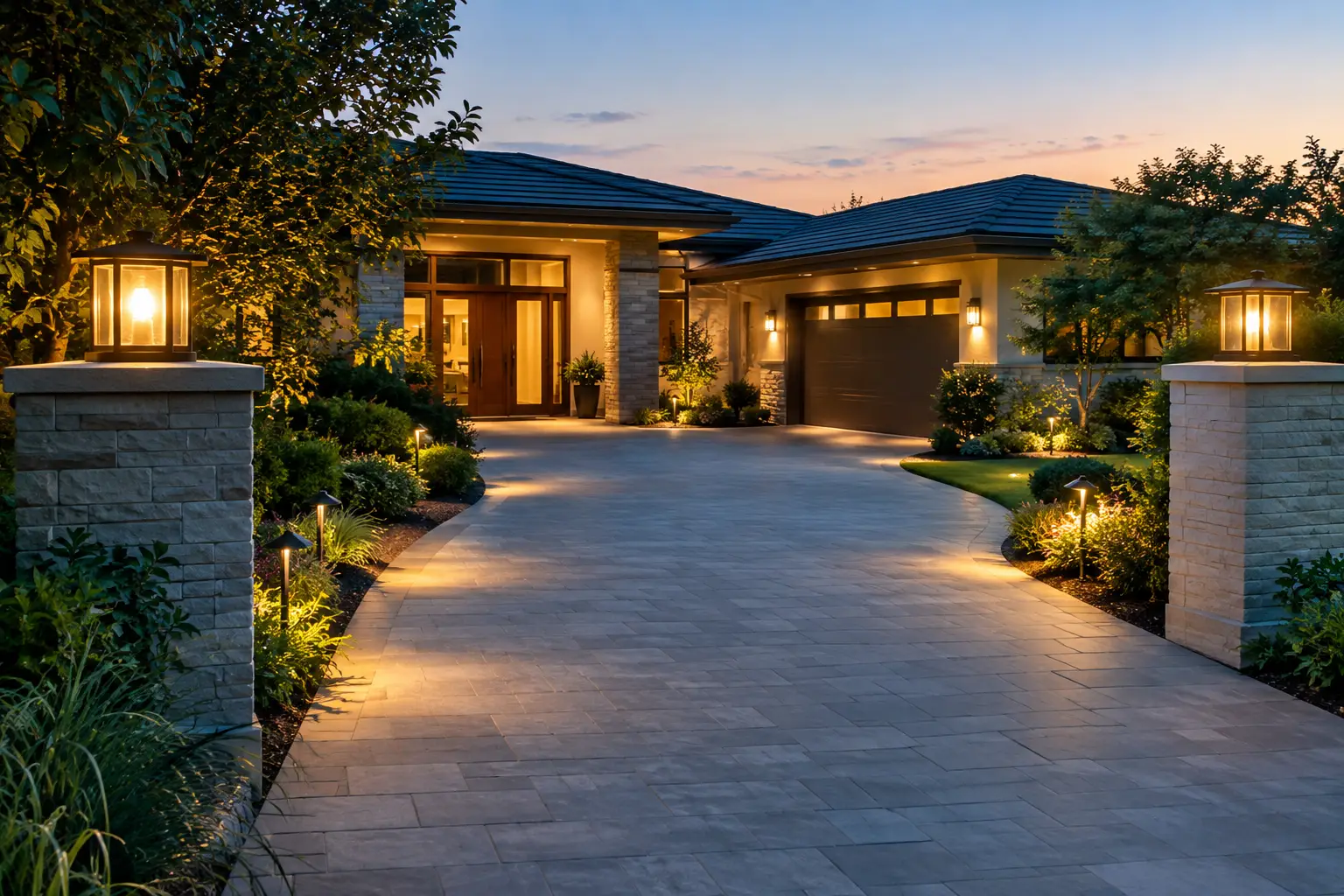
A driveway entrance sets the tone before guests see the front door. Learning how to illuminate driveway entrances is less about adding the brightest fixtures and more about creating a composed arrival experience: clear, welcoming, secure, and beautifully connected to the home’s architecture.
For Tampa Bay properties, the right design also has to perform through heat, rain, humidity, and coastal air. A refined entrance lighting plan balances drama with restraint, using durable LED fixtures and carefully controlled beams to make a lasting impression without turning the drive into a runway.
Start With the Arrival Experience
Think about the entrance from a driver’s perspective. Where does the driveway begin? Is there a gate, monument sign, pair of columns, curving approach, or change in elevation? Each of these features affects where light belongs and how much is needed.
The most successful designs guide the eye in stages. The first layer identifies the property line or entrance point. The next layer helps drivers read the drive safely. A final layer draws attention to the details that make the property distinctive, such as masonry columns, palms, specimen trees, stone walls, or a custom gate.
This approach prevents a common mistake: placing identical fixtures in a straight line simply because they are easy to install. Symmetry can be elegant when the entrance is formal, but a curved drive or lush landscape may call for a more natural rhythm. The lighting should feel intentional from the street and effortless from behind the wheel.
How to Illuminate Driveway Entrances in Layers
A layered design creates depth, visibility, and architectural presence without relying on excessive brightness. At the driveway entrance, three types of illumination often work together.
Define columns, walls, and gate structures
Uplighting is especially effective on entrance columns, textured masonry, stucco walls, and decorative gates. A narrow or medium beam can reveal stone texture and vertical proportions, while a wider beam may suit a broad wall or mature palm behind the entrance.
Fixture placement matters as much as output. Set too close to a wall, an uplight can create a harsh hot spot. Set too far away, it loses definition and spills into the surrounding landscape. The goal is a soft, even wash that gives the feature dimension while keeping the light source discreet.
For gated properties, lighting the gate itself can improve usability and give the entrance a more finished appearance. The gate should be visible, but the fixture should not shine directly into approaching drivers’ eyes or interfere with camera views.
Guide the vehicle without outlining every inch
Driveway path lighting should communicate direction, not create a dotted border from the street to the garage. Well-spaced, low-profile fixtures can clarify a curve, a narrow passage, or a change in grade. They are particularly useful where guests may be unfamiliar with the property.
On a wide, straight driveway, lighting both sides continuously is often unnecessary. Alternating fixtures, illuminating landscape beds near key turns, or using discreet directional lighting can provide the same guidance with a more polished result. Less repetition usually looks more luxurious.
If the entrance has a steep slope, retaining wall, or drainage swale, prioritize visibility at that transition. Safety lighting belongs where a driver or pedestrian needs information, not everywhere light can be installed.
Add landscape depth behind the entrance
A beautifully lit palm, oak, hedge, or flowering tree behind the entrance gives the composition a backdrop. Without this depth, illuminated columns can appear to float in darkness. With it, the entire entry gains scale and a sense of arrival.
Choose one or two landscape focal points rather than lighting every plant. A canopy of warm light above a gate, for example, can make the property feel established and inviting. Lighting too many small shrubs, by contrast, can make a premium landscape look busy.
Choose Warm Light and Controlled Beam Angles
For most luxury residences, warm white LED lighting in the 2700K to 3000K range creates the most timeless result. It complements natural stone, brick, painted architecture, and lush Florida landscaping while feeling inviting at night. Cooler light can be appropriate for certain contemporary properties, but it must be selected carefully. Blue-white light often feels commercial and can flatten the warmth of a home’s exterior.
Brightness should be tailored to the surrounding environment. A secluded estate entrance may need enough output to establish visibility from a dark road, while a home in a well-lit neighborhood may need considerably less. More lumens do not automatically mean better security or better curb appeal. Excessive output can cause glare, wash out architectural detail, and make shadows beyond the lighted area seem even darker.
Beam spread is equally important. Narrow beams create strong vertical accents on tall palms or columns. Wider beams provide gentle coverage for walls, hedges, and larger planting areas. A custom design often uses both, with each fixture selected for a specific visual purpose.
Put Safety First Without Making the Entrance Harsh
A driveway entrance should help residents, guests, delivery drivers, and service providers identify the property and move through it confidently. Address numbers should be readable from the road, turns should be clear, and walking areas near gates or mailboxes should not disappear after sunset.
That does not require floodlighting the entire front yard. Broad, uncontrolled floodlights can create glare for drivers and neighbors, cast deep shadows, and diminish the sense of elegance homeowners want to achieve. Shielded fixtures, thoughtful aiming, and overlapping layers of low-level illumination produce better visibility with a more distinguished finish.
Security is also more effective when lighting supports the property’s actual sightlines. Consider where cameras are installed, where someone could approach from the side, and where landscaping may block views. A professionally designed system can illuminate these areas while preserving the calm, welcoming character of the home.
Plan for Tampa Bay Conditions and Long-Term Performance
Outdoor lighting in Tampa Bay faces demanding conditions. Heavy rain, irrigation, intense sun, high humidity, and salt exposure in coastal communities can shorten the life of poorly made fixtures and connections. A beautiful first-night reveal means little if the system corrodes, shifts, or develops inconsistent performance over time.
Look for professional-grade, weatherproof LED fixtures with durable finishes and properly sealed electrical connections. Brass and high-quality copper fixtures are often valued for their longevity and natural patina, while premium powder-coated finishes can complement a more contemporary design. The best choice depends on the home’s style, location, and desired maintenance profile.
Installation details deserve the same attention as fixture selection. Wiring should be protected and concealed, fixtures should be positioned to avoid irrigation damage, and transformers should be sized for both current needs and future expansion. A system designed with capacity for additional landscape, dock, pool deck, or architectural lighting gives the property room to evolve.
Maintenance is part of preserving the original design. Plants grow, mulch shifts, lenses collect debris, and storms can alter fixture angles. Periodic service keeps beams properly aimed, replaces aging components before they fail, and ensures the entrance continues to look composed season after season.
Avoid the Details That Undercut a Premium Entrance
The most noticeable lighting mistakes usually come from overdoing the design. Visible glare, mismatched color temperatures, overly bright fixtures, and uneven spacing can make even a beautiful property feel unfinished. So can placing lights where vehicles regularly strike them or allowing landscape growth to block the intended effect.
Solar fixtures can be useful for a temporary or simple application, but they often struggle to deliver the consistency, output, and refined fixture appearance expected at an upscale driveway entrance. Their performance depends on sun exposure and battery condition, which can be limiting beneath mature trees or during extended rainy periods.
A custom low-voltage LED system offers greater control over placement, beam direction, scheduling, and visual cohesion. It also gives homeowners the opportunity to coordinate the entrance with the home’s façade, front walk, entertaining spaces, and surrounding landscape rather than treating the driveway as an isolated project.
Let the Entrance Reflect the Home Beyond It
The finest driveway lighting does more than make a turn easier to see. It creates a quiet moment of recognition: this is a cared-for property, thoughtfully designed and ready to welcome whoever arrives.
At Elegant Accents Outdoor Lighting, that begins with seeing the entrance as part of the complete nighttime property. A thoughtful consultation can reveal where a small number of precisely placed fixtures will create the greatest impact, then support that design with professional installation and dependable maintenance. The result is lighting that feels as enduring as the home it introduces.