
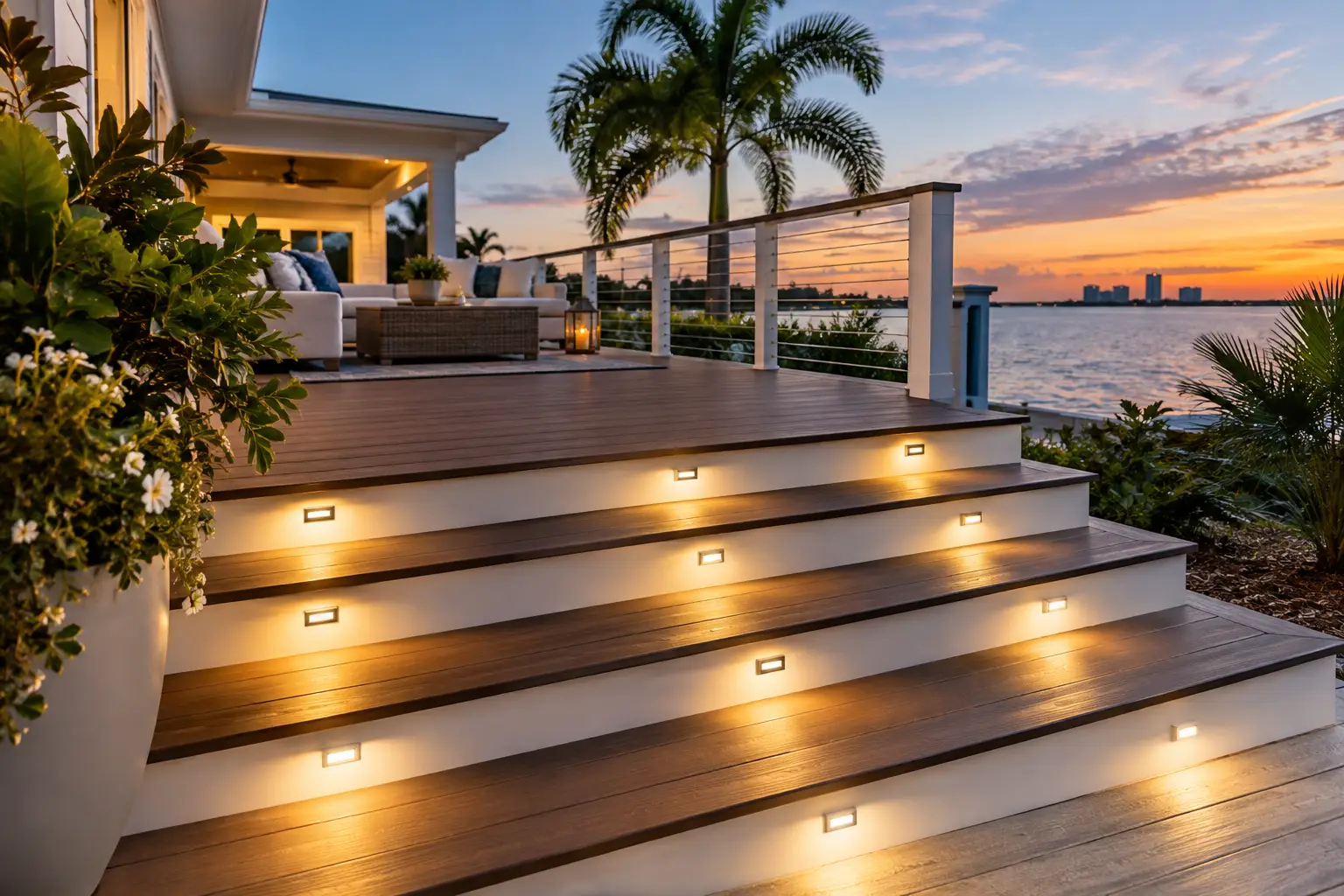
A beautifully finished deck should not disappear after sunset. The right deck step lighting ideas make each change in elevation clear underfoot while giving the entire outdoor space a composed, welcoming glow. For Tampa Bay homes, where decks, docks, pools, and lanais are used well into the evening, step lighting deserves the same thoughtful attention as architectural and landscape illumination.
The goal is not to place a bright fixture on every stair. Luxury lighting feels intentional: it reveals the edge of each tread, supports safe movement, and adds a quiet layer of dimension without turning a peaceful terrace into a runway. The best approach depends on the deck material, stair layout, nearby water, entertaining habits, and the view from inside the home.
Deck Step Lighting Ideas That Balance Beauty and Safety
1. Recessed lights set into stair risers
Riser lights are a classic choice for a reason. Installed on the vertical face below each tread, they cast light downward across the step instead of into a guest’s eyes. The result is crisp visibility with a clean, tailored appearance during the day.
This option works particularly well on broad wood, composite, or stone-clad stairs leading from a pool deck or covered lanai. A warm LED color temperature keeps the effect inviting and complements the glow of nearby landscape lighting. Fixture placement matters: a light centered on every riser can look formal, while alternating fixtures may suit wider, lower-traffic steps.
2. Under-tread lighting for a floating effect
Concealed beneath the lip of each tread, under-tread lighting makes stairs appear to float. It is one of the most refined choices for contemporary homes, especially where clean lines, modern railings, or large-format pavers define the outdoor design.
Because the source remains hidden, this treatment reduces glare and creates an elegant wash of light across each lower step. It also requires precise planning before construction or during a substantial deck renovation. Access for wiring, drainage, and future service should be built into the design rather than treated as an afterthought.
3. Sidewall step lights for masonry stairs
When deck stairs meet a stucco wall, retaining wall, or raised planter, recessed sidewall fixtures can provide excellent guidance. These compact lights are mounted low along the wall and project a controlled beam across the walking surface.
They are especially useful when a stair design has no exposed risers or when a homeowner prefers a more architectural look than individual tread lighting. Proper spacing is essential. Too few fixtures can leave dark gaps, while overly bright fixtures may create harsh pools of light on pale stone or travertine.
4. Rail-mounted downlights for open staircases
Open-riser stairs and elevated decks often need light from above rather than from within the structure. Small downlights integrated into handrails or mounted beneath a railing cap can illuminate the treads with a soft, practical wash.
This approach preserves an open view and can be ideal for a deck overlooking a waterfront, golf course, or carefully designed landscape. It also adds useful light to the railing edge without relying on decorative post caps. Select fixtures with focused optics so light stays on the steps instead of spilling into neighboring properties or reflecting off nearby water.
5. Post-cap lights used with restraint
Illuminated post caps add a traditional finishing detail to a deck perimeter, but they should not be expected to do all the work of step lighting. Their light is generally too high and too broad to define each tread safely on its own.
Used selectively, however, they can frame an entry stair, mark a landing, or establish rhythm along a long railing. Pair them with discreet riser or under-tread fixtures for a layered result. This is a good example of why lighting design is more than fixture selection: each layer has a distinct job.
6. A lit landing between levels
A landing is where guests pause, turn, or change direction. Treating it as a small destination rather than an unlit transition makes a multi-level deck safer and more visually generous.
One or two low-glare fixtures can define the landing, while nearby plantings, a feature wall, or the base of a pergola may receive a subtle accent. On a larger entertaining deck, this helps separate the dining area from the pool, fire feature, or dock walk without adding physical barriers.
7. Lighting the first and last step
Not every staircase needs illumination on every riser. On compact, straight runs with a clear path, highlighting the top and bottom step may provide enough orientation while keeping the design minimal.
This restrained strategy works best when the middle of the stair run receives gentle ambient light from nearby rail lighting, wall fixtures, or landscape illumination. It is less appropriate for steep, curved, heavily shaded, or frequently used stairs. The design should respond to how the space is actually used after dark, not just how it looks in a daytime photograph.
8. Curved stair lighting that follows the architecture
Curved stairs benefit from fixtures placed to reinforce the arc. Rather than forcing symmetrical spacing that ignores the shape, a tailored layout follows the path and maintains even visibility around the turn.
This can be achieved with compact recessed fixtures, concealed linear lighting beneath a cap, or low wall lights positioned on the inside of a curved retaining wall. The finished effect should feel effortless, as if the architecture itself is softly illuminated from within.
9. Linear LED lighting beneath bench seating
Built-in benches near deck steps create an opportunity to combine comfort and circulation lighting. A concealed linear LED beneath the bench edge can softly define the adjacent stair or landing while making the seating area feel more inviting.
It is a particularly effective choice around outdoor kitchens, fire tables, and poolside lounges. The key is shielding the diode source and using a quality channel and diffuser. Exposed tape lighting may seem economical at first, but it rarely offers the clean finish or weather resistance expected in a luxury outdoor setting.
10. Step lighting that connects the pool deck and lanai
Many Tampa Bay properties transition from an interior living area to a covered lanai, then down to a pool deck. Lighting these level changes as one connected experience gives the backyard greater depth and makes evening entertaining more comfortable.
Use a consistent warm color temperature and coordinated fixture finishes across the route. Step lights can guide the descent, while pool cage lighting, architectural accents, and carefully aimed landscape fixtures establish the surrounding ambiance. Each layer should be separately controllable so a quiet night outdoors does not require the same brightness as a gathering.
11. Dock and waterside deck stair illumination
Deck stairs near a dock require additional care. Reflections off the water can make glare more noticeable, and the environment demands fixtures designed for moisture, heat, wind, and long-term exposure.
Low-mounted, shielded lighting is usually more effective than bright overhead fixtures. It helps define the path to the dock while protecting the calm character of the waterfront. Local conditions matter here, including salt air exposure in coastal areas and the need to keep wiring and connections properly protected.
12. A custom scene for entertaining and late-night use
The most polished systems are designed around more than one setting. A brighter arrival or entertaining scene can illuminate deck steps, gates, and circulation paths, while a lower late-night setting keeps the architecture visible without flooding the yard with light.
Zoning and professional controls make this possible. They also prevent a common mistake: adding more fixtures when better aiming, dimming, and grouping would create a more useful result. Thoughtful controls allow the lighting to adapt to the moment while extending the life of the system.
What Makes Step Lighting Last in Florida
A refined lighting plan must perform through Florida’s heat, humidity, heavy rain, and frequent irrigation. Weatherproof LED fixtures, sealed connections, properly buried cable, and a correctly sized low-voltage system are foundational details, not upgrades. Quality components are less likely to corrode, shift in color, or require frequent replacement.
Maintenance also protects the original effect. Plant growth can block a beam, deck movement can affect alignment, and lenses may collect debris over time. A professional service plan keeps fixtures aimed, connections inspected, and nighttime scenes looking as intentional in year five as they did on installation night.
Elegant Accents Outdoor Lighting begins with how a property is used after dark, then develops a custom plan that brings safety, architectural definition, and enduring ambiance into balance. The most memorable deck lighting does not call attention to every fixture. It simply makes the next step feel natural, the gathering feel warmer, and the home feel complete long after sunset.