
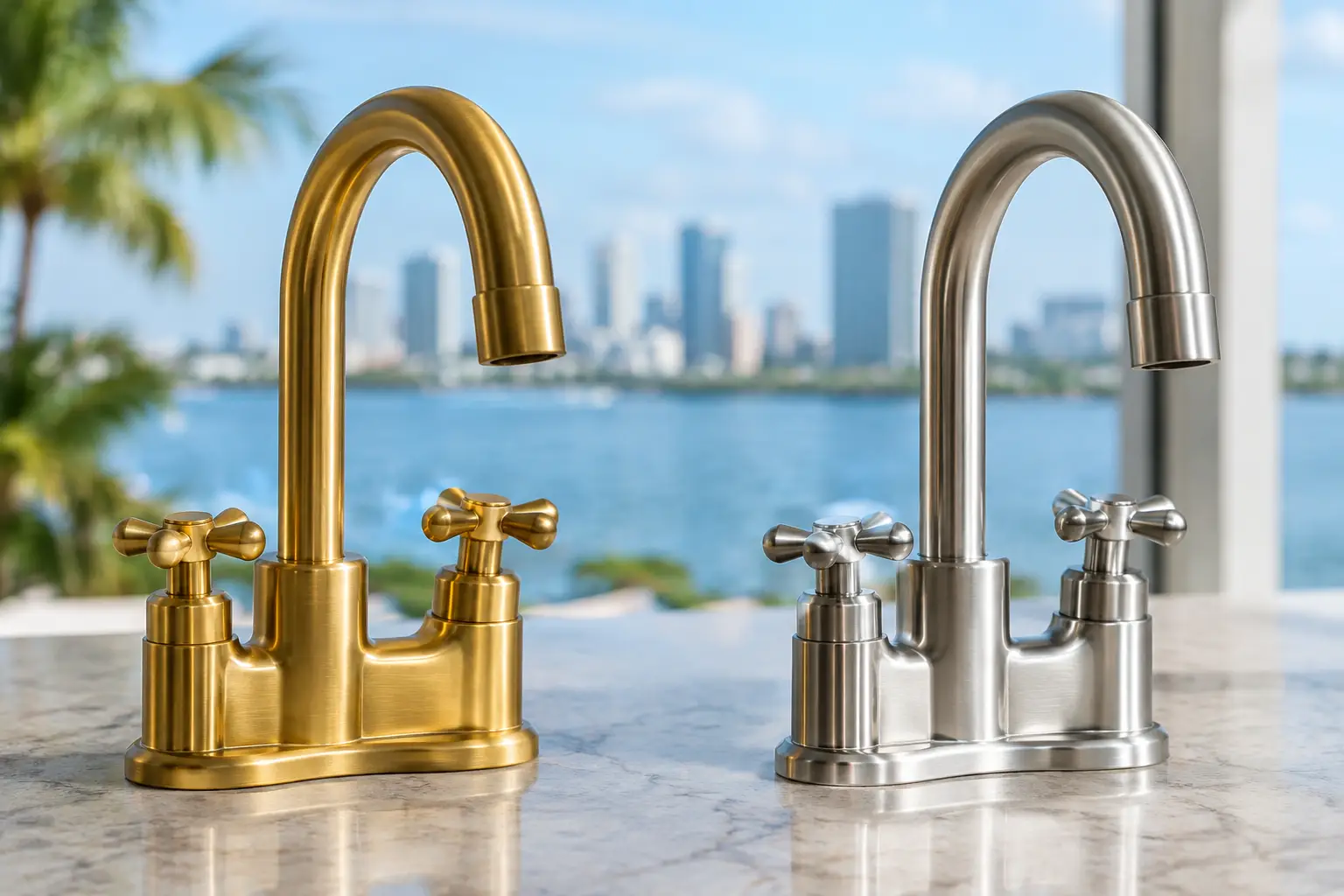
A beautifully designed lighting system can lose its polish quickly when fixture materials are not suited to Florida’s heat, rain, salt air, and year-round humidity. The question of brass versus aluminum fixtures is not simply about appearance or initial price. It is a decision that affects how your landscape lighting ages, how often it needs attention, and whether the finished design still looks intentional years after installation.
For Tampa Bay homes, both materials can have a place in a thoughtful outdoor lighting plan. The better choice depends on fixture location, exposure, finish expectations, budget, and the level of permanence you expect from the investment.
Why Fixture Material Matters in Tampa Bay
Outdoor lighting fixtures face far more than occasional rainfall. They contend with intense ultraviolet exposure, daily moisture, irrigation overspray, fertilizer, mulch, pool chemicals, and, in many neighborhoods, salt carried inland from the Gulf. A fixture that performs well in a mild, dry climate may not deliver the same long-term result here.
Material affects corrosion resistance, finish durability, heat management, and service needs. It also influences the visual character of the installation. A fixture can be technically functional while still diminishing the refined nighttime presentation of a home if its finish fades, chips, or develops uneven corrosion.
That is why a quality lighting plan begins with more than deciding where to place uplights and path lights. It considers what each fixture will encounter over time.
Brass Versus Aluminum Fixtures: The Core Difference
Brass is a copper-and-zinc alloy known for its weight, strength, and ability to withstand outdoor exposure. In landscape lighting, solid brass fixtures are often selected for premium installations because they do not rust and tend to hold up exceptionally well in wet, humid, and coastal conditions.
Aluminum is lightweight, economical, and widely used in outdoor fixtures. When it is made well and protected with a durable powder-coated finish, aluminum can provide an attractive and dependable lighting solution. However, it is more dependent on the quality and condition of that finish. Once the protective coating is compromised, aluminum can oxidize and show pitting or surface deterioration.
Neither material is automatically right for every application. The distinction lies in how the fixture is manufactured, where it will be installed, and what standard of longevity and visual consistency the property requires.
When Brass Is the Better Choice
Solid brass is often the preferred material for permanent, high-visibility landscape and architectural lighting. It has substantial weight, which gives fixtures a more grounded, crafted feel and helps them remain stable in planting beds and along pathways. More importantly, it develops a natural patina rather than rusting away.
That patina is one of brass’s defining qualities. Over time, a raw brass fixture may deepen from a warm gold tone to bronze and eventually take on darker brown or greenish notes, depending on its environment. For many homeowners, this evolution complements mature landscaping, natural stone, brick, and traditional architecture. It can give a lighting system the character of a considered architectural detail rather than an added accessory.
Brass is particularly well suited to locations with persistent moisture or greater salt exposure, including waterfront properties, docks, coastal communities, pool areas, and heavily irrigated planting beds. It is also an excellent choice for fixtures that are difficult to access, such as lights tucked beneath large specimen trees or integrated into extensive garden beds. Choosing a material with greater inherent durability reduces the likelihood of premature replacements disrupting an established design.
The trade-off is cost. Solid brass fixtures generally command a higher initial investment than aluminum. They are also heavier, which is an advantage for durability but requires proper installation and support. For homeowners who want lighting that defines distinction and is intended to remain part of the property for many years, the added cost often reflects a more lasting result.
Brass Does Not Mean Maintenance-Free
Brass is highly durable, but it still benefits from professional care. Dirt, mineral deposits, landscape debris, and irrigation residue can change how fixtures look and perform. The finish will also age differently depending on its exposure.
Some homeowners appreciate a naturally weathered patina. Others prefer to preserve a more uniform bronze appearance. Either preference can be accommodated through fixture selection and maintenance, but it should be discussed before installation so the finished system aligns with the home’s style.
When Aluminum Makes Sense
Aluminum fixtures can be an excellent choice when they are manufactured to a high standard and installed in the right setting. Their lighter weight and lower material cost make them practical for broad lighting coverage, especially on larger properties where a design calls for many fixtures.
A quality powder-coated aluminum fixture can offer a clean, tailored appearance in black, bronze, white, or other architectural finishes. This makes aluminum especially appealing for contemporary homes, roofline applications, pool cages, covered lanais, and certain wall-mounted fixtures where a crisp finish is central to the design.
Aluminum is also a sensible option for areas with less direct environmental stress. Under a covered entry, within a screened enclosure, or on a protected façade, a well-finished aluminum fixture may deliver years of reliable performance while keeping the project investment focused where it matters most.
The critical point is that not all aluminum fixtures are equal. Thin castings, weak coatings, exposed fasteners, and poorly sealed electrical connections can shorten the life of any fixture, no matter how attractive it looks on the day it is installed. A lower-priced fixture may seem efficient at first, but frequent replacements can interrupt the lighting design and create greater expense over time.
The Finish and Construction Matter as Much as the Metal
Comparing brass and aluminum by material alone can be misleading. The details of construction determine how a fixture performs in real conditions.
For brass, confirm that the body is solid brass rather than brass-plated steel or another base metal. Plated products may mimic the appearance of brass initially, but a damaged finish can reveal material that is far less suited to outdoor use.
For aluminum, look for substantial casting quality and a durable powder-coated finish designed for exterior exposure. Sealed lenses, quality gaskets, corrosion-resistant hardware, and properly protected wire connections matter just as much. Even the best fixture housing cannot compensate for poor installation practices below grade or at the electrical connection.
LED performance deserves attention as well. Modern LED systems run cooler than older halogen lighting, but quality fixtures still need sound thermal design to protect components and maintain consistent light output. A professional lighting plan pairs the fixture body, lamp or integrated LED source, beam spread, color temperature, and mounting method to the intended effect.
Match the Material to the Application
The most polished lighting systems often use both materials strategically rather than applying one rule across the entire property. Brass may be selected for exposed uplights that showcase palms, oaks, stonework, and entry landscaping, where durability and graceful aging are priorities. Powder-coated aluminum may be ideal for sheltered architectural accents, pool cage lighting, or fixtures where a precise color match is desired.
Waterfront and near-coastal homes deserve special consideration. Salt exposure can be unpredictable, and a property does not need to sit directly on the shoreline to experience its effects. In these conditions, investing in brass for the most exposed landscape fixtures can protect the long-term beauty of the installation.
Commercial and hospitality properties may weigh the equation differently. A restaurant patio or resort-style pool deck needs an elevated appearance, but it may also require a coordinated finish across numerous fixtures and a practical maintenance schedule. The right recommendation accounts for guest experience, operating demands, and the property’s overall visual standard.
Think Beyond the Initial Fixture Price
A lighting proposal should make it easy to understand where the investment is going. Brass fixtures cost more up front, yet their longevity can make them a strong value in demanding locations. Aluminum can offer meaningful savings and a refined finish when it is used thoughtfully and maintained properly.
The more useful question is not, “Which material is cheapest?” It is, “Which material will preserve the intended look of this area for the longest time?” A front entry, waterfront garden, pool deck, and covered patio may each have a different answer.
Since 1999, Elegant Accents Outdoor Lighting has approached material selection as part of a complete design conversation, not a one-size-fits-all upgrade. A custom plan should account for the property’s architecture, planting design, exposure, lifestyle, and future service needs before fixtures are installed.
Your home deserves lighting that remains as considered after seasons of Florida weather as it did on the night of the reveal. Choose brass where enduring character and exposure demand it, choose quality aluminum where its finish and value make sense, and let the location guide the decision.